
You want to know when asphalt needs attention so small problems don’t become big, expensive fixes. We will show the clear signs of stress and wear on asphalt so you can spot cracking, rutting, potholes, and surface degradation early and act before damage spreads.
We explain what causes those symptoms, how to check pavement safely, and which quick fixes and maintenance steps work best to extend service life. Follow our guide to identify issues fast and choose the right prevention or repair.
Key Symptoms of Stress and Wear on Asphalt Surfaces
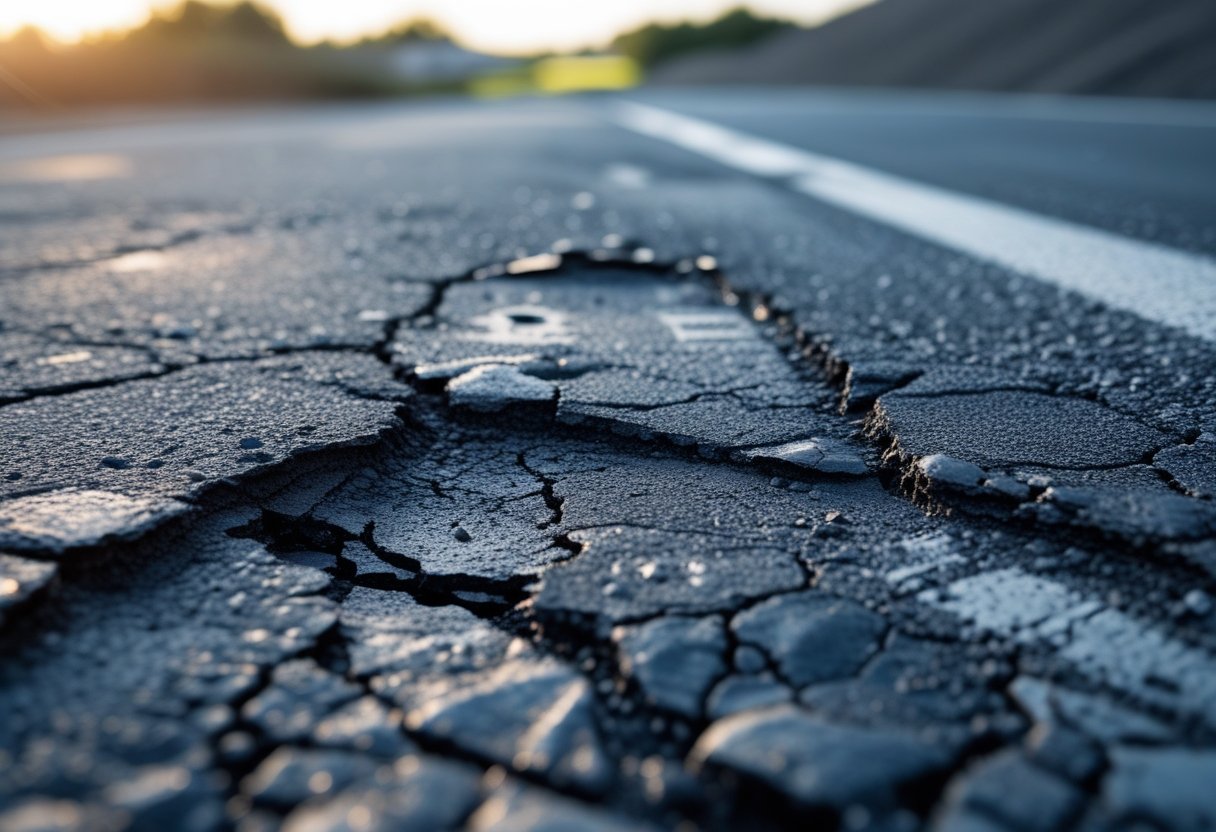
We look for visible signs that tell us the pavement is failing. These signs include different crack patterns, sinking areas, and the loss of surface material.
Cracks and Fissures
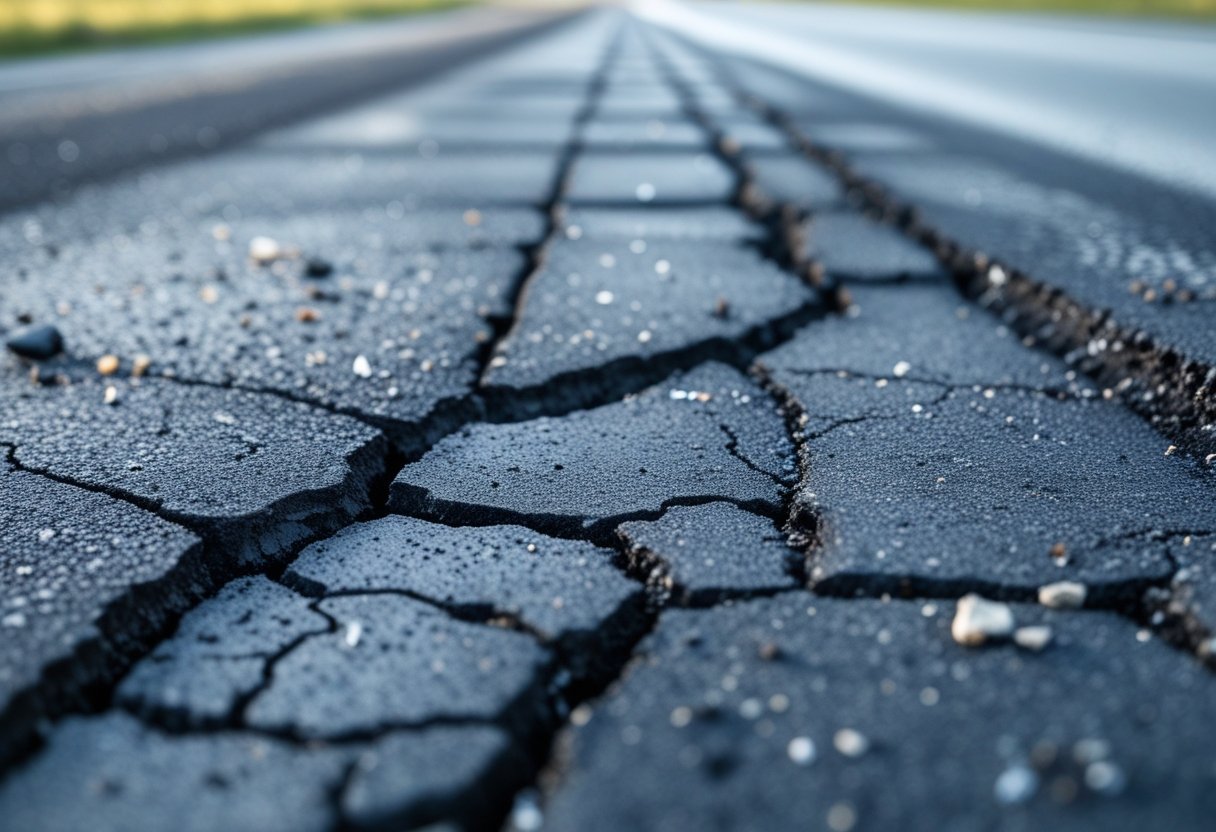
Cracks start small but reveal underlying stress in asphalt. Hairline cracks may be less than 1/8 inch wide and often appear from weathering or shrinkage. We watch these because water can enter and make them wider or deeper.
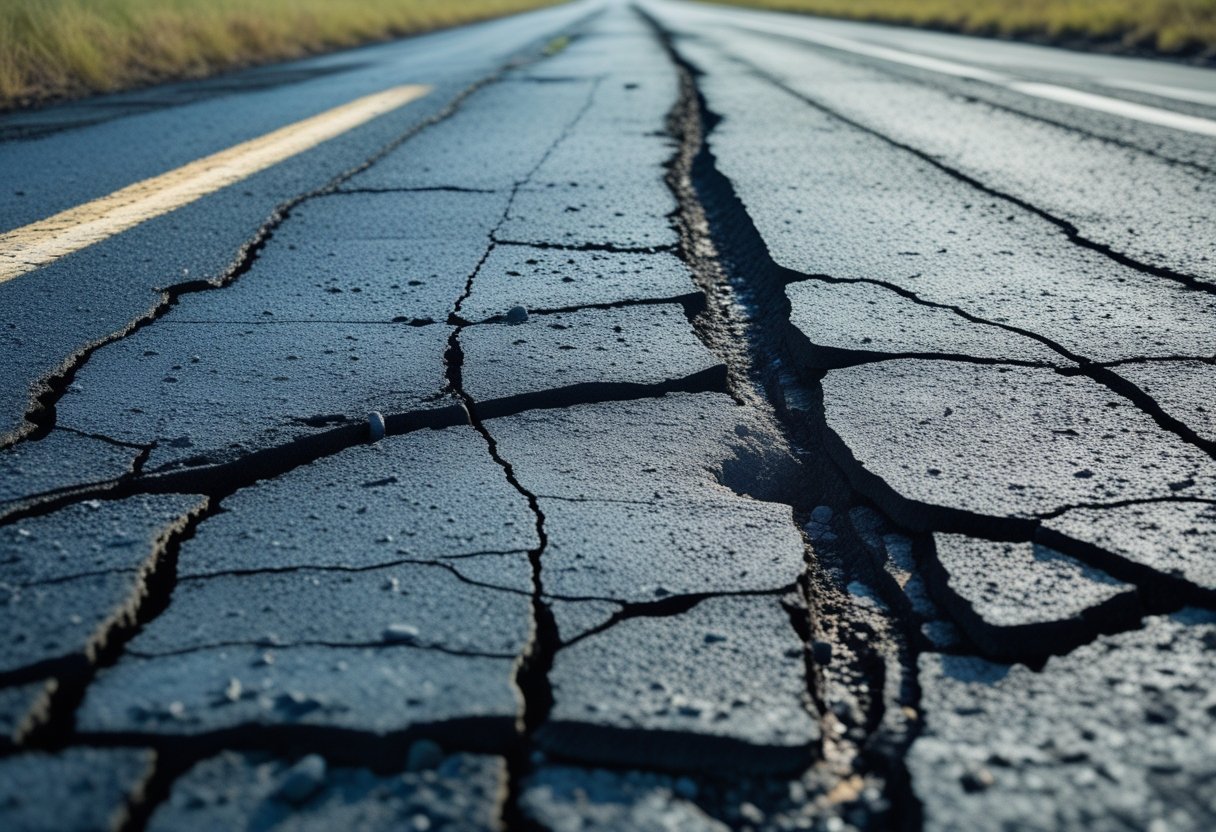
Wider cracks form from repeated traffic and from the pavement flexing over weak base layers. These may be 1/4 inch to several inches wide and can interconnect. When cracks run across the pavement rather than along the wheel path, they often reflect surface aging rather than base failure.
We note the crack edges. Sharp, clean edges usually mean recent cracking. Rounded or raveling edges show the binder has worn away and the surface is deteriorating. Early sealing of cracks can slow asphalt deterioration.
Alligator Cracks
Alligator cracking (fatigue cracking) looks like a series of connected polygons, similar to a lizard skin. We find this pattern where the asphalt repeatedly bends under heavy loads, often in wheel paths.
This defect signals structural failure of the asphalt layer or the base beneath it. If the pattern is large and deep, patching alone will fail because the load spreads through a weakened base. We assess the depth: surface-only alligatoring may be salvageable with overlays, but deep alligator cracks require full-depth repair.
We also check surrounding signs like rutting or water in joints. These help us decide whether to mill out and rebuild or to remove and replace the failed layers.
Potholes and Depressions
Potholes form when cracks allow water to reach and weaken the base, then traffic removes the unsupported asphalt. We see potholes as rounded holes with loose asphalt fragments and exposed aggregate.
Depressions are shallow low spots that trap water and speed asphalt damage. We measure depth and check for loose aggregate around the edges. Small potholes can be patched temporarily, but large or recurring potholes mean the base or subgrade needs repair.
We inspect pothole bottoms for soft material. If the base crumbles under light pressure, we plan for full-depth replacement. For shallow cases, compacted patching with proper bonding can restore surface integrity.
Raveling and Surface Erosion
Raveling shows as loose aggregate and a rough, sandy surface where the asphalt binder has worn off. We see loss of fine particles first, then larger stones loosen and fall out.
This type of surface erosion reduces skid resistance and accelerates water penetration. Causes include UV exposure, oil spills, poor compaction, or aging binder. We assess the extent: limited raveling may be treated with a thin seal coat to bind loose material back; severe raveling needs surface milling and overlay.
We inspect edges and wheel paths especially, since these areas lose aggregate faster. Addressing raveling early prevents deeper asphalt deterioration and reduces future repair costs.
Contributing Factors Behind Asphalt Wear and Tear
We focus on the main causes that weaken asphalt so you can spot problems early. Each factor explains how specific forces and conditions break down pavement over time.
Heavy Traffic and Load Stress
We see heavy traffic and concentrated loads cause the most visible damage. Large trucks, buses, and delivery vehicles put repeated pressure on the same lanes, compacting base layers and cracking the surface.
Overloaded axles and frequent turning at intersections produce rutting and fatigue cracks. These deformations let water penetrate deeper, which speeds up deterioration.
Parking lots with tight spaces and constant stopping also create wheel-track wear and small potholes. Heavy traffic combined with ageing pavement dramatically shortens useful life unless the base was built to handle the load.
Weather Conditions and Environmental Factors
We count freeze-thaw cycles and temperature swings among the top weather risks. Water that soaks into cracks freezes and expands, widening gaps and breaking the asphalt binder.
Sunlight and heat oxidize the asphalt, making it brittle and prone to surface cracking. Chemical spills, such as fuel or de-icing salts, dissolve binders and weaken the mix.
Wind-blown sand and debris abrade the surface over time, while humidity and subsurface moisture soften base materials. Together, these environmental factors speed up cracking and surface loss.
Drainage Problems and Standing Water
We find water is the single most damaging agent when it pools on pavement. Standing water seeps into small cracks and the underlying base, reducing its load-bearing strength and causing potholes.
Clogged drains, poor slope, and blocked gutters create persistent water pooling along edges and low spots. Repeated saturation and drying cycles loosen aggregates and cause base erosion.
Surface drainage failures also promote vegetation at joints, which lifts and breaks the asphalt if roots grow beneath the pavement.
Subpar Installation and Poor Grading
We often trace early failures to poor installation and incorrect grading. Thin asphalt lifts, uneven compaction, and inadequate base materials let loads and water damage the pavement quickly.
Improper slope and poor grading prevent water from running off, causing chronic pooling and base washout. Joints that are not sealed and rough transitions invite rapid crack growth.
Using the wrong asphalt mix for local traffic or climate; too soft in heat or too brittle in cold; creates premature raveling and fatigue. Proper installation and correct grading are vital to long-term performance.
Early Detection and Assessment Strategies
We focus on checking the asphalt for visible wear, color change, and shape problems. Regular checks help us spot surface fading, oxidation, uneven asphalt, and UV damage before durability drops.
Visual Inspections and Surface Changes
We walk the asphalt driveway or parking area looking for cracks, raveling, and loose aggregate. Small hairline cracks and sand-like loose stone mean oxidation and binder loss; these are early signs that durability is falling.
We use a flashlight at low angles to see shallow defects that sunlight can hide. Make notes or photos of locations and sizes so we can track growth over time.
We also check edges and joints where wear starts. Water and traffic concentrate there, leading to deeper cracking and more rapid surface fading.
Identifying Surface Fading and Discoloration
We compare color across areas to find surface fading caused by UV damage and oxidation. Faded spots look gray or chalky compared with darker, healthy asphalt.
We rub suspect areas with a cloth to see if black binder comes off. If the cloth gets dusty, oxidation is present and surface sealing is needed to restore binder and protect durability.
We map fading patterns. Uniform fading suggests age and sunlight exposure. Patchy discoloration can mean oil spills, chemical exposure, or poor patchwork.
Spotting Uneven or Warped Asphalt
We look for dips, bumps, rutting, and sloped areas that hold water. Uneven asphalt surface often results from poor compaction, base failure, or freeze-thaw cycles.
We drive a straightedge or use a level across suspicious zones to measure warp and sag. Even small changes; 1/4 inch over a few feet; can grow into bigger structural issues.
We inspect load-bearing spots like drive lanes and wheel paths more often. Concentrated traffic speeds up wear and causes rutting that signals reduced durability.
Preventive Measures and Effective Maintenance
We focus on simple, practical steps that extend pavement life, stop small problems, and guide when to call for bigger asphalt repairs.
Sealcoating and Seal Coat Applications
We apply sealcoating to protect asphalt from water, UV, oil, and de-icing chemicals. A quality seal coat fills surface voids and restores mild surface friction. Use coal‑tar or asphalt emulsion sealers designed for pavements; temperature and dry conditions matter; apply when air and pavement are above 50°F and no rain is forecast for 24-48 hours.
We schedule sealcoating every 2-4 years on driveways and parking lots that see regular traffic. Before sealing, we clean the surface, remove weeds, and repair cracks and potholes. Avoid sealing over fresh asphalt for at least 6-12 months to prevent trapping oils and causing adhesion failure.
Crack Filling and Patching
We repair cracks promptly to stop water infiltration and base damage. For cracks under 1/2 inch, we use hot or cold pour crack sealant. For larger cracks and alligator cracking, we cut and remove damaged asphalt, then patch with compacted hot‑mix asphalt for a lasting asphalt repair.
We clean cracks with a wire brush or compressed air, then dry before applying sealant. For pothole repair, we remove loose material, apply tack coat, place hot or cold patch, and compact in layers. Proper preparation and compaction reduce reappearance and improve asphalt longevity.
When to Consider Resurfacing or Repairs
We consider resurfacing when fatigue cracking, widespread patching, or rutting affect more than 20-30% of the pavement area. Resurfacing (overlay) adds a new asphalt layer and fixes thin or aged surfaces. It restores ride quality and extends pavement life by 8-15 years depending on thickness and traffic.
We choose full‑depth repair or replacement when base failure, deep potholes, or severe settlement exist. For commercial or high‑traffic asphalt paving, we measure surface grade, drainage, and base condition before deciding. Timely resurfacing or full repairs save money compared with repeated patching and prevent costly failures later.