You can spot the asphalt problems that will cost you time and money if you know what to look for. We will show the exact crack types and signs that mean your pavement needs attention now, so you can act before damage gets worse.
Walk the surface and look closely: some cracks are cosmetic, but others show structural trouble, drainage issues, or hidden collapse risks. We’ll point out visual clues, water-related warnings, and what repairs or preservation steps will stop small issues from becoming big ones.
Essential Warning Signs: Cracks That Demand Immediate Attention
We look for specific crack patterns that show where asphalt has failed and what repairs it needs. Recognizing the right signs helps us act quickly to stop damage and higher costs.
Identifying Hairline and Surface Cracks
Hairline cracks are thin, usually less than 1/8 inch wide. They start on the surface from UV exposure or minor freeze-thaw cycles. We watch for many small, shallow lines across the pavement; they often appear first in high-traffic areas and near joints.
Surface cracks let water into the pavement layers. Even if they look shallow, they can grow wider and deeper if left untreated. We treat clusters of hairline cracks with sealcoating or crack fill to prevent them from becoming bigger problems.
Spotting Alligator Cracking and Structural Patterns
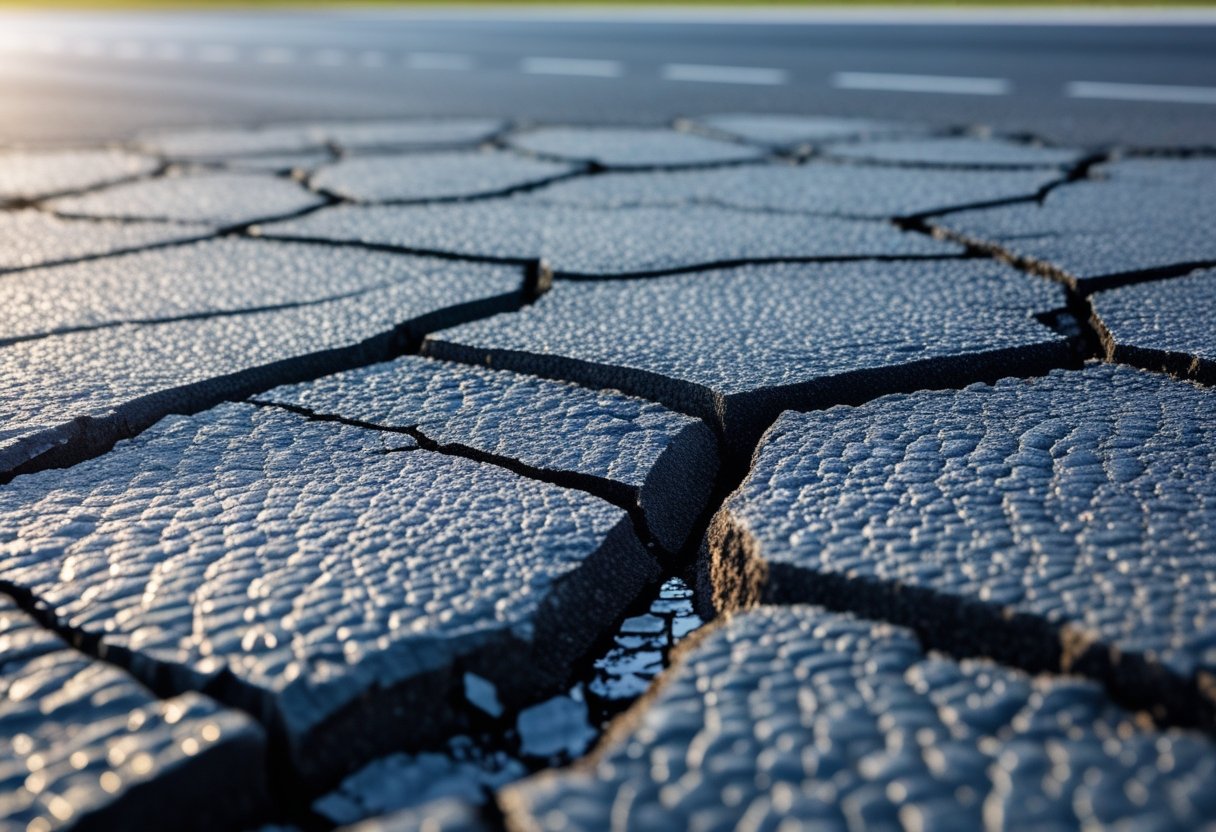
Alligator cracking shows a pattern of interconnected cracks that looks like reptile skin. This pattern means the asphalt base or subbase failed under load. We treat alligator cracking as structural damage, not a surface defect.
We inspect the size and depth of the panels inside the pattern. If panels are large or loose, we remove and replace the pavement layer. If the pattern is limited, full-depth patching and base repair may fix the issue and stop further asphalt damage.
Evaluating Edge Cracks and Deterioration
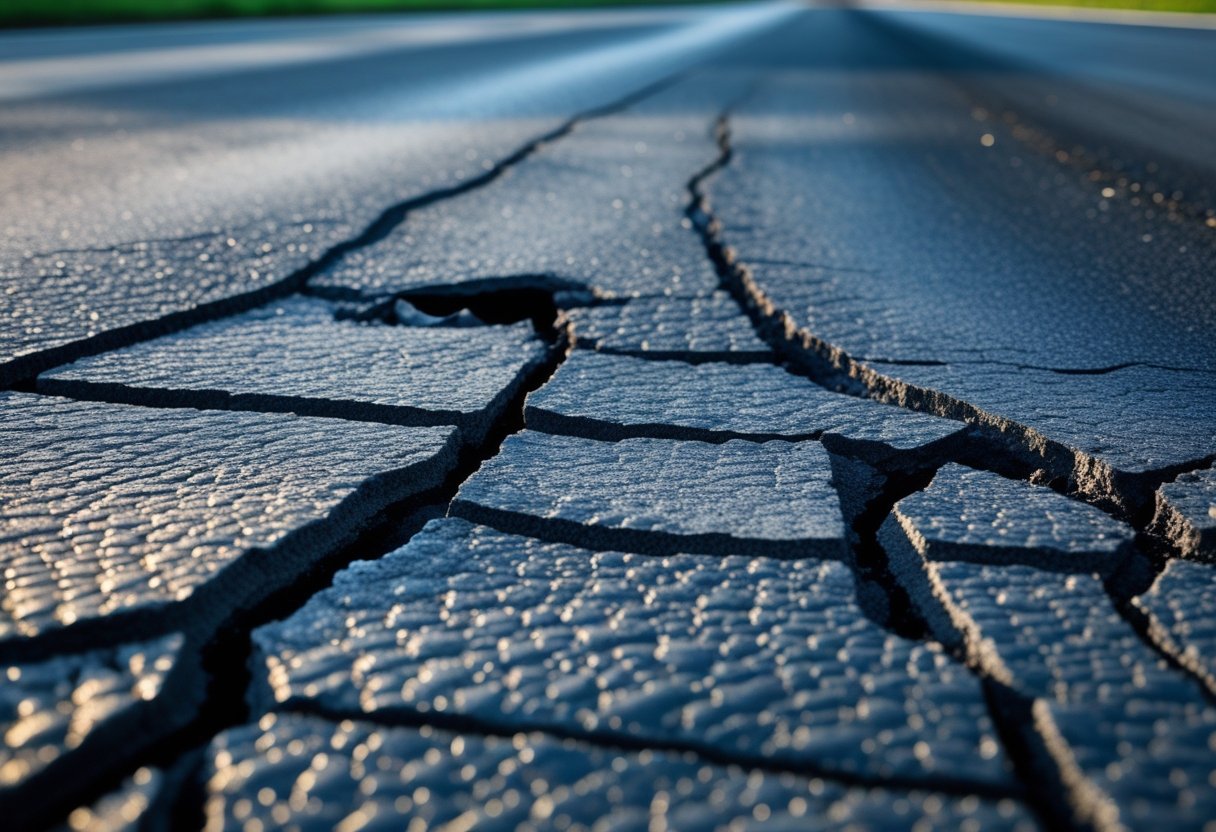
Edge cracks run along the pavement border and often start where the asphalt lacks support. We check if the shoulder or turf beside the pavement has eroded. Unsupported edges let loads crack the asphalt and cause edge deterioration.
We test whether the edge breaks away under light pressure. If edges crumble or pieces fall out, we plan edge repair with proper shoulder support and base reinforcement. Fixing edge cracks early keeps the rest of the asphalt stable and extends pavement life.
Beyond Cracks: Visual and Structural Indicators of Asphalt Failure
We look for visible signs that show more than surface cracking. These signs tell us about deeper asphalt deterioration and when to act to protect asphalt longevity.
Potholes, Sinkholes, and Sunken Areas
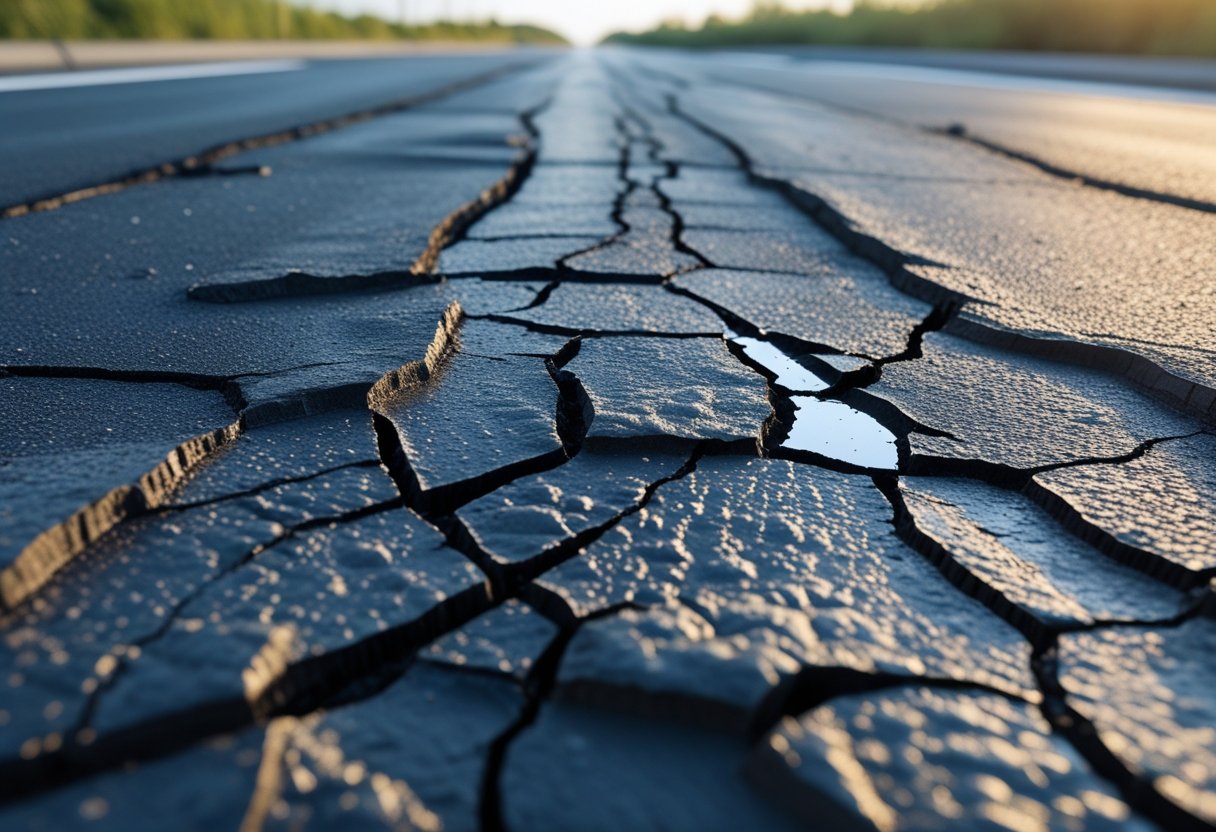
Potholes form when water weakens the base under asphalt and traffic breaks the surface into chunks. We watch for loose material, irregular edges, and widening holes. Small holes that keep growing or reappear after patching mean base failure and need full-depth repair.
Sinkholes look like sudden collapses and often follow underground voids or severe erosion. We check for subsidence near drains, sewer lines, or where water pools. If an area keeps sinking after repairs, we suspect undermining rather than surface damage.
Sunken areas show gradual settling over a broad zone. They cause pooling and stress on surrounding asphalt. We map low spots, note how much water accumulates, and measure depth to decide between resurfacing or rebuilding the base.
Fading Color and Surface Oxidation
Oxidation turns asphalt from black to gray as oils evaporate and binders break down. We inspect driveways and pavements for a chalky, faded look and loss of sheen. This discoloration signals surface deterioration that reduces flexibility and increases cracking.
Temperature and UV exposure speed oxidation. We pay attention to south-facing areas and places with little shade. When oxidation is advanced, sealcoating can restore oils temporarily, but repeated oxidation often means the asphalt is nearing end of life.
Faded color also links to reduced skid resistance. We test surface texture and note smooth, polished areas. If texture loss combines with oxidation, we plan for resurfacing to restore safety and extend asphalt longevity.
Uneven and Warped Surfaces
Uneven surfaces show bumps, waves, or changes in slope that affect drainage. We look for ridges, ripples, and areas where water fails to run off. Warping often comes from repeated freeze-thaw cycles, poor compaction, or weak subbase materials.
Warps create stress points that lead to cracking and potholes. We measure deviations from flatness and inspect seams and joints for separation. If repair is limited to surface patching, warping often returns, so we consider milling and overlay or full reconstruction.
Warped asphalt also signals drainage problems and accelerated asphalt damage. We prioritize fixing base and drainage before paving to protect future asphalt pavements and improve overall asphalt longevity.
Drainage and Water-Related Warning Signs
Water collects where asphalt can’t shed it. Watch for pooling after rainfall, standing water that won’t drain, and areas where drainage problems speed asphalt deterioration.
Recognizing Pooling After Rainfall
We spot pooling after rainfall by checking low spots and ruts within 24 hours of a storm. Look for puddles that stay more than a day; those indicate poor slope or blocked drains.
Measure puddle depth: anything over 1/4 inch is a concern for repeated water exposure. Repeated pooling invites freeze-thaw cycles that force cracks wider and shorten asphalt longevity.
Check curb lines and seams next to concrete. If water clings along edges or between patches, the seam has failed or the slope is wrong. Small fixes like grinding a high spot or adding a channel drain often stop pooling early.
Standing Water and Poor Drainage
Standing water sits for hours or days and shows us where drainage solutions are needed urgently. It causes soft spots and raveling as water weakens the asphalt binder. We inspect manholes, catch basins, and driveway slopes for clogs and misalignment.
Poor drainage also shows as dark patches and oil stains that never dry. These areas are prone to potholes once traffic stresses the wet base. We recommend clearing debris, adjusting slopes, or installing trench drains to prevent chronic standing water.
Impact of Drainage Issues on Asphalt Health
Drainage problems speed asphalt deterioration through repeated saturation and the freeze-thaw cycle. Water trapped under surface layers freezes, expands, and opens cracks. Thawing then washes out fines, creating voids that turn into potholes.
We track areas with recurring water damage to plan repairs that restore drainage and extend asphalt longevity. Typical solutions include regrading, resurfacing with proper crown, edge sealing, and targeted drainage installation to stop the cycle before major rehabilitation is needed.
Critical Steps for Asphalt Preservation and Repair
We focus on practical actions that slow damage and restore safe surfaces. Our steps cover fixing cracks and holes, protecting the top layer, deciding between resurfacing or replacement, and when to hire pros.
Timely Crack Sealing and Pothole Repair
We seal cracks under 1 inch wide to stop water from reaching the sub-base and causing bigger failures. For linear cracks, we clean out debris and loose aggregate, then apply a hot-pour or cold-applied crack sealant that bonds to edges. This prevents raveling and keeps the asphalt’s oil content from leaching out.
For potholes, we remove unstable material, dry the area, and use a compacted hot mix or infrared patching if available. Proper compaction and edge preparation prevent the hole from returning. We treat oil stains and chemical spills first, because they can interfere with adhesion.
Sealcoating and Surface Protection
We apply sealcoat every 2-4 years on driveways and parking lots with sound structure to protect against UV, water, and vehicle fluids. Sealcoating fills hairline voids and adds a sacrificial layer that slows oxidation and loss of binder, extending asphalt longevity.
Before sealing, we clean the surface, fix loose aggregate, and repair cracks and small depressions. We avoid sealcoating over active bleeding, standing water, or recent oil stains. Choose a coal-tar or asphalt-emulsion product based on local regulations and traffic patterns.
Resurfacing Versus Full Replacement
We choose resurfacing (a new asphalt layer over the existing pavement) when the surface shows moderate cracking, raveling, and shallow potholes but the sub-base remains solid. Resurfacing restores smoothness and hides cosmetic damage while keeping costs lower than full replacement.
We choose full replacement when there is widespread sub-base failure, severe rutting, or uneven surfaces that surface fixes can’t correct. Signs include structural cracking patterns, large settled areas, and repeated repairs that fail. Full replacement lets us rebuild proper drainage and sub-base support.
When to Call an Asphalt Contractor
We call an asphalt contractor when damage is beyond simple crack sealing or when equipment like infrared patching is needed. A pro can assess sub-base support, test for oil contamination, and recommend resurfacing versus replacement with cost estimates.
Hire licensed contractors with references, proof of insurance, and clear warranties for asphalt repairs and sealcoating. Ask about materials, expected lifespan, and maintenance plans so we can budget for future upkeep.