
You notice small pieces of asphalt breaking away and wonder if it’s a sign of a big problem. If asphalt is flaking, we can usually tell quickly whether it needs a quick patch or a full repair by checking how deep, widespread, and active the damage is.
We will walk you through what flaking looks like, what causes it, and how to spot damage that gets worse over time. You’ll learn simple checks to decide when to call a pro and what repairs actually fix the issue.
We explain common causes like weather, poor mixes, and traffic, then show repair options and maintenance steps that save money and extend pavement life.
Understanding Asphalt Flaking and Surface Deterioration
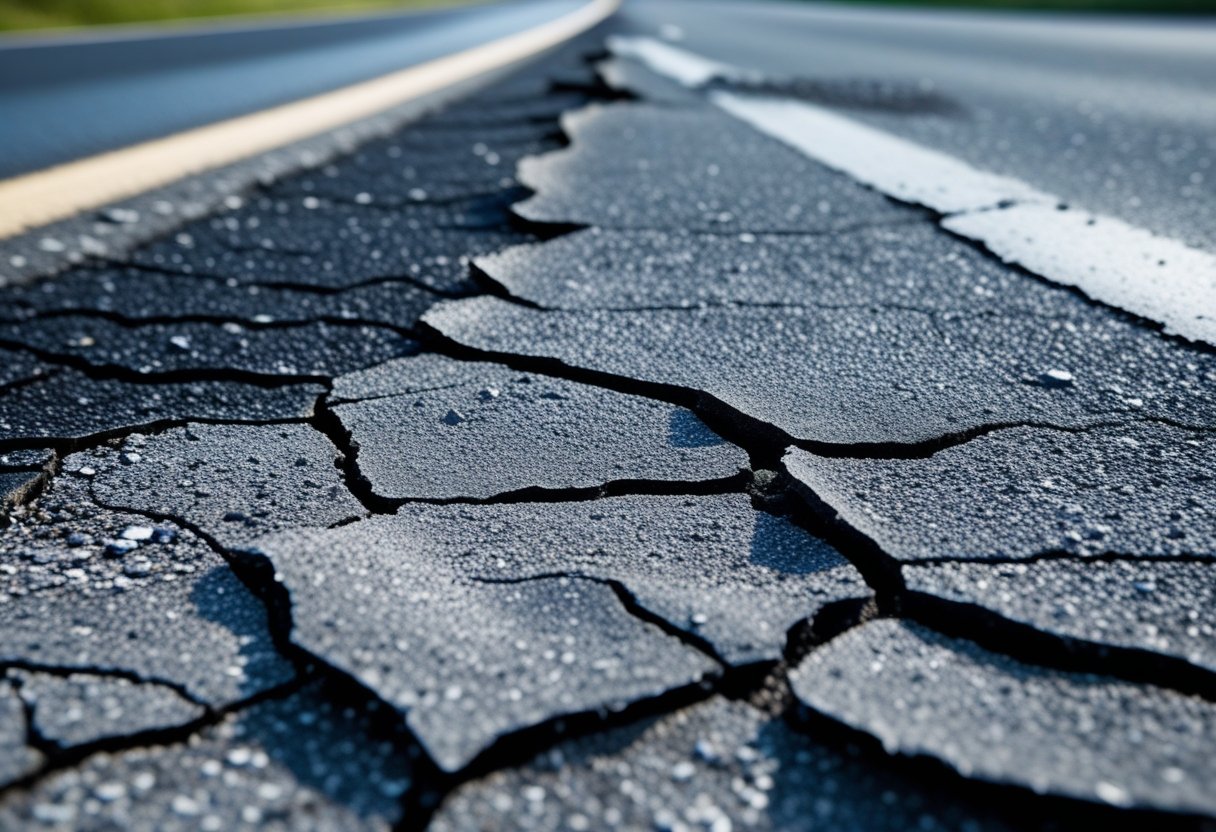
We explain what causes flaking, how to spot it, and how it differs from other surface damage so you can decide when repairs are needed. The focus is on visible signs, causes in the mix and binder, and how different faults affect lifespan.
What Is Asphalt Flaking?
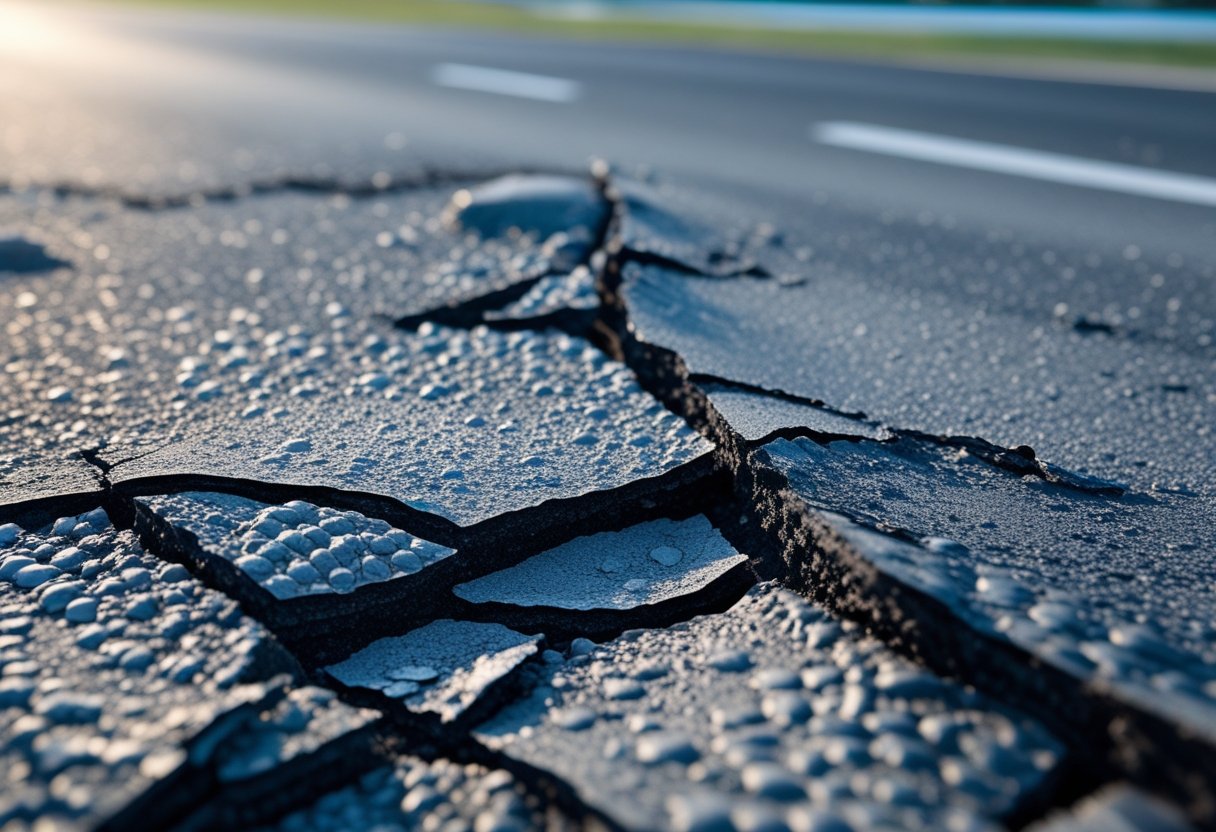
Asphalt flaking happens when the top layer of an asphalt pavement breaks into thin, shallow pieces. This usually affects only the surface course and does not create deep potholes at first.
We see flaking when the asphalt binder loses adhesion to the aggregate or the surface becomes brittle from oxidation. Freeze-thaw cycles and heavy traffic accelerate loss of the binder on the top millimeter to few millimeters.
Poor compaction at paving, excessive fines in the asphalt mix, or inadequate surface treatments can also increase flaking. Flaking often begins as small, loose chips that spread and reduce skid resistance.
Early repairs include surface treatments or light overlays. If we ignore flaking, raveling or deeper failures can follow and require more costly full-depth repairs.
Visual Indicators of Flaking and Spalling
Flaking appears as thin, plate-like fragments or scaly flakes on the pavement surface. These flakes are usually parallel to the pavement plane and detach easily when scraped.
Spalling is a related condition where larger pieces break away around joints, edges, or heavy-loading areas. Spalls are deeper and often reveal exposed aggregate beneath the binder.
Other clues include lighter-colored patches where binder has oxidized, scattered loose aggregate, and reduced surface texture. We also look for increased water infiltration at flaked areas, which speeds deterioration.
Documenting the size, depth, and distribution of flakes helps decide between surface treatments and overlays.
Differences Between Flaking, Raveling, and Other Damage
Flaking is a surface-level loss of thin layers, while raveling is progressive loss of aggregate particles from the asphalt mixture. Raveling leaves a rough, grainy texture and often starts where the binder fails to coat the aggregate.
Potholes form when deeper layers fail and pieces fall out, usually after water penetrates through flaked or raveled zones. Alligator cracking shows interconnecting cracks due to structural fatigue, not just surface binder loss.
Key diagnostic points:
- Flaking: thin flakes, shallow, binder oxidation or surface stripping.
- Raveling: loose aggregate, rough texture, often across lanes.
- Spalling/potholes: deeper loss, vertical faces, structural failure.
Recognizing these differences guides our choice of fixes: surface rejuvenation for flaking, aggregate retention treatments for raveling, and full-depth repair for structural failures.
Primary Causes of Asphalt Flaking
We identify the main drivers of asphalt flaking and explain how each one damages pavement. Understanding these causes helps us choose the right repairs and prevent repeat problems.
Water Infiltration and Freeze-Thaw Cycles
Water entering cracks and the base is the most common cause of flaking. When water soaks into the asphalt mix and the underlying layers, it weakens the bond between the aggregate and the asphalt binder. Repeated wetting reduces cohesion and leads to small pieces breaking free.
During freeze-thaw cycles, trapped water expands and exerts pressure inside the pavement structure. That pressure opens micro-cracks and lifts the surface binder away from aggregate. In regions with frequent freezes, a thin layer of the surface can detach after only a few seasons if we do not seal cracks or restore drainage.
We can limit this damage by sealing surface cracks, improving edge drains, and ensuring proper subbase compaction during paving. Timely maintenance stops water from reaching the base and prevents the freeze-thaw cycle from accelerating flaking.
Material Quality and Installation Errors
Poor-quality asphalt mix or wrong binder grade speeds flaking. If the asphalt mix uses low-quality aggregate or a binder that lacks proper viscosity for the climate, the surface will lose adhesion faster. Incorrect aggregate gradation also reduces interlock and makes the surface brittle.
Installation mistakes – like paving over a wet base, insufficient compaction, or incorrect lift thickness – create weak spots. When compaction is too low, voids remain and let water collect, which magnifies flaking. Laying a hot mix below recommended temperature prevents proper binder coating and shortens pavement life.
We must specify the correct asphalt binder and mix design for temperature and traffic. Proper site prep, moisture control, and compaction testing during paving cut the risk of early flaking.
Impact of Environmental and Chemical Factors
Sunlight, temperature swings, and chemicals change asphalt properties and promote flaking. UV radiation oxidizes the asphalt binder and makes it hard and brittle. High daytime heating and cool nights stress the pavement and cause surface micro-cracking.
Chemical exposure from de-icing salts, gasoline, oil, and industrial chemicals breaks down the asphalt binder and dissolves fine particles. Salt accelerates moisture-driven damage, while petroleum spills soften binder in concentrated spots and create weak patches that flake off.
We manage these risks by choosing oxidation-resistant binders, using protective seal coats, and cleaning spills quickly. For heavily exposed sites, specifying polymer-modified binders or denser mixes reduces chemical and UV damage.
Traffic Loads and Heavy Vehicles
Traffic intensity and axle loads drive mechanical breakdown at the pavement surface. Repeated heavy wheel loads cause compressive stress that crushes aggregate and abrades the asphalt binder, forming loose flakes and raveling.
Point loads from heavy vehicles, sharp turns, and braking zones concentrate stress and strip the binder from aggregates. Areas near loading docks and bus stops often show accelerated flaking because the asphalt mix and compacted base weren’t designed for such loads.
We design pavements with appropriate asphalt mix stiffness, thicker lifts, and stronger binders where heavy traffic is expected. Strengthening the base, using higher-quality mixes, and limiting heavy-vehicle turns help prevent flaking in high-load zones.
Identifying Critical Repair Needs for Asphalt Flaking
We focus on signs that tell us whether a surface fix will do or if a deeper repair or replacement is needed. Look for patterns, depth, and how water moves across the pavement.
Assessing Severity of Surface Damage
We inspect the top layer for loose flakes, bleeding, and shallow cracks. Small flaking and fine transverse or block cracks often mean surface oxidation or binder loss; these usually respond to sealcoats or thin overlays.
Measure cracking width and length. Cracks under 1/8 inch that do not interconnect are minor; cracks wider than 1/4 inch or networks of block cracks indicate higher risk of moisture entry.
Check for rutting and minor depressions. If ruts are less than 1/2 inch and isolated, a targeted surface treatment or localized asphalt repair may work. Record drainage flow; standing water accelerates flaking and surface deterioration.
Recognizing Deep Structural Issues
We look for alligator (fatigue) cracking, potholes, and interconnected longitudinal cracks that reach the base. These mean load-related failure and poor structural integrity. Fatigue cracking in a zone larger than a few square feet generally requires base repair or full-depth asphalt replacement.
Probe weak areas to judge material strength. If cores show disintegrated base or subgrade washout beneath flakes, surface fixes will fail. Also check for reflection cracking from an underlying concrete slab; those need an overlay with stress-relief or full replacement.
Warning Signs Requiring Immediate Repair
We act fast when we see expanding potholes, deep alligator cracks, or edge cracking where pavement separates from base. These failures can rapidly grow and cause safety hazards or vehicle damage. Mark and schedule repairs within days if traffic loads are high.
Look for gouges exposing aggregate, or areas where water channels into joints and causes active erosion. Rapid bleeding after heat or sudden pavement soft spots under load also demand prompt asphalt repair to prevent collapse.
When to Resurface or Replace Asphalt
We choose resurfacing (asphalt overlay) when the base is sound but the surface shows widespread flaking, hairline cracks, or mild rutting. A 1.5-2 inch overlay often restores smoothness and stops surface deterioration if structural integrity checks pass.
We opt for full-depth replacement when base failure, deep potholes, interconnected alligator cracking, or severe drainage issues exist. If cores reveal base loss or if rutting exceeds 1 inch over long stretches, replacement prevents repeated repairs. Use overlays cautiously over reflection cracking; add a milling step or interlayer to reduce recurrence.
Effective Asphalt Repair Solutions and Proactive Maintenance
We focus on repairs that stop damage fast and maintenance that keeps asphalt strong. The steps below cover cleaning, filling, sealing, drainage fixes, and when to hire pros.
Surface Cleaning, Patching, and Crack Filling
We start with surface cleaning to remove dirt, vegetation, and loose aggregate. Use a power broom or pressure washer and allow the surface to dry fully before any repair. Clean joints and cracks so materials bond properly.
For potholes and large depressions, we prefer an asphalt patch using hot-mix when possible. If hot-mix is unavailable, a quality cold patch is acceptable for temporary repair. Compact the patch with a plate compactor or vibratory roller to match the surrounding pavement level.
For linear cracks under 1/2 inch, we use crack filling with a poured or extruded crack filler. For wider cracks or joints that move, we apply crack sealing with a hot rubberized sealant that bonds and flexes. Proper cleaning, routing of deep cracks, and use of backer rod where needed extend repair life.
Sealcoating and Preventive Surface Treatments
We apply sealcoating to protect asphalt from UV, oil, and water intrusion. Sealcoat products include asphalt-emulsion sealers and polymer-enhanced mixes. Apply on a clean, dry surface and wait 24-48 hours before light traffic.
We schedule sealcoating every 2-4 years on driveways and parking lots depending on traffic and climate. Use a broom or squeegee application for even coverage. Markings must be protected or reapplied after sealcoating.
For high-wear zones, consider slurry seal or micro-surfacing as a thin overlay to restore texture and friction. These treatments are preventive maintenance that delay costly milling or full-depth reclamation.
Addressing Drainage and Water Management Issues
We inspect slopes, catch basins, and drains to prevent standing water that accelerates flaking. Regrade shoulders and add swales where water pools, and clear clogged drain inlets.
For long-term fixes, install or repair sub-drains, curb-and-gutter, or channel drains to move water away from the asphalt base. Ensure positive slope of at least 1-2% away from structures and pavements.
When poor drainage has undermined the base, we remove and replace affected sections with proper base compaction. That may require milling and full-depth patching or full-depth reclamation if damage covers large areas.
Role of Professional Asphalt Experts
We recommend hiring an asphalt contractor for accurate diagnosis and durable repairs. Certified asphalt experts assess base condition, determine whether crack sealing, patching, milling, or full-depth reclamation is needed, and size materials and equipment properly.
Professionals provide proper compaction, heating, and sealant application that DIY efforts often miss. We verify contractor credentials, ask for references, and request a written scope that lists materials (hot mix vs cold patch), crack sealant types, and warranty terms.
For large parking lots, roads, or repeat flaking on an asphalt driveway, we budget for preventive maintenance plans with scheduled sealcoating, inspections, and targeted repairs to extend pavement life.