You rely on asphalt every day – driveways, parking lots, and roads. We keep these surfaces safe and usable longer when we act early and maintain them regularly. Regular maintenance prevents small problems from turning into costly failures and extends asphalt life by years.
We will show why upkeep matters, what core tasks make the biggest difference, and extra steps to boost lifespan. Follow our practical, step-by-step approach to protect your pavement and save money over time.
Why Regular Maintenance Is Essential for Asphalt Longevity
Regular work keeps small problems from becoming large ones and protects the asphalt from water, sun, and traffic damage. Timely maintenance saves money, preserves curb appeal, and protects the value of the property.
Understanding Asphalt Deterioration Factors
We see asphalt fail for a few specific reasons: water intrusion, UV oxidation, load stress, and surface wear. Water seeps into cracks and weakens the base, causing potholes and edge break. UV rays dry out the binder, making the surface brittle and prone to cracking.
Traffic concentrates stress along wheel paths and at edges. Heavy vehicles and repeated braking accelerate raveling and deformation. Freeze-thaw cycles worsen hidden damage by expanding trapped water.
Preventive measures target each cause: crack sealing stops water entry, sealcoating restores flexible binder, and timely overlays strengthen the surface. Routine inspections help us spot early signs, so we act before repairs need full reconstruction.
The Cost-Saving Benefits of Early Intervention
We cut long-term costs by fixing small defects early. Crack sealing and patching cost a fraction of a full resurfacing. For example, sealing cracks in a 10,000 sq ft lot can delay a $40,000 overlay by several years at a cost under $2,000.
Preventive maintenance reduces emergency repairs and liability from trip hazards. It also extends intervals between major rehabilitation, lowering life-cycle cost per year. Budgeting for annual inspections and minor treatments spreads expense and prevents large capital outlays.
We prioritize treatments based on condition surveys: fill cracks first, then sealcoat in 3-5 year cycles, and plan overlays when rutting or base failure appears. This sequence preserves pavement structure and reduces total ownership cost.
Impact on Property Value and Curb Appeal
Well-maintained asphalt signals good overall property care to buyers and tenants. Smooth, dark pavements increase perceived value and can improve curb appeal for commercial and residential sites alike. Poor pavement can lower offers and deter visitors.
We find that clean, uniformly sealed parking areas improve first impressions. Clear striping and prompt repairs also reduce liability claims, protecting the owner’s financial standing. Investors view regular asphalt maintenance as part of a smart asphalt investment strategy that preserves resale value.
Maintaining asphalt supports leasing and rental efforts by making properties more attractive. It also simplifies tenant turnover and reduces vacancy risk tied to visible neglect.
Core Asphalt Maintenance Practices That Extend Lifespan
We focus on specific, repeatable actions that keep asphalt strong and usable. These steps lower repair costs, slow deterioration, and protect curb appeal.
Routine Inspections and Scheduling
We perform routine inspections every 3-12 months depending on traffic and climate. During each check we look for surface cracks, drainage issues, faded markings, and early pothole formation. We document findings on an asphalt maintenance schedule and prioritize repairs by risk and cost.
We use a checklist: date, weather, crack locations, drainage problems, and photos. This helps track trends and plan preventive maintenance before damage spreads. Scheduling inspections after winter and before heavy-use seasons captures the most damage-prone times.
When we spot small issues, we schedule routine maintenance tasks such as crack sealing or sealcoating. This reduces the chance of needing major repairs and extends the life of an asphalt driveway or parking lot.
Sealcoating for Protection and Appearance
We apply sealcoat every 2-4 years on driveways and parking lots to protect asphalt binder from UV, water, and oil. Sealcoating restores a uniform black finish and fills tiny surface voids that accelerate wear.
Preparation matters: we clean the surface, repair potholes and large cracks, and ensure the pavement is dry. Proper application thickness and curing time are key. A quality sealcoat delays oxidation and reduces the frequency of more costly repairs.
Sealcoating works best as part of an overall asphalt maintenance service plan. It does not fix deep structural issues, so we combine it with crack sealing and timely patching to maximize lifespan.
Crack Sealing and Filling to Prevent Damage
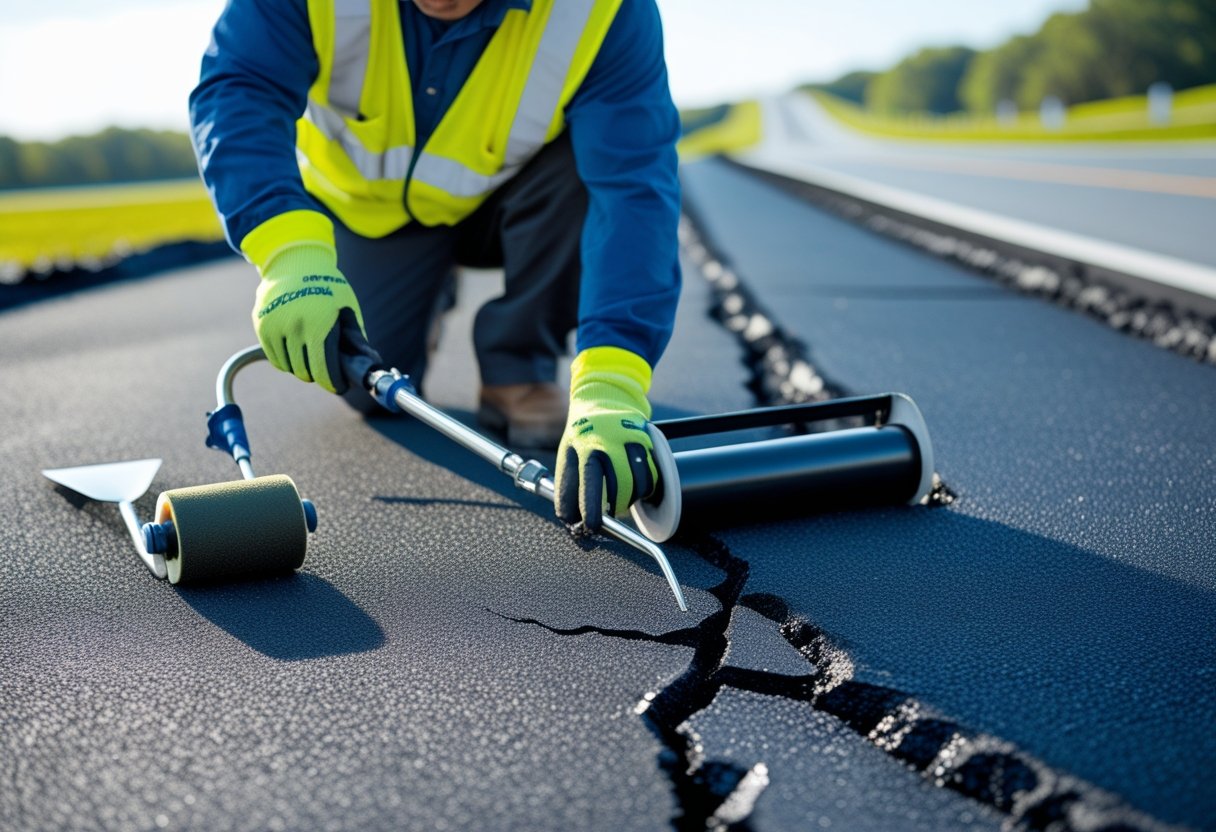
We seal cracks promptly to stop water from reaching the base. For active cracks that move with temperature, we use hot-pour crack sealants. For stable, non-working cracks, we may use crack filling material. Both prevent freeze-thaw damage and edge breakdown.
Our process: clean the crack, remove vegetation, dry the area, and apply the proper sealant to the right depth. Routine crack sealing on an asphalt maintenance schedule prevents larger failures and reduces pothole formation.
We track treated cracks in our inspection reports and plan follow-up work as needed. Timely crack sealing is one of the most cost-effective preventive maintenance steps for any asphalt driveway or parking area.
Prompt Pothole Repair and Surface Patching
We repair potholes quickly to avoid larger structural damage. Short-term patching works, but we prefer full-depth patching where base damage exists. Proper repair starts with removing loose material, cleaning, compacting, and applying hot or cold mix correctly.
For emergency fixes, a cold patch is acceptable, but we schedule a permanent hot mix patch when weather allows. Surface patching also addresses alligator cracking areas by removing failed asphalt and replacing it with compacted layers.
We log each repair in our asphalt maintenance schedule and inspect patched areas during later routine maintenance. Prompt pothole repair reduces liability and extends pavement life.
Supplementary Strategies to Maximize Asphalt Life
We focus on practical steps that cut water damage, remove stains, reduce wear, and make professional help more effective. Each tactic ties back to faster repairs, longer life, and safer commercial parking lots.
Proper Drainage and Water Management
We design slopes and drains so water never pools on the asphalt surface. A 1-2% slope toward catch basins or guttering moves runoff away from hot mix asphalt and prevents water from entering base layers.
We inspect drains and gutters quarterly and clear debris after storms. Clogged drains cause standing water, which softens the asphalt binder and leads to potholes and edge failure.
We seal joints and edges where asphalt meets concrete curbs or structures to stop water infiltration. Flashing, edge trimming, and applying a compatible sealant reduce freeze-thaw damage and base erosion.
We install subsurface drainage where soils drain poorly. Perforated pipe set in a gravel trench under the pavement lowers the water table and preserves skid resistance in commercial parking lots.
Cleaning, Power Washing, and Oil Stain Removal
We remove grit and debris monthly with sweepers to prevent abrasive wear and keep skid resistance. Loose material accelerates breakdown when vehicles turn or brake in parking lots.
We use pressure washing at 1,200-2,000 psi for routine cleaning of asphalt surfaces. For oil and grease, we apply a detergent or solvent designed for asphalt, agitate with a stiff brush, then rinse. Avoid hot water above manufacturer limits to protect sealcoats.
We treat fresh oil stains within 48 hours for best results. Absorbents like cat litter or commercial pads lift much of the residue before chemical cleaners. For deep oil penetration in hot mix asphalt, do a test patch to confirm the cleaner won’t damage the binder.
We document stain locations and treatments. Records help us track chronic leak sources, plan preventative measures, and budget for more invasive repairs when stains recur.
Managing Traffic Loads and Surface Wear
We map heavy vehicle paths and mark high-traffic zones in commercial parking lots to target reinforcement. Concentrated loads cause rutting and cracking in asphalt surfaces.
We recommend load limits and enforce parking layouts that spread axle loads. Installing wheel stops, designated delivery lanes, and protective mats at loading zones reduces point stresses on the pavement.
We schedule more frequent inspections where turning radii and braking create shear stress. Crack sealing and thin overlays in these areas prevent small defects from widening under repeated loads.
We choose pavement mix designs matched to traffic: dense-graded hot mix asphalt for heavy truck areas and standard mixes for passenger-car zones. Proper surface preparation before overlays ensures good bond and longer life.
The Role of Professional Maintenance Services
We hire professional asphalt maintenance teams for accurate condition assessments and technical repairs. Trained crews use industry-standard methods for crack sealing, sealcoating, and mill-and-overlay work.
We expect contractors to confirm surface preparation steps: cleaning, tack application, and proper temperature control for hot mix asphalt. Skipping prep causes poor adhesion and early failure.
We require written work scopes, material specifications, and warranties for commercial parking lot projects. This paperwork clarifies responsibilities and helps us compare bids.
We schedule periodic professional inspections and preventive maintenance contracts. Regular service reduces emergency repairs and keeps asphalt surfaces safer and more cost-effective over time.
Long-Term Planning for Asphalt Performance
We plan maintenance around weather, traffic, and visible pavement changes to keep asphalt strong and useful. Small, regular actions like sealing cracks, restriping, and addressing drainage prevent big repairs later.
Seasonal and Climate Considerations
We schedule sealcoating in late spring or summer when temperatures stay above 50°F for 48 hours. Warm temperatures let the asphalt binder flow and bond; early cold snaps can trap moisture and weaken the surface. In freeze-thaw regions, we inspect for cracks each spring because water freezes in cracks and widens them, accelerating pavement deterioration.
We adjust maintenance frequency by climate: humid, hot areas need more frequent crack sealing to slow oxidation of the binder. In cold, snowy areas we prioritize timely snow clearing and pothole repair to reduce repeated freeze-thaw damage. For residential driveways, we avoid heavy equipment in winter and store vehicles off the sealcoated surface until it cures.
Recognizing When Resurfacing or Overlay Is Needed
We look for interconnected cracks, rutting, and widespread oxidation as signs resurfacing is due. If more than 20-30% of the pavement shows fatigue cracking or if raveling exposes aggregate, an overlay or full-depth repair will extend pavement life more than patching alone. Striping that fades quickly can signal binder loss and surface oxidation.
We base decisions on pavement life stage and traffic load. Light residential driveways often get a fresh overlay every 12-20 years with regular maintenance. Busier commercial lots may need overlays every 7-12 years. We weigh cost, subbase condition, and drainage; if base failures or severe settlement exist, full-depth reconstruction is necessary rather than just an overlay.