
You rely on your asphalt every day, and weather does a lot more to it than you might think. We will show what elements like sun, water, and cold do to asphalt and how those changes affect safety, cost, and lifespan.
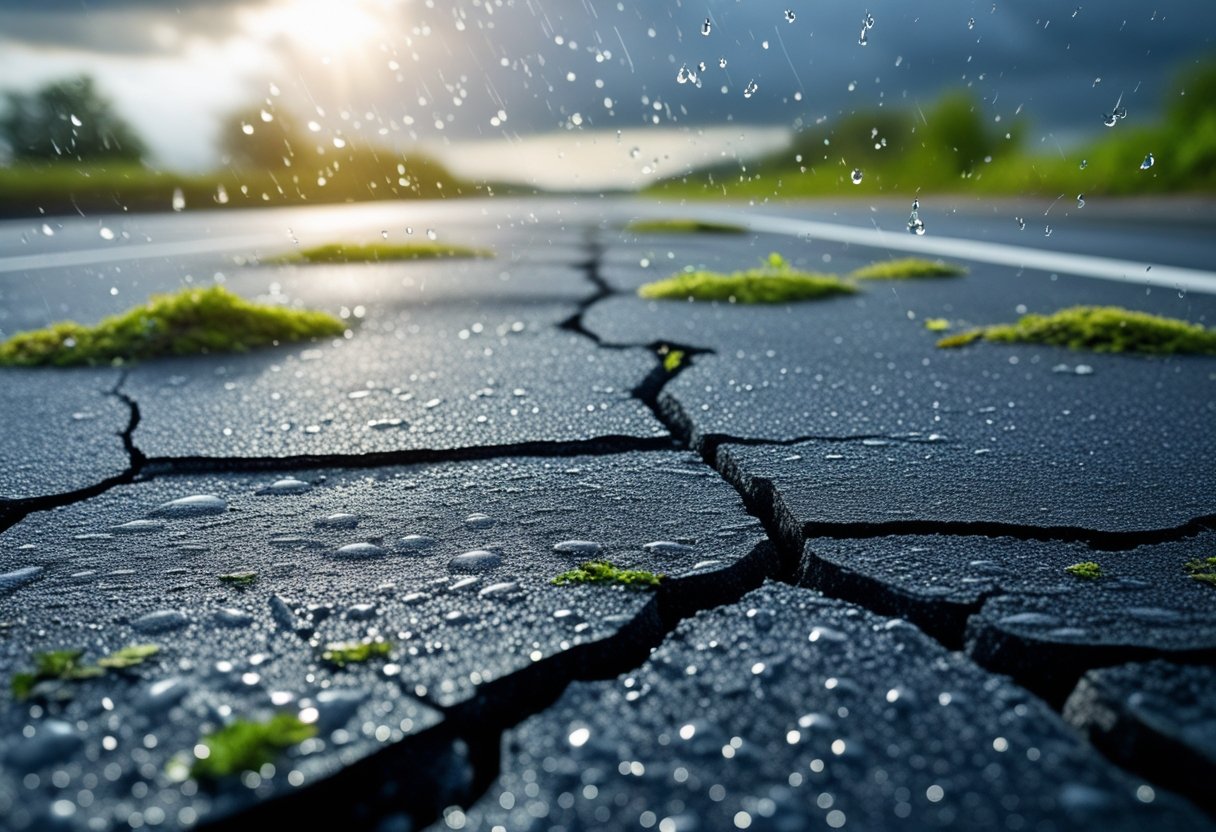
You can protect your pavement if you know how weather damages it and what to do about it. We will explain the materials in asphalt, how heat, freeze-thaw cycles, and moisture break it down, common kinds of damage you’ll see, and practical steps you can take to slow the process.
We keep this simple and useful so you can spot problems early and choose the right fixes. Follow along to learn clear actions that save you money and keep surfaces safer.
Core Elements of Asphalt and Weather Susceptibility
We focus on the mix of materials in asphalt, how weather attacks those materials, and why climate changes performance. Knowing what each part does helps us pick the right materials and maintenance for roads, driveways, and parking lots.
Asphalt Composition and Structure
Asphalt is a mix of asphalt binder and aggregates like sand, gravel, and crushed minerals. The binder is a thick, sticky petroleum product that holds aggregates together. Aggregates provide strength and resist wear on road surfaces, residential driveways, and parking lots.
Grading and size of aggregates matter. Fine sand fills gaps, while larger gravel carries loads. The proportion of binder to aggregate affects flexibility. Too much binder makes surfaces soft in heat. Too little binder makes them brittle in cold.
Mixture design also includes void content and compaction. Higher voids let air and water in, increasing risk of oxidation and moisture damage. Proper mixing and paving projects ensure consistent density to extend pavement life.
Fundamental Weathering Mechanisms
Weather acts mainly through oxidation, thermal stress, and moisture damage. Oxidation makes the binder hard and brittle over time. Heat speeds oxidation and softens binder during hot days, causing rutting or stickiness.
Cold brings contraction and cracking. Repeated freeze-thaw cycles let water enter cracks, expand, and break aggregates loose. Moisture weakens the bond between binder and aggregates, a problem for asphalt mixtures in poorly drained areas.
UV radiation from the sun degrades binder chemistry, speeding breakdown. Chemical additives and proper mix design slow these effects. Sealcoats and timely repairs reduce water ingress and slow oxidation on driveways and road surfaces.
Climate and Regional Variations
Hot, arid regions drive hardening by intense heat and UV exposure. We select binders with higher temperature susceptibility for those areas to resist rutting on roads and parking lots. In desert climates, aggregates with low porosity work better to reduce dust and loss.
Cold climates need flexible binders to resist low-temperature cracking and mixes that shed water quickly. In freeze-thaw zones, we use denser mixes and better drainage to limit moisture damage on paving projects and asphalt surfaces.
Coastal areas face salt and higher humidity, which accelerate moisture-related stripping of binder from aggregates. We choose corrosion-resistant materials and include anti-stripping agents in the mix for coastal roads and driveways.
How Weathering Impacts Asphalt Performance
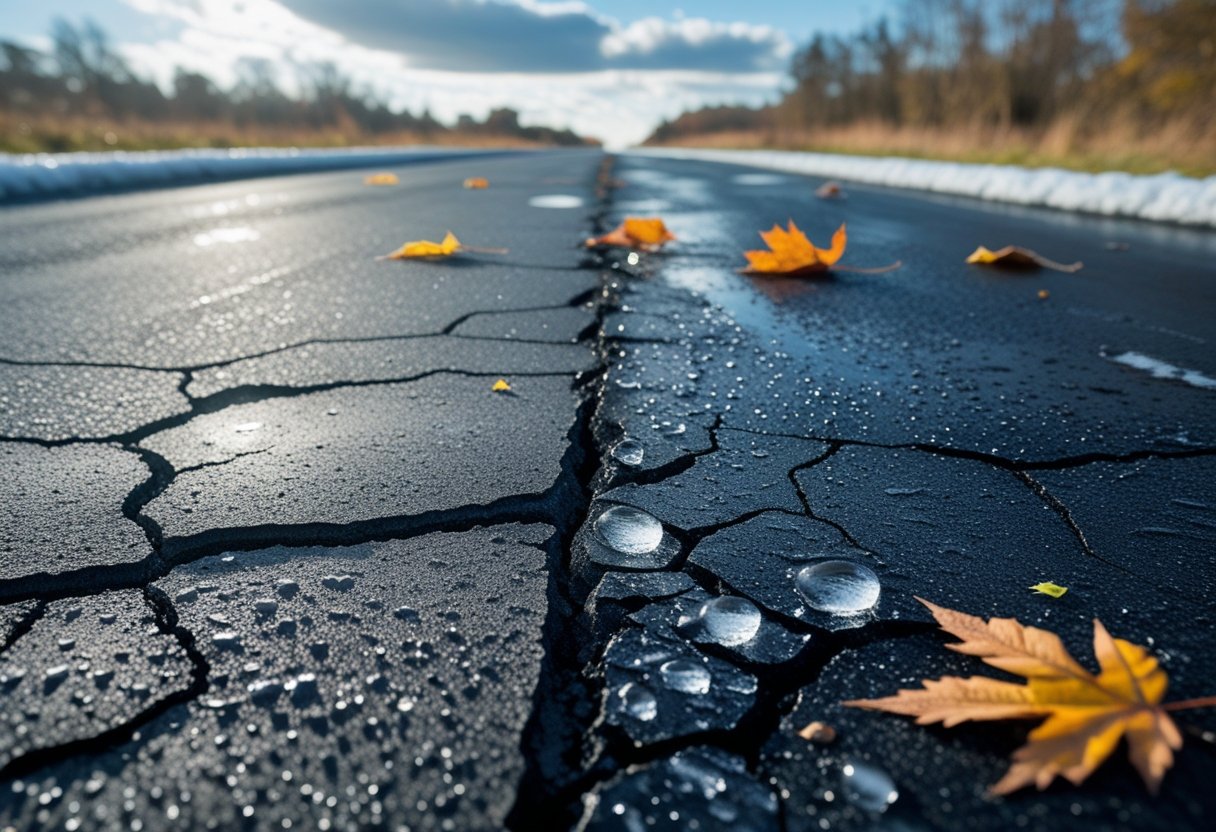
We identify specific ways weather wears on asphalt and how those forces change pavement strength, surface texture, and lifespan. The main drivers are temperature swings, water infiltration, freeze-thaw action, and sun plus wind exposure.
Effects of Temperature Extremes on Asphalt
Extreme temperatures change asphalt stiffness and make it more likely to fail. High heat softens the asphalt binder, which increases rutting and surface deformation under traffic. We see wheel ruts form faster on hot days, especially where heavy vehicles stop and accelerate.
Cold and freezing temperatures make the binder brittle. That brittleness raises the risk of cracking when traffic or thermal stresses occur. Repeated temperature shifts between hot and cold accelerate fatigue cracking and alligator cracking patterns.
Rapid temperature changes cause thermal contraction and expansion. Those shifts open micro-cracks and let moisture enter, which worsens damage. Proper mix design and adequate binder content reduce sensitivity to extremes.
Moisture, Rain, and Water Penetration
Rain and standing water push into asphalt micro-cracks and along the pavement layers. Water infiltration weakens the base and subbase, reducing load-bearing capacity and leading to potholes and asphalt erosion.
Poor drainage concentrates water under the surface. We recommend functioning drainage systems and surface grades that shed water quickly to prevent prolonged saturation and water damage.
Water also strips the asphalt binder from aggregate over time. This loss of bond causes raveling and a rougher surface. Regular sealing and prompt crack repair slow water penetration and extend pavement life.
Freeze-Thaw Cycles and Asphalt Deterioration
Freeze-thaw cycles cause trapped water to expand and contract inside pavement voids. Each freeze can create small fractures; each thaw lets water move deeper. Over several cycles, we see widening cracks, delamination, and potholes.
Snow and ice increase freeze-thaw frequency and add weight from plowing. Salts and deicers speed chemical damage and binder degradation. We must clear snow properly and avoid ponding to reduce cycle impacts.
Managing the freeze-thaw effect requires good drainage, timely crack sealing, and choosing mixes with resistance to moisture and low-temperature cracking. These steps lower the risk of severe asphalt deterioration.
Wind, Sun, and UV Exposure
UV rays from the sun oxidize the asphalt binder, making it hard and brittle over time. We notice surface chalking, reduced flexibility, and an uptick in temperature-related cracking after prolonged UV exposure.
Wind accelerates drying and carries abrasive particles that erode the surface. In exposed areas, we see faster loss of fines and surface texture, which can reduce skid resistance.
Combining UV protection (like sealcoats) with routine surface maintenance helps slow binder aging. Vegetation control and windbreaks can reduce wind-driven abrasion and debris accumulation.
Common Forms of Asphalt Damage Caused by the Elements
We see three main ways weather harms asphalt: surface cracks and rutting from heat and traffic, potholes from freeze-thaw cycles, and harm from de-icing salts and snow removal. Each type needs specific repair steps to stop further asphalt deterioration.
Cracking, Rutting, and Surface Failures
Cracks form when asphalt binder dries and traffic stresses the pavement. Alligator cracking appears as interconnected small cracks and signals base failure. Small, isolated cracks can often be managed with crack sealing or crack filling to keep water out and delay larger repairs.
Rutting is a permanent groove in wheel paths caused by heavy loads and softened asphalt during hot weather. Rutting changes surface drainage and raises skid risk. We recommend milling and asphalt paving or overlay when ruts exceed design depths.
Surface failures include raveling and binder loss from UV oxidation and oil/gas spills. These reduce skid resistance and speed asphalt erosion. Timely surface treatments like sealcoats or localized asphalt repair preserve the asphalt surface and extend life.
Development of Potholes
Potholes start when water enters cracks, weakens the base, and freezing expands trapped water. Repeated freeze-thaw cycles cause chunks of asphalt to break free, forming potholes. We watch for potholes near cracks and low spots where water pools.
Cold patch is a temporary fix but allows traffic to continue until we can do permanent repairs. Permanent repairs require cutting to sound material, removing damaged base, and placing compacted hot mix asphalt. Proper drainage and asphalt paving techniques prevent potholes from returning.
Effect of De-Icing Chemicals and Snow Removal
De-icing salts like sodium chloride and calcium chloride speed freeze-thaw damage by drawing water into pavement and accelerating binder breakdown. Salt crystals and brine increase asphalt deterioration and promote potholes and edge cracking.
Mechanical snow removal can gouge and scrape the asphalt surface if crews use metal blades or remove too much surface material. Repeated scraping leads to asphalt erosion and exposes aggregate. We advise using rubber-blade plows and careful snow clearing near curbs and manholes.
When chemicals or plowing cause damage, timely asphalt repair and surface treatments reduce long-term costs. Regular inspection after winter helps us spot cracks and potholes early and apply crack sealing, patching, or paving before problems grow.
Best Practices for Preserving Asphalt Against Weathering
We focus on practical steps that extend pavement life: routine maintenance, protective coatings, timely repairs, good drainage, and selecting durable materials. Each step targets common failure points like UV damage, water infiltration, and binder oxidation.
Effective Asphalt Maintenance Strategies
We inspect pavements at least twice a year, after winter and after heavy storms. Regular checks spot surface raveling, pothole formation, and early cracks before they grow.
We schedule cleaning to remove debris, oil, and vegetation. Power sweeping and degreasing keep the asphalt binder working properly and improve sealcoat adhesion.
We use a maintenance calendar that lists sealcoating, crack filling, line repainting, and inspections. Consistent work prevents small issues from turning into paving projects that cost far more.
We track traffic loads and adjust maintenance frequency for high-use areas. Heavier loads speed oxidation and cracking, so we inspect commercial drives and loading zones more often.
Role of Sealcoating and Protective Layers
We apply sealcoat every 2-4 years depending on exposure and traffic. Quality sealcoats protect the asphalt binder from UV, water, and oils, slowing oxidation and loss of flexibility.
We choose asphalt-based or coal-tar emulsion sealcoats matched to local regulations. A proper application requires a clean, dry surface and temperatures above 50°F (10°C) for 24-48 hours after application.
We consider supplemental protective layers like polymer-modified tack coats for overlays. These improve bond strength in paving projects and reduce future delamination.
We document product type, batch, and application date. That record helps us plan reapplication and compare performance across different sealcoat options.
Importance of Timely Repairs and Drainage
We fill cracks and seal joints promptly to stop water from reaching the base layer. Crack filling and crack sealing use different materials; we use hot rubberized sealant for moving cracks and cold pour for minor, non-moving cracks.
We repair potholes using a compacted, tack-coated patch or full-depth replacement when base failure exists. Proper asphalt repair restores load transfer and prevents larger failures.
We design and maintain proper drainage to keep water off the pavement. Grading, gutters, sloped edges, and functioning inlets prevent standing water that accelerates freeze-thaw damage.
We inspect drains and clean them seasonally. Clogged drains trap water on the surface and in the subbase, which undermines even high-quality asphalt.
Choosing Materials for Weather-Resilient Asphalt
We specify high-quality asphalt mixes with polymer-modified binders in climates with wide temperature swings. These binders resist cracking in cold and rutting in heat.
We select aggregate gradation and crushed stone that improve compaction and interlock. Good aggregate reduces permeability and supports heavy loads without premature deformation.
We use additives like anti-stripping agents to improve adhesion between aggregate and asphalt binder. This reduces water-induced stripping and extends pavement life.
We coordinate with contractors on mix design, compaction targets, and paving temperatures. Tight quality control during paving projects yields a more weather-resilient surface and lowers long-term maintenance needs.