
You can spot serious asphalt problems before cracks appear by watching for fading color on the surface. Faded pavement often means the binder is breaking down and the surface is losing strength, so acting early can save time and money. We will show what fading looks like, what types of deterioration link to it, and what to do next.
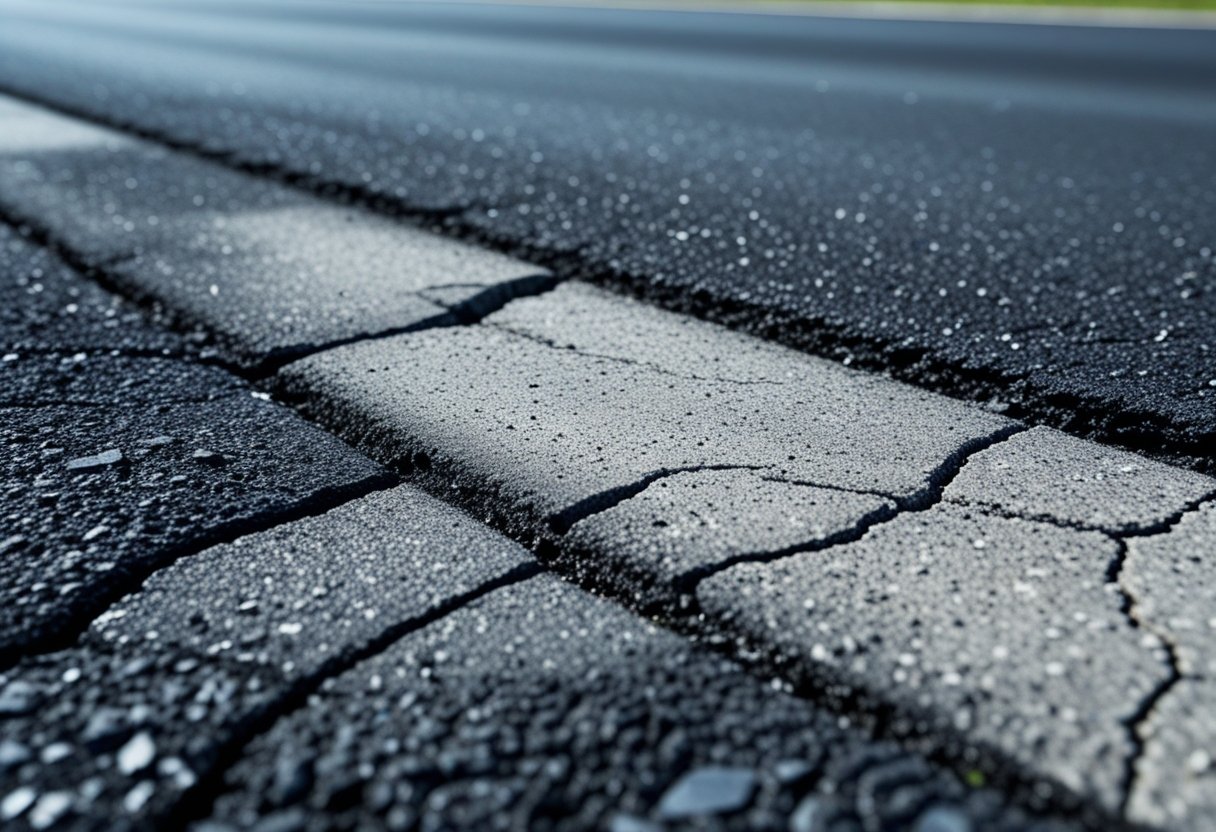
When you notice dull, gray, or powdery patches, you may be seeing the first signs of oxidation, loss of fines, or surface abrasion. We will break down common causes and give clear options for maintenance and repair so you can decide the right step for your pavement.
The Meaning of Fading Color: Early Visual Signals of Surface Deterioration
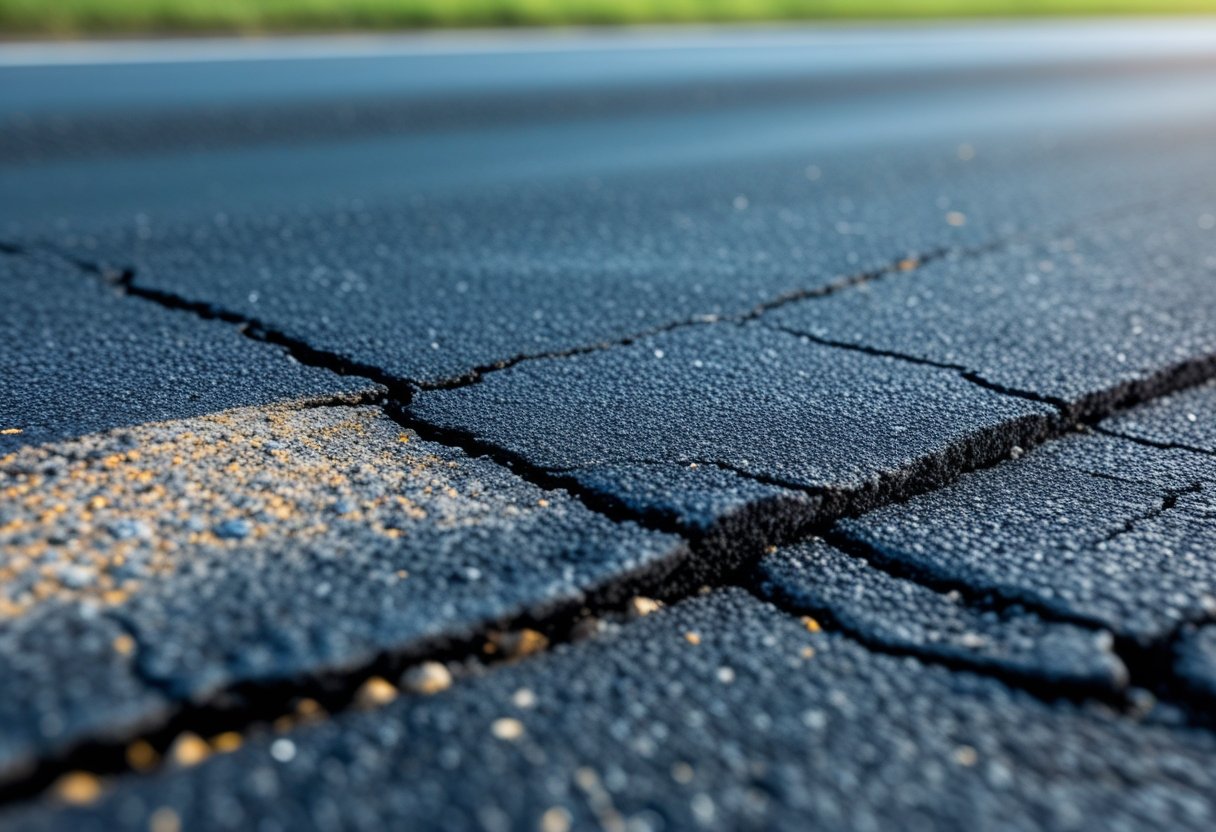
Fading color on asphalt surfaces often points to chemical and physical changes in the pavement. We can read those changes as early warnings of binder loss, UV damage, and increased brittleness that lead to bigger problems if ignored.
How UV Exposure and Oxidation Cause Fading
Sunlight breaks down the asphalt binder through UV radiation and heat. UV photons split molecular bonds in the binder, a process called photo-oxidation, which changes the dark, flexible binder into a lighter, chalky material. We see this as a gray or brown fade across asphalt pavement, especially on horizontal areas with direct sun.
Oxidation also occurs when oxygen reacts with binder molecules over time. Warmer climates speed this chemistry. The combined effect reduces binder elasticity, so the surface becomes less able to absorb traffic stress and more prone to microcracking.
Loss of Binding Agents and Surface Brittleness
Fading usually means the binder that holds aggregate is weakening. As the binder thins, aggregate particles lose adhesion and the surface feels rougher and more granular. We notice fine loose sand-like material on the pavement, a sign that binding agents have migrated or evaporated.
When binder content drops, the surface stiffens and becomes brittle. Brittle asphalt cracks under loads it once tolerated. These small cracks let water enter, which accelerates deeper deterioration and pothole formation.
Fading vs. Other Asphalt Discoloration
Not all color changes mean the same thing. Oil spills and tire rubber create dark stains, not the uniform lightening from UV and oxidation. Bleached or white patches often come from chemical spills or salt, while rust-colored streaks usually indicate metallic staining.
We can tell fading by its even, chalky look and loose granular surface. Mapping where fading appears helps pinpoint causes: sun-exposed lanes suggest UV damage, whereas shaded, patchy fading points to traffic or chemical issues.
Common Types of Surface Deterioration Linked to Fading Color
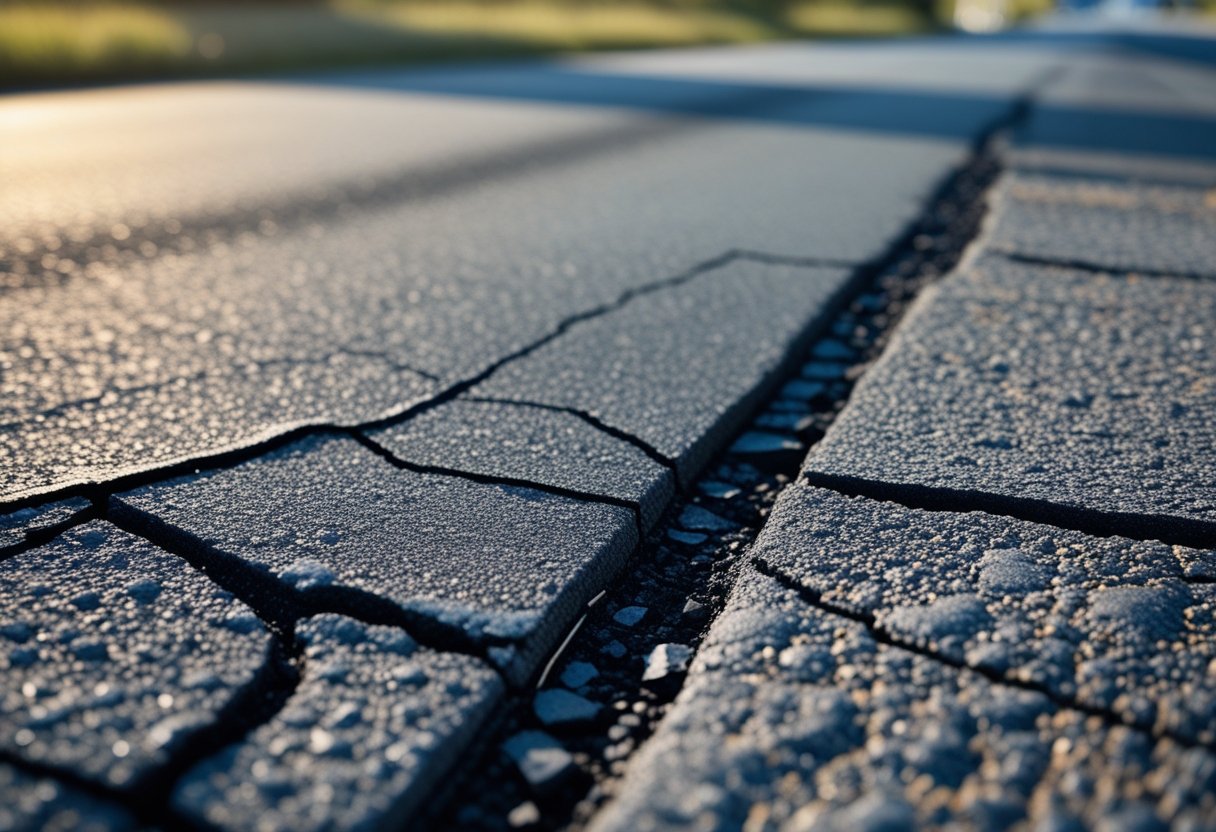
We focus on the visible signs that fade in asphalt and what each means for pavement health. These signs include distinct cracking patterns, loss of binder that loosens aggregate, sinkage that forms potholes, and weakening at the pavement edge.
Cracking Patterns: From Hairline to Alligator Cracking
We see cracking start small and grow more serious. Hairline cracks are thin, typically less than 1/8 inch wide. They often run across the pavement surface and point to binder oxidation. Faded color at the crack line means the asphalt is losing oils and becomes brittle.
Alligator cracking looks like a patch of interconnecting cracks, resembling a reptile hide. This pattern shows structural failure in the asphalt layer, often from repeated heavy loads or a weak base. When color fades around alligator cracks, the surface has lost flexibility and will shed aggregate faster. We inspect crack length, width, and pattern to decide repair: sealing hairline cracks, patching or milling areas with alligator cracking, and addressing underlying base issues when needed.
Surface Raveling and Loose Aggregate
Raveling appears as gradual loss of fines and small stones from the surface. Faded, lighter patches often show where the binder has oxidized and no longer binds particles. We notice rough texture and exposure of coarse aggregate when raveling advances.
Loose aggregate collects in wheel paths and at drain inlets. This creates safety hazards and speeds wear. Causes include poor compaction, insufficient binder, or long-term UV exposure that fades color and dries the mix. We monitor the rate of aggregate loss to choose preventive sealcoating or deeper repairs like overlay or surface reclamation.
Pothole Formation and Depressions
Potholes form where water and traffic exploit weakened or missing material. Fading color around potholes signals binder loss and reduced cohesion. We find potholes often begin as pothole-trap depressions or areas of alligator cracking that let moisture reach the base.
Depressions also include low spots that hold water and accelerate binder breakdown. Repeated freeze-thaw cycles enlarge these defects. We repair potholes by removing unstable material and installing compacted patch material. For larger depressions, we evaluate whether milling and resurfacing or full-depth reconstruction is necessary.
Edge Cracking and Crumbling
Edge cracks start near the shoulder and run parallel to the pavement. Faded color at the edge points to ultraviolet exposure and weak binder near the pavement-shoulder interface. We see these cracks where the asphalt lacks lateral support or where drainage erodes the base.
Crumbling edges occur when pieces of asphalt break away under traffic. Loose aggregate and ragged edges follow faded, brittle binder. We stabilize edges by improving drainage, regrading the shoulder, and applying edge sealing or localized reconstruction to restore support and prevent further loss.
Underlying Causes of Asphalt Surface Deterioration
We focus on the main drivers that fade and weaken asphalt so owners can spot problems early. Knowing how water, cold, traffic, and construction interact helps us pick the right fixes.
Water Infiltration and Drainage Issues
Water infiltration is a top cause of surface failure. When moisture gets into cracks or the pavement base, it washes fines from the base and reduces support. That leads to rutting, potholes, and faded color as the asphalt binder breaks down.
Poor drainage and standing water speed the damage. Surface ponding near curbs or low spots keeps asphalt wet and encourages deeper moisture infiltration. We check slopes, gutters, and inlets to find where water pools.
We use drainage solutions like regrading, installing catch basins, and edge drains to lower moisture levels. Sealing cracks and maintaining joints also limits water entry and extends surface life.
Freeze-Thaw Cycles and Temperature Extremes
Freeze-thaw cycles force trapped water to expand and contract, breaking apart the asphalt matrix. Each freeze pushes water into cracks and forces the binder and aggregates apart. Repeated cycles create spalling, surface flaking, and loss of color.
Temperature extremes stiffen or soften the asphalt binder. Hot summers make binder flow and bleed, dulling the surface and creating ruts under loads. Cold winters make the binder brittle, causing cracking and surface crumbling.
We target areas prone to freeze-thaw by improving drainage and using frost-resistant base materials. Choosing binders rated for local temperature ranges reduces cracking from thermal stress.
Heavy Vehicle Traffic and Loading
Heavy vehicle traffic increases stress on pavement layers. Trucks and buses apply concentrated loads that compress the base and deform the asphalt surface. Over time this causes permanent rutting, fatigue cracking, and accelerated binder oxidation that fades color.
Traffic loading intensity and frequency matter. Routes with frequent heavy hauling or delivery trucks need stronger mix designs and thicker pavement. We assess axle loads, traffic counts, and turning movements when planning repairs.
We often reinforce high-traffic areas with modified asphalt binder, higher-quality aggregates, and increased pavement thickness. Regular pavement maintenance like patching and overlays helps restore surface strength.
Construction Quality and Material Factors
Construction quality directly affects long-term performance. Poor compaction, incorrect layer thickness, or uneven grading leave voids and weak spots where moisture and loads concentrate. These defects show up as early color loss and surface failure.
Mix designs and material selection play a big role. Low-grade aggregates, improperly aged asphalt binder, or wrong binder grade for climate reduce durability. Asphalt paving executed at wrong temperatures can cause weak bonds between layers.
We insist on quality control: proper compaction, verified mix temperature, and tested binder and aggregates. When mix designs match traffic and climate needs, the pavement resists moisture infiltration, freeze damage, and heavy loading much better.
Proactive Asphalt Maintenance, Repair, and Longevity Strategies
We focus on actions that protect asphalt color, slow surface breakdown, and avoid costly repairs. Regular upkeep, timely fixes, and good drainage extend pavement life and keep driveways safe.
Sealcoating and Surface Treatments
We apply sealcoat every 2-4 years on driveways and parking lots to block UV rays and water. A good sealcoat uses coal-tar or asphalt-based products; both fill tiny voids and restore dark color. Clean the surface, repair cracks and potholes, then apply sealcoat at recommended film thickness for best protection.
Surface treatments also include chip seal or slurry seal for larger areas. These treatments add texture and strengthen thin pavements. For preventive maintenance, we choose products based on pavement age, traffic load, and climate to protect property value and reduce future asphalt repairs.
Crack Sealing and Filling Techniques
We prioritize crack sealing on active cracks wider than 1/8 inch to stop water entry and edge break. For narrow cracks, hot-pour rubberized sealants bond better and flex with temperature changes. We rout and clean wider cracks before filling to ensure adhesion.
For surface-level cracks and spiderweb patterns, we use cold-applied fillers as a temporary fix until full repair. Regular crack sealing is a low-cost, proactive maintenance step that limits pothole formation and extends the life of an asphalt driveway.
Improving Drainage and Preventing Water Pooling
We inspect slopes, gutters, and downspouts to keep water from pooling on asphalt. Standing water accelerates color fading, weakens the binder, and causes potholes. Regrading the subgrade, adding catch basins, or adjusting curb flow fixes chronic pooling.
Regular drainage maintenance includes clearing debris from drains and ensuring surface runoff flows away from the pavement. For long-term solutions, we recommend drainage design changes like installing French drains or improving surface pitch to meet a 1-2% slope away from structures.
When to Seek Professional Assessment
We call in professionals when cracks are extensive, raveling appears, or multiple potholes form. An expert will evaluate structural issues, subbase failure, and needed asphalt repairs rather than just surface fixes. They can perform core tests, recommend mill-and-overlay or full-depth reclamation, and estimate costs.
Seek assessment if surface treatments fail within a year or if the pavement shows longitudinal cracks and rutting. Professional assessment protects property value and prevents misapplied fixes that waste money.