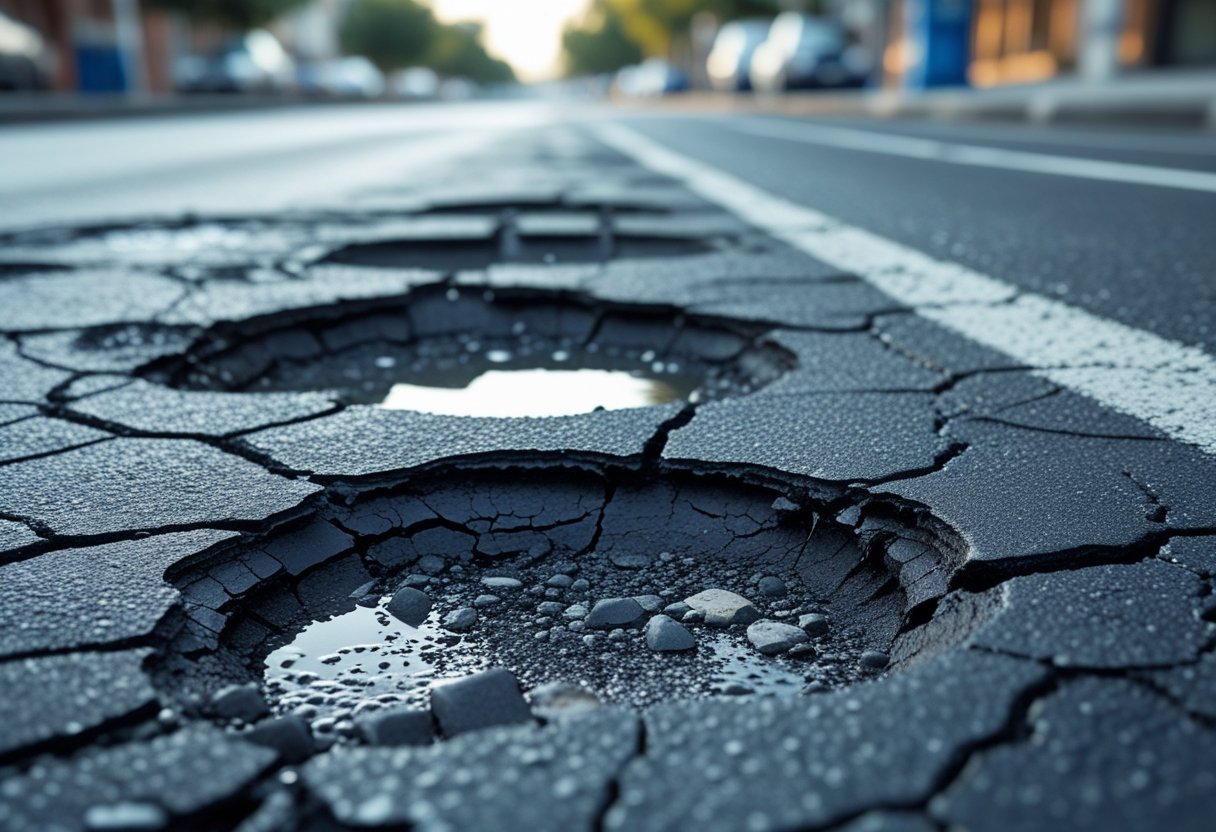
You notice a pothole and think it’s just a nuisance, but it often signals bigger problems under the surface. We can spot the signs now and act before damage worsens, saving time and money. This article shows what to watch for and why those hollow-sounding bumps mean your asphalt may be failing.
We will walk through common warning signs, the main causes behind them, and practical fixes you can use or ask a pro about. By the end, you’ll know how to tell if a quick patch will do or if the pavement needs a deeper repair.
Why Potholes Matter: Early Warning Signs of Asphalt Failure
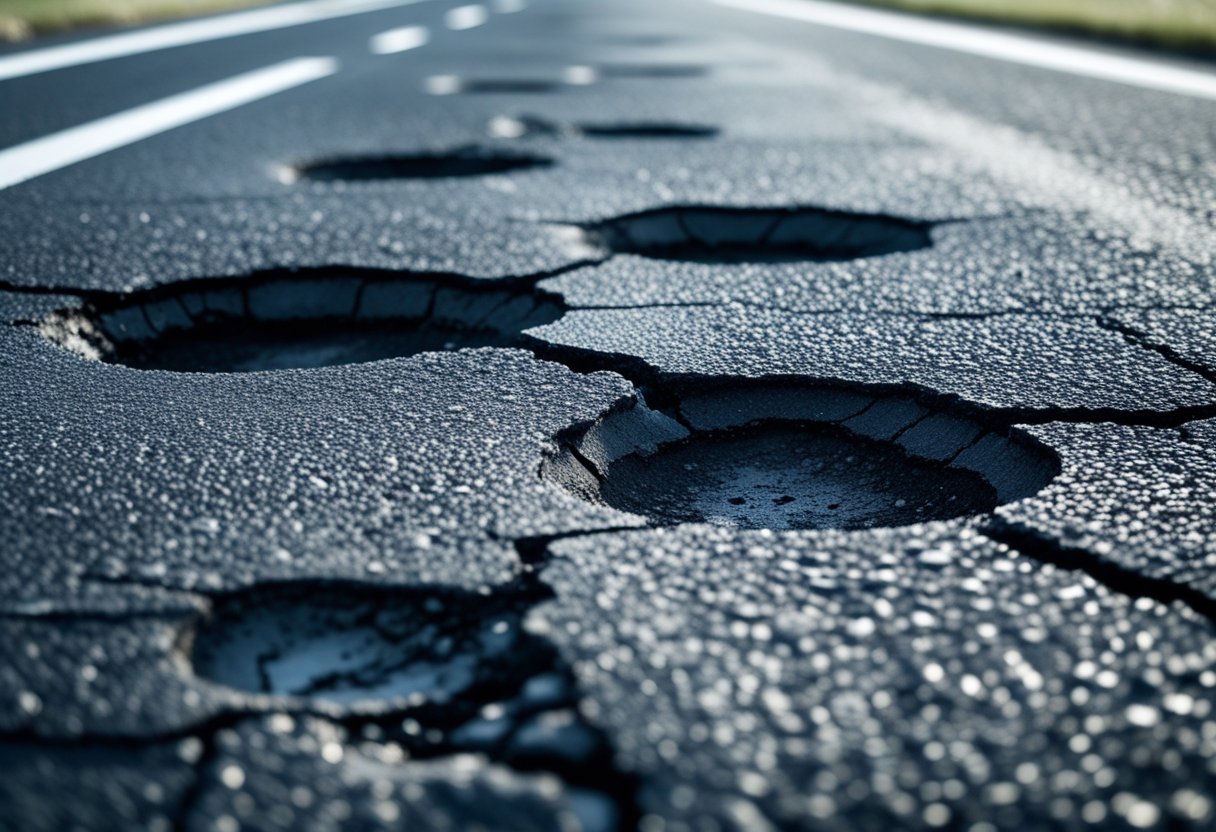
Potholes signal weak spots in asphalt that can spread fast. They show where water, traffic, and age are breaking the pavement down.
The Role of Potholes in Asphalt Deterioration
We see potholes as active agents that speed up asphalt failure. When a small crack lets water reach the base, freeze-thaw cycles and heavy traffic break the asphalt surface into loose fragments. Those fragments get pushed out, enlarging the void and turning a crack into a pothole.
Once a pothole forms, it concentrates stress around its edges. Traffic loads hit the remaining asphalt unevenly, causing more cracking and edge collapse. Repeated weight from trucks and buses makes the underlying layers compress and rut, which undermines adjacent pavement and increases repair difficulty.
Early repair of cracks and small depressions prevents potholes from becoming larger, deeper, and more expensive to fix. We monitor pothole growth to prioritize maintenance before the asphalt pavement needs full-depth reconstruction.
The Cost and Consequences of Ignoring Potholes
Ignoring potholes raises maintenance costs and risks. A small repair might cost a few hundred dollars, while full-depth asphalt pavement reconstruction can cost thousands per lane mile. Municipal budgets balloon when we wait for repeated patching instead of fixing root causes.
Potholes also lead to indirect costs. Drivers pay more for tire and suspension repairs. Public services slow due to vehicle damage and detours. Poor pavement conditions can reduce property values and hurt local businesses that rely on smooth access.
Timely pothole repair extends pavement life and spreads maintenance costs more evenly over time. We prioritize fixes where heavy traffic loads and water infiltration converge to get the best return on our maintenance dollars.
How Potholes Form: Underlying Causes
Potholes form from a mix of water, load, and weak materials. Water enters through surface cracks or poor drainage and softens the base or subgrade. When vehicles, especially heavy trucks, travel over the softened spot, the surface looses and fragments.
Temperature swings make the process worse. Freeze-thaw cycles expand trapped water and push apart asphalt grains. Poor initial construction, thin asphalt layers, or low-quality aggregates speed up failure. Inadequate compaction during paving leaves voids that let water and air accelerate decay.
We inspect drainage, asphalt thickness, and base condition to find the most likely cause. Fixes vary by cause: improving drainage, strengthening the base, or using higher-quality asphalt mixes to resist deformation and water damage.
Potholes and Vehicle & Pedestrian Safety
Potholes pose direct safety hazards for drivers and pedestrians. Vehicles can suffer tire punctures, bent rims, and suspension damage from hitting a pothole at speed. Sudden swerving to avoid a pothole increases crash risk, especially in heavy traffic.
Pedestrians and cyclists face tripping and falling hazards near potholes. Water-filled potholes hide depth and edges, increasing the chance of slips and ankle injuries. Poorly lit or high-speed areas make potholes more dangerous at night.
We map potholes in high-use corridors and near schools to reduce injury risk. Rapid pothole repair and targeted signage at known spots help prevent crashes and protect vulnerable road users.
Common Signs Your Asphalt Is Failing
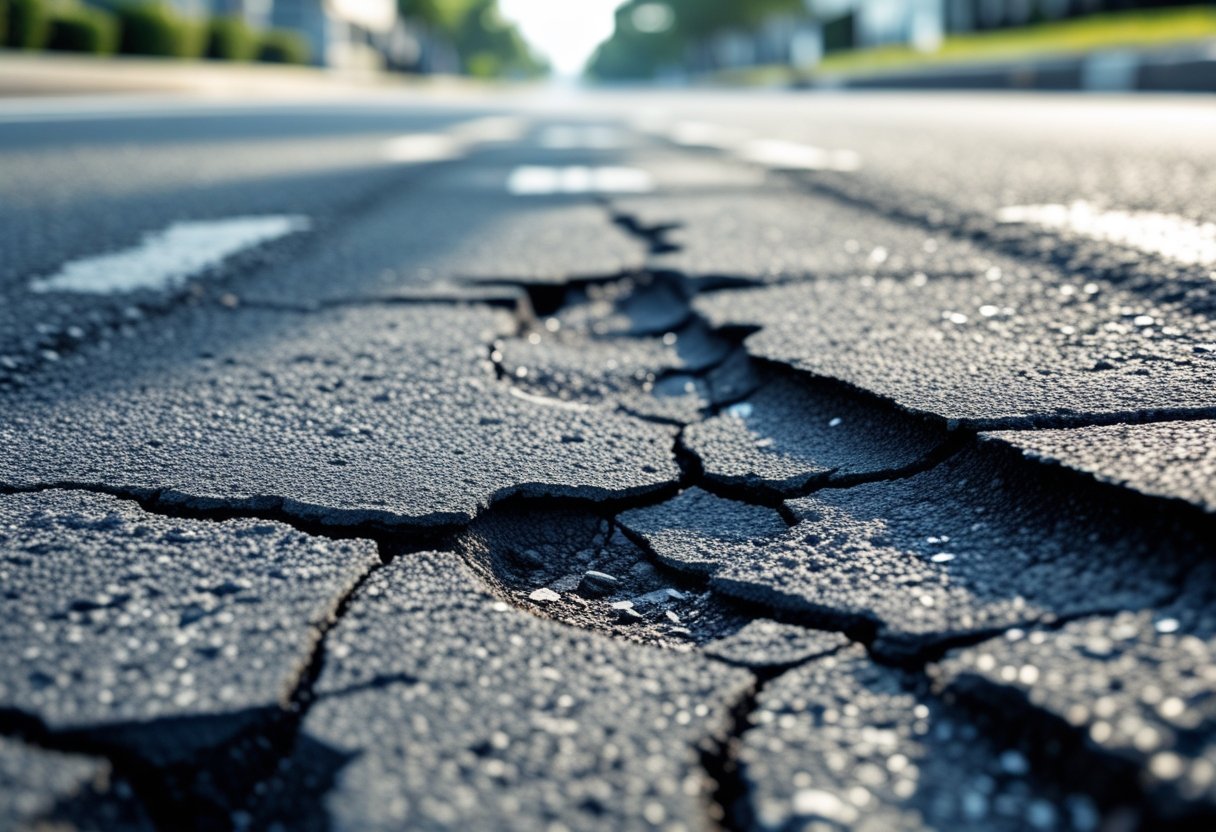
We point out clear, visible problems that tell us asphalt needs repair. Look for cracks, wear, water pooling, and edge damage; each needs a specific fix to stop potholes.
Cracks: Alligator, Longitudinal, and Other Types
We check cracks first because they let water reach the base and cause big damage. Alligator cracking looks like a chain of small, interconnected cracks and means the base or subgrade is failing. Longitudinal cracks run parallel to the road or driveway and often come from poor joint compaction or shrinkage. Single, isolated cracks usually come from shrinkage or temperature changes and can be handled with focused crack sealing. Wider gaps or spreading cracks need more than sealant; they need patching or mill-and-overlay. We note that untreated cracks let water penetrate, which speeds up oxidation and asphalt deterioration.
Surface Wear and Fading
We look for surface wear like faded color, a dry chalky texture, or loss of binder. UV damage and oxidation strip oils from the asphalt, making it brittle and prone to cracking. Surface raveling happens when aggregate loosens and falls away, leaving a pitted surface that worsens under traffic. Early-stage fading can be slowed with sealcoating that restores binder and protects against UV. If the surface has lost much binder and shows exposed stones, we plan for resurfacing rather than just a cosmetic fix.
Water Pooling and Drainage Issues
We watch for standing water on asphalt after rain or visible low spots where water collects. Water pooling soaks into cracks and accelerates base failure, which leads to potholes. Poor drainage often comes from settled subgrade, clogged drains, or improper slope during installation. We test drainage by observing flow after storms and noting areas that stay wet more than 24 hours. Fixes range from regrading to installing drains or addressing subgrade compaction; stopping standing water prevents further asphalt damage.
Raveling and Edge Crumbling
We inspect edges and wheel paths for crumbling and loose aggregate. Raveling begins when the binder breaks down and stones come loose; it often starts at the surface and spreads inward. Edge crumbling usually points to poor support at the perimeter, like lack of proper compaction or failing curbs. These conditions let traffic strip material and widen into potholes. We treat minor raveling with patching and sealcoating, but extensive edge loss requires rebuilding the edge and improving base support to prevent repeat damage.
Primary Causes of Asphalt Failure and Deterioration
We list the main problems that make asphalt break down: water getting under the pavement, weak base layers, wrong asphalt mix or thickness, and heavy traffic stress. Each cause creates clear signs like potholes, cracks, and raveling that tell us what repair is needed.
Water Infiltration and Freeze-Thaw Cycles
Water under asphalt causes more damage than surface wear. When drainage is poor or there are cracks, water seeps into the pavement and reaches the subgrade. Standing water and clogged drainage systems let moisture sit under the asphalt and weaken the base.
In cold climates, freeze-thaw cycles magnify the problem. Water expands when it freezes and creates voids or separates layers. When it thaws, the pavement loses support and collapses. Repeated cycles cause potholes, alligator/fatigue cracking, and edge break.
We look for signs such as spongy spots, map cracking, and pooled water after rain. Fixes include sealing cracks, restoring drainage, and using denser hot mix asphalt or proper compaction to limit water infiltration.
Poor Subgrade Preparation and Compaction
A strong subgrade supports the asphalt layer. If the subgrade is soft, uneven, or poorly compacted, the pavement bends and cracks under load. Bad subgrade work is a common cause of premature failure and is often missed during quick or low-budget projects.
Problems include contaminated fill, inadequate depth of granular base, and uneven compaction. These issues lead to rutting, potholes, and fatigue cracking as the asphalt loses uniform support. Signs of a bad asphalt job often appear soon after installation.
We fix subgrade failures by removing bad material, improving drainage, and compacting layers to specified densities. Proper geotextiles or a thicker granular base can prevent future settlement and extend pavement life.
Inadequate Asphalt Thickness and Mix Quality
Asphalt needs proper thickness and the right hot mix asphalt design to resist traffic and weather. Too-thin pavements or mixes with low-quality binder fail quickly. A weak binder or wrong aggregate gradation reduces cohesion and increases raveling.
Contractor errors, lack of quality control, or cost-cutting produce signs of a bad asphalt job: patching, surface flushing, and accelerated cracking. Fatigue cracking appears when repeated loads exceed the strength of a thin or poorly mixed layer.
We specify pavement thickness based on anticipated traffic, use hot mix asphalt with the correct binder grade, and require compaction targets. Core testing and mix certification help catch mix quality issues before large areas fail.
Impact of Heavy Loads and Traffic
Heavy vehicles concentrate stress on small pavement areas. Trucks, delivery vehicles, and overloaded equipment speed up fatigue cracking and rutting. Repeated axle loads crush the aggregate and break the binder, leading to potholes.
Traffic frequency and vehicle weight determine design needs. Roads built for light use will quickly fail under heavy use. We can spot early failure near wheel paths, intersections, and delivery zones.
We reduce damage by designing thicker pavements for heavy traffic, enforcing weight limits, and using stronger asphalt binders. Targeted maintenance like reinforcing wheel paths extends life and prevents small cracks from becoming large potholes.
Effective Solutions for Repair, Maintenance, and Prevention
We focus on repairs that stop water, maintenance that slows wear, and choices that save money over time. Practical fixes include pothole patching, crack filling, sealcoating, and knowing when to resurface or replace.
Asphalt Repair Options: Pothole Repairs, Crack Filling, and Patching
We fix potholes by removing loose material, drying the area, and installing compacted hot- or cold-mix asphalt. Hot mix gives longer life but needs planned crews and higher cost. Cold mix works for quick temporary fixes or when hot mix is unavailable.
For cracks, we clean and dry the joint, then use routed-and-sealed or pour-and-overband methods with rubberized sealant. Proper crack filling prevents water entry and slows edge breakage. We use patching for larger failures; a full-depth patch removes damaged base and replaces it with compacted asphalt for lasting repair.
Key steps: remove debris, ensure proper base, compact material, and slope the patch for drainage. We document repairs and monitor them during the first year for settlement.
Preventative Maintenance: Sealcoating, Crack Sealing, and Regular Inspections
We schedule sealcoating every 2-4 years depending on traffic and climate. Sealcoating renews the surface binder, resists UV oxidation, and makes the pavement easier to clean. Apply sealcoat only after pavement has cured and after crack sealing and repairs.
Crack sealing should occur when cracks are active but still narrow-typically every 1-3 years. Sealed cracks stop water from reaching the base and delay pothole formation. We use hot-pour rubberized sealants for best flexibility and adhesion.
Inspections catch problems early. We perform visual checks twice a year and after major storms. During inspections we look for alligator cracking, edge failure, drainage issues, and growth of potholes, then prioritize repairs by safety risk and cost-effectiveness.
When to Resurface or Replace vs. Overlay
We choose a resurfacing overlay when the base is sound but the surface shows moderate distress like raveling or shallow cracking. An overlay (thin asphalt layer) restores smoothness and adds structural capacity while costing less than full replacement.
We recommend full-depth replacement when base failure, deep rutting, or widespread alligator cracking appears. Replacement removes the failing base and installs new aggregate and binder for a long-term fix. This is costlier but prevents repeated repairs.
Use mill-and-overlay when surface thickness is too thin or grade must be corrected. Evaluate using core samples, deflection testing, and drainage review. We weigh material life, traffic load, and budget to decide between overlay, resurfacing, or replacement.
Choosing a Professional Asphalt Contractor
We vet contractors for licensing, insurance, and references. Ask for proof of liability and workers’ comp insurance, and inspect recent job sites for workmanship and longevity. Verify experience with asphalt installation, overlays, and full-depth replacement.
Get written estimates that list scope, materials (hot mix vs cold mix), compaction specs, and warranty terms. Check that the contractor performs asphalt inspection pre- and post-work and provides maintenance recommendations like sealcoating schedules.
Look for contractors who use quality equipment, perform proper base prep, and offer timelines for curing and traffic return. We prefer contractors who document repairs and provide clear invoicing and a contact for follow-up care.