
You want roads that last and feel safe under your wheels. We will show how to spot longitudinal cracking, why it starts, and what it means for pavement life so you can take action before small cracks grow into big repairs. Longitudinal cracking runs parallel to traffic and often signals structural strain, poor joint construction, or pavement movement-catching it early saves time and money.
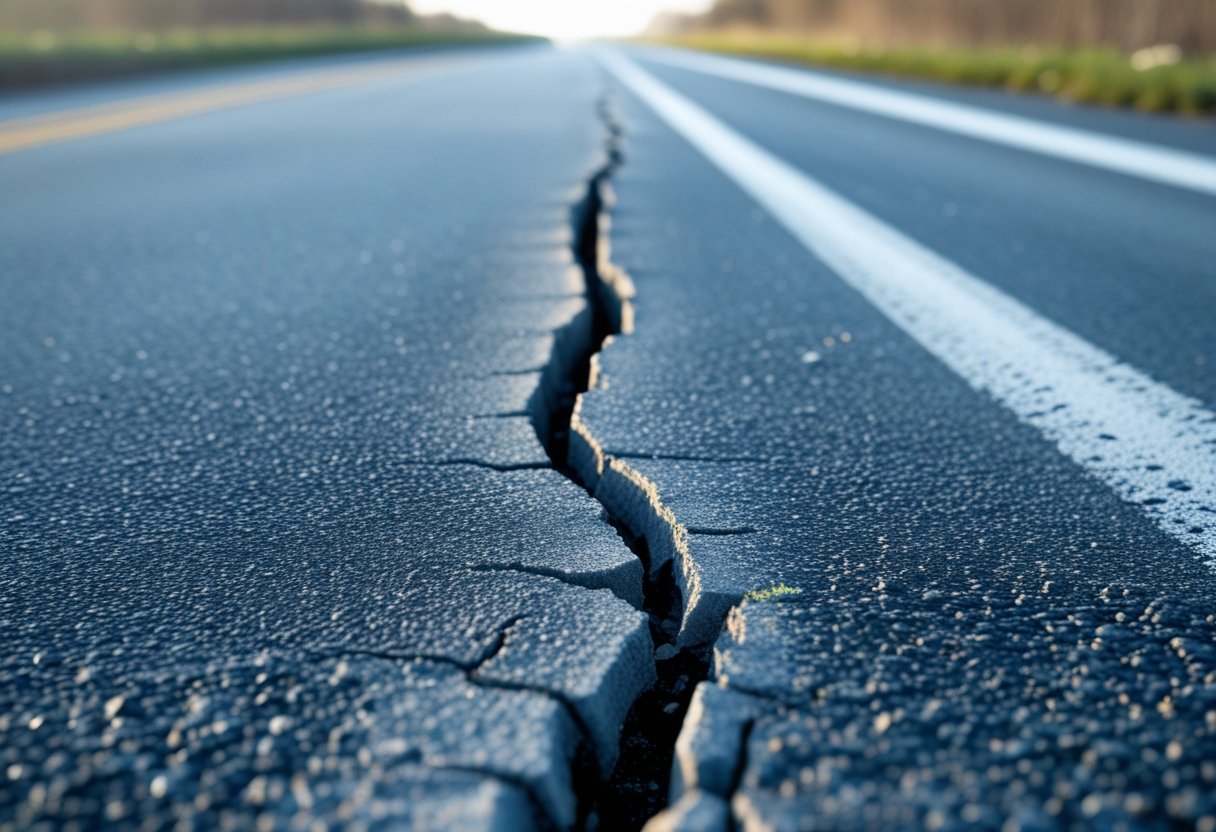
We will explain the types of longitudinal cracks, the common causes like traffic loading and material faults, and how cracks progress if ignored. Then we will cover practical ways to assess damage and choose maintenance or prevention methods that match the problem.
Defining Longitudinal Cracking in Roads
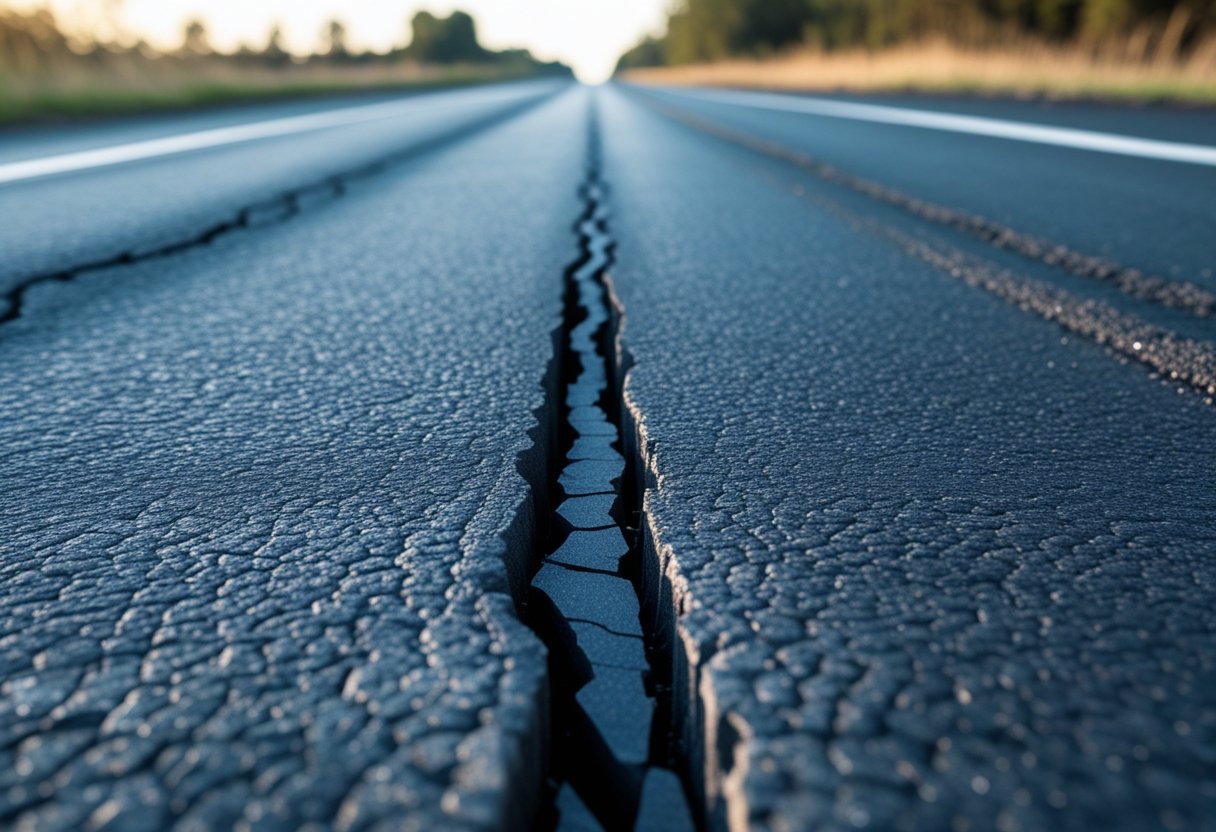
We explain what longitudinal cracking looks like, why it forms, and how it differs from other pavement damage. We focus on crack location, shape, causes, and signs you can see on asphalt pavement.
Types and Patterns of Longitudinal Cracks
Longitudinal cracks run roughly parallel to the road centerline or wheel path. They appear as single continuous lines, multiple hairline cracks, or matched pairs.
Common patterns include:
- Centerline longitudinal cracks: along the road center, often from poor joint compaction or thermal shrinkage.
- Wheel path longitudinal cracks: in the wheel track, usually from repeated traffic loading and fatigue.
- Construction or reflective longitudinal cracks: mirror underlying joint or crack patterns from base layers or old overlays.
We note width and spacing. Narrow hairline cracks often signal early aging. Wider cracks or closely spaced parallel cracks often show fatigue or structural failure. Reflective cracks often follow old transverse cracks or alligator cracking below the surface.
Key Characteristics and Visual Indicators
Longitudinal cracks are straight or slightly meandering and follow traffic direction. They may be single, paired, or in a cluster and vary from hairline to over 25 mm wide.
Look for these visual clues:
- Crack alignment with centerline or wheel path.
- Raveling edges or loss of aggregate for older cracks.
- Staining, weed growth, or water infiltration indicating persistent opening.
We check depth and edge condition. Shallow, sealed cracks show less deterioration, while deep or fractured edges point to structural issues. Presence of alligator cracking nearby usually means the pavement layer below is failing, not just a surface crack.
Longitudinal Cracks vs. Other Pavement Distresses
Longitudinal cracks differ in orientation and cause from other distresses. Transverse cracks run across the road and stem from thermal movement, while longitudinal cracks run along traffic flow and often relate to load or construction defects.
Alligator cracking shows a network of interconnected cracks and indicates base or subgrade failure, not just a surface longitudinal crack. Reflective cracks repeat the pattern of underlying joints or old cracks and can be longitudinal if they follow an old seam.
We use location, pattern, and associated signs to tell them apart. For example, a longitudinal crack in the wheel path with polished edges signals fatigue; a centerline crack at a seam suggests a construction joint issue.
Primary Causes and Contributing Factors
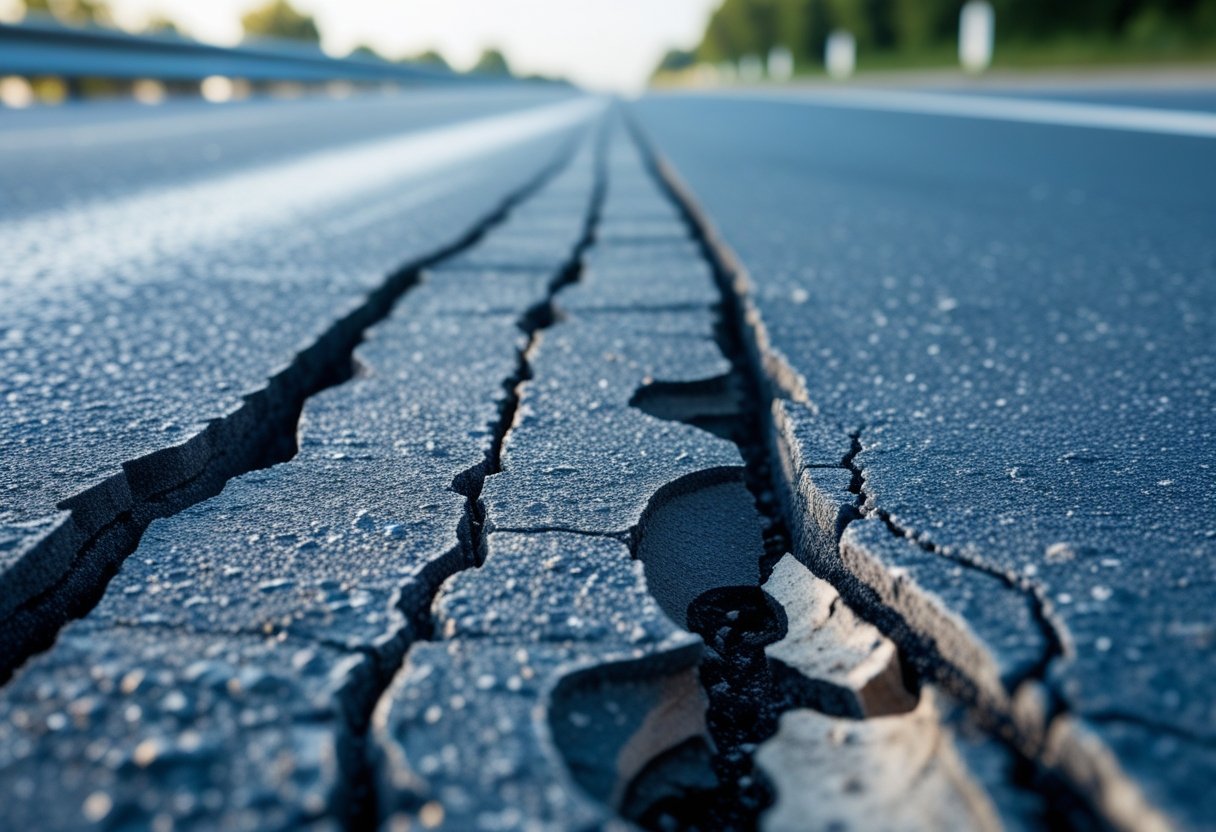
We identify how vehicle forces, construction flaws, materials, and weather combine to start and grow longitudinal cracks. Each factor changes stresses in the asphalt layers and base, and interacts with the others to speed up damage.
Traffic Loads and Fatigue Mechanisms
We see most longitudinal cracking where repeated wheel loads concentrate along a line, such as wheelpaths or the pavement edge. Heavy truck axle loads raise shear stress and tensile stress in the asphalt surface layer and underlying asphalt layers. Repeated loading causes fatigue cracking as micro-cracks link and grow vertically and along the length.
Fatigue is worse when the asphalt concrete is thin or when the base layer is weak. Vertical deformation under repeated vehicle load increases tensile stress at the bottom of the asphalt layer, leading to cracks that run longitudinally. High traffic volumes and frequent heavy loads shorten the time to failure.
Construction Practices and Joint Quality
Poor joint construction creates weak lines that turn into longitudinal joints and cracks. If the longitudinal joint between paving passes is not compacted, it leaves low density and poor bonding. That weak plane concentrates stresses and allows water to enter.
Cold joints from stopping paving, misaligned joints, and inadequate tack coat all reduce joint strength. Weaker joints are prone to raveling and then longitudinal cracking under shear from traffic. Proper compaction, joint heating or seam rolling, and correct tack application reduce these risks.
Environmental Influences: Temperature and Moisture
Temperature fluctuations change the stiffness of asphalt concrete and produce thermal stresses. In cold areas, low temperatures make asphalt brittle; freeze-thaw cycles and frost heave in the base layer move the pavement vertically. These movements open and extend longitudinal cracks.
Moisture infiltration through joints or cracks softens the base layer and reduces support. Water in the base plus freeze-thaw accelerates structure failure and leads to transverse and longitudinal cracking patterns. We must control drainage and seal joints to limit moisture damage.
Material Properties and Pavement Structure
The mix design, binder properties, and layer thickness determine resistance to longitudinal cracking. Stiffer binders resist rutting but may increase tensile cracking at low temperatures. Thin asphalt surface layers or weak base layers raise tensile stress at the layer interface and promote fatigue cracking.
Poorly graded aggregates, low compaction, or inadequate binder content lower cohesion and increase susceptibility to cracking. A properly designed pavement structure and competent engineering of layer thickness, material selection, and compaction reduce the chance that traffic loads, joints, or environmental forces will cause longitudinal cracks.
Impacts and Progression of Longitudinal Cracks
Longitudinal cracks start small and worsen over time. They reduce pavement life, lead to other distresses, and create safety and functional problems for road users.
Effect on Pavement Performance and Longevity
Longitudinal cracks let water enter pavement layers, which weakens binders and aggregates. We see loss of stiffness in the asphalt and reduced load-carrying capacity, which shortens service life.
Cracks aligned with traffic flow concentrate stress and accelerate rutting and deformation under repeated loads. This increases the risk of structural failure in wheel paths and makes routine maintenance less effective.
When water and traffic combine, we get accelerated raveling and binder stripping near the crack edges. That loss of surface material exposes aggregates and can lead to potholes within seasons if left untreated.
Targeted repairs slow deterioration, but untreated longitudinal cracking often forces full-depth rehabilitation sooner than planned.
Development of Secondary Distresses
Longitudinal cracks act as initiation points for multiple secondary distresses. Reflective cracking from underlying layers can produce top-down cracks and alligator cracking patterns where fatigue develops.
As cracking progresses, small edge disintegration turns into raveling; continued material loss widens cracks and forms potholes. We also observe transverse distortions where base weakness allows deformations to grow.
Traffic loading converts linear cracks into localized failures. Water infiltration reduces base stiffness and leads to pumping and loss of support, which promotes rutting and deformation.
Secondary distresses compound repair complexity and cost, often requiring combined treatments for crack sealing, patching, and base repair rather than simple surface fixes.
Safety Risks and Functional Impairments
Longitudinal cracks affect vehicle control and comfort, especially in high-speed lanes and wet conditions. We see increased steering corrections and higher braking distances when tires track along cracks.
Crack edges create noise and vibration that reduce ride quality. For cyclists and motorcyclists, a wide or stepped longitudinal crack poses a fall hazard.
Cracks that develop into potholes and raveling create sudden hazards and can cause vehicle damage. Pavement distortion in wheel paths reduces drainage and increases hydroplaning risk.
Poor pavement performance from cracking also raises maintenance frequency and traffic disruptions. We must monitor cracks promptly to limit escalation into severe safety and functional impairments.
Assessment, Prevention, and Maintenance Strategies
We focus on clear, measurable steps to assess severity, apply timely crack sealing, and choose long-term repairs. Our approach targets safety, life extension of asphalt layers, and cost-effective maintenance.
Severity Levels and Measurement Methods
We use a three-level severity scale: low, moderate, and high. Low means hairline or narrow longitudinal cracks under 6 mm; moderate covers 6-20 mm with some raveling; high includes wider cracks, interconnecting splits, or visible HMA fatigue.
We measure crack width with a crack gauge and length per lane-km. We record density (m of crack per 100 m2) and map locations with GPS for trending.
We inspect after seasonal shifts and heavy winters. We note edge breaks and base exposure because those signal deeper issues.
We document rutting, loss of support, and moisture infiltration; these factors guide whether sealing alone suffices or structural repair is needed.
Crack Sealing and Early Intervention
We prioritize sealing cracks while they are low or moderate severity to prevent moisture and debris entry. We clean cracks with compressed air, remove vegetation, and dry surfaces before applying a crack sealant.
We choose materials by flexibility and adhesion; hot-applied rubberized sealants work well for moving longitudinal cracks. Cold-applied products fit short-term or low-traffic uses.
We rout cracks only when needed to form a uniform reservoir that improves sealant contact. Typical seal widths are 10-20 mm. Sealant depth should match crack depth but not exceed asphalt layer thickness.
We schedule sealing during warm, dry days and avoid sealing over frost or wet bases. Regular early intervention reduces HMA fatigue progression and defers larger repairs.
Long-Term Solutions and Rehabilitation
We select full-depth or partial-depth repairs when cracks show high severity or when HMA fatigue is present. Full-depth patching replaces failed asphalt layers and binds to a sound base. Partial-depth milling with overlay can correct widespread cracking when the base is intact.
We design overlays with sufficient thickness to redistribute loads and reduce reflective cracking. Reinforcement fabrics or stress-absorbing interlayers can slow reflection from old cracks.
We include drainage fixes and subgrade stabilization when moisture causes recurring longitudinal cracks. Routine monitoring and preventive maintenance plans set trigger points for rehabilitation to avoid costly emergency repairs.
We track repair outcomes and adjust strategies based on performance data, traffic levels, and material life cycles.