
You can spot raveling and surface wear before they turn into costly problems by knowing what to look for and where to look. We will show common signs like loose aggregate, grainy texture, and loss of surface film so you can identify damage fast and decide what to do next.
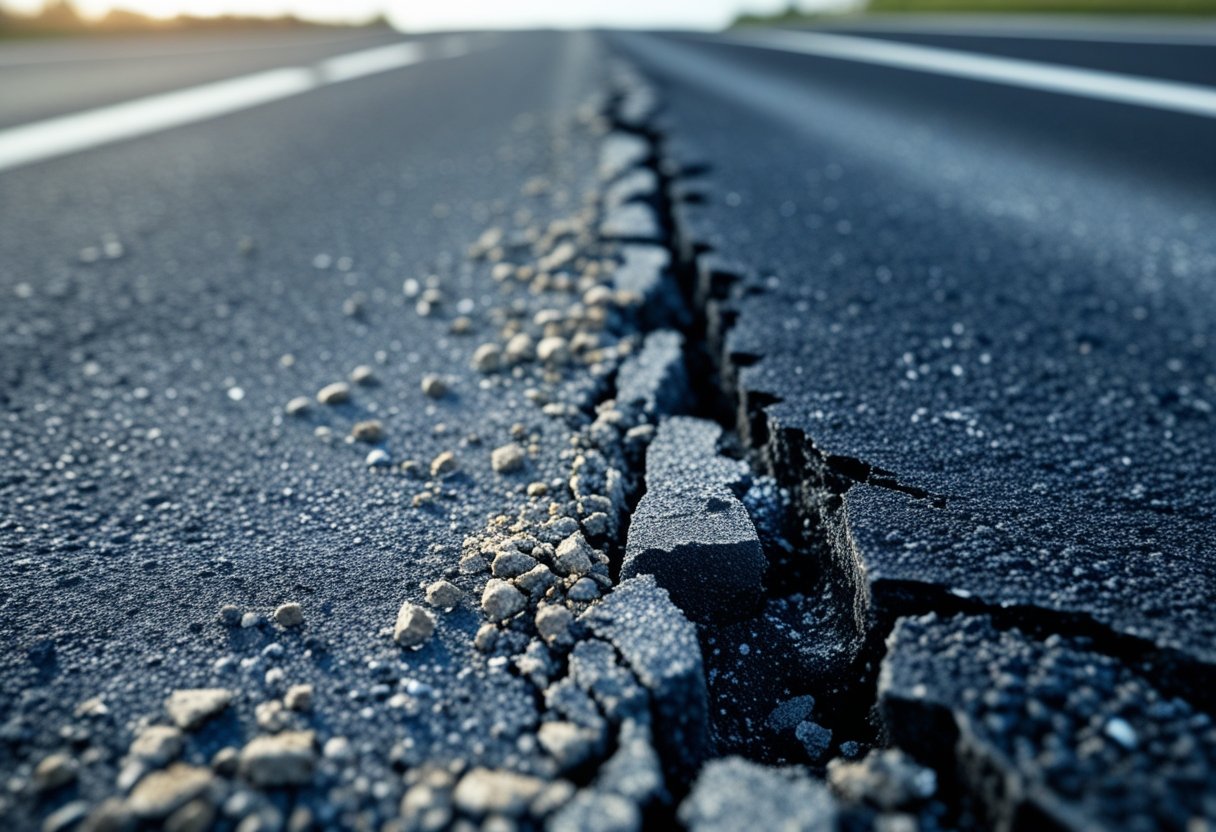
We explain how raveling differs from other distress, what causes it, and how location, traffic, and weather affect the surface. Our practical tips will help you assess severity and choose the right maintenance or repair steps.
Follow our clear guidance on prevention, routine checks, and simple fixes so you can extend pavement life and avoid bigger repairs.
Fundamentals of Raveling and Surface Wear
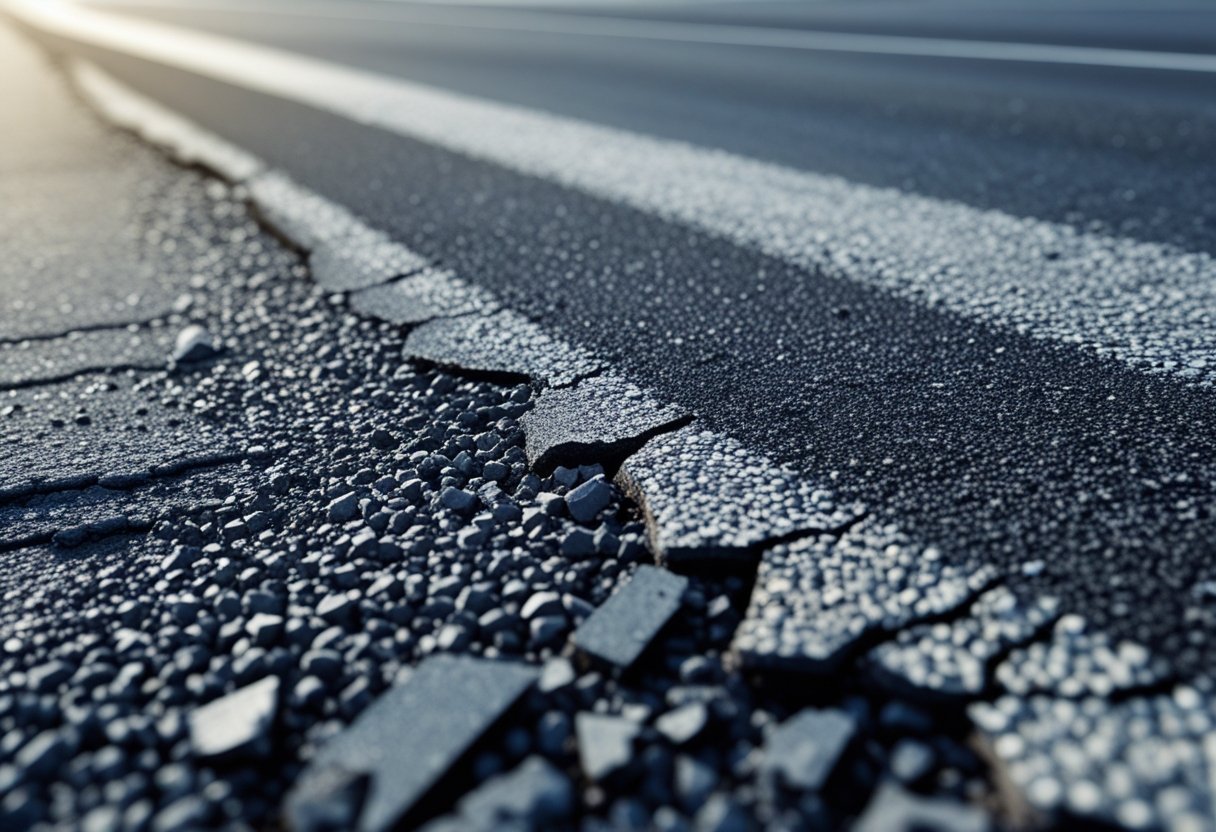
We explain how raveling starts, how different wear types act on asphalt pavement, and how surface texture and defects reveal underlying problems.
Defining Raveling in Pavement
Raveling is the progressive loss of aggregate from the surface layer of asphalt pavement. We see individual stones loosen, then detach, leaving a rough, granular surface and exposing binder-starved areas.
Common causes include weak asphalt binder, poor compaction, aging, and traffic abrasion. Water infiltration and freeze-thaw cycles speed the process by breaking bonds between aggregate and binder. Construction issues; like improper mixing or segregation; also produce early raveling.
Typical signs are surface graininess, increased surface voids, and small potholes forming where material has been removed. We measure severity by percent area affected and by mass of material lost during sweeping or high-speed sand testing.
Types and Mechanisms of Surface Wear
Surface wear on paved surfaces falls into distinct types: abrasive wear, fatigue cracking leading to particle loss, and binder oxidation that reduces adhesion. Each mechanism removes material differently and requires different responses.
Abrasive wear comes from traffic and studded tires grinding the surface. Fatigue causes cracks that break aggregates free under repeated loading. Oxidative aging hardens binder, making the mix brittle and more prone to surface raveling.
Material removal often starts at the top 5-20 mm of the asphalt pavement. We diagnose the dominant mechanism by looking at particle shape, depth of loss, and whether the binder remains tacky. Repair choice depends on whether damage is shallow (surface treatment) or deeper (overlay or structural rehab).
Surface Texture and Surface Defects
Surface texture describes microtexture and macrotexture that affect skid resistance and water drainage. Raveling alters both by removing fine particles and exposing larger aggregate, which can change friction and noise.
Surface defects tied to raveling include flushing, polishing, and bleeding. Flushing is binder migration that masks texture; polishing smooths aggregates; bleeding leaves a shiny binder film. All reduce pavement performance and safety.
We inspect for localized depressions, rough patches, and loose aggregate to map defects. Simple tools like a sand patch test for macrotexture, and visual checks for loose particles, help prioritize maintenance before more material loss occurs.
Recognition and Assessment of Raveling and Surface Wear
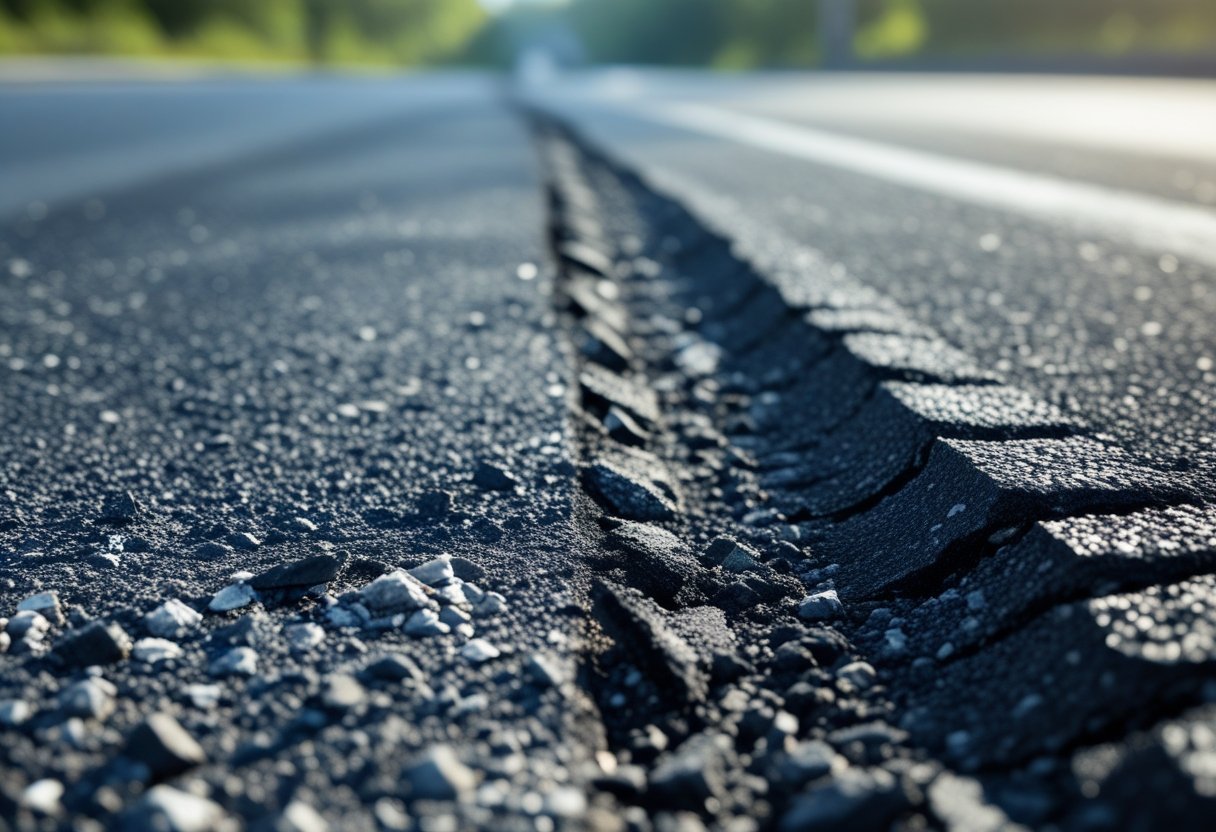
We focus on practical checks and measured signs to tell raveling and surface wear apart, and we use simple tests and tools to judge severity and data-driven methods to confirm findings.
Visual Inspection Techniques
We start with a systematic walk or drive-by inspection, scanning 3-5 meters ahead and to the pavement edges.
Look for loose aggregate, exposed sand, and a loss of binder; these are direct signs of surface raveling and asphalt damage.
Use a 10x magnifier to confirm aggregate loss and a coin or ruler to measure loose particle depth.
Note locations with GPS or lane mile markers and take photos from three angles: oblique, close-up, and context shot.
Record pavement roughness qualitatively (smooth, slightly rough, rough) and note adjacent defects like cracking or potholes.
Use a simple checklist: presence of loose stones, binder sheen loss, texture change, and particle depth. These details guide maintenance decisions.
Common Surface Indicators: Cracks, Potholes, and Erosion
We inspect cracks for pattern and width: longitudinal and transverse cracks often indicate base or temperature issues, while alligator cracking signals structural failure.
Cracking that breaks up the surface accelerates raveling by letting moisture in.
Potholes form where raveling and fracture converge; look for sharp edges, loose debris, and varying depths.
Measure pothole diameter and depth; small shallow pits suggest early surface wear, large deep holes signal advanced pavement distress.
Erosion shows as gradual edge loss, shoulder drop-off, or fine material washed away after rain.
Track locations where water flow concentrates; repeated erosion near joints or drains often causes rapid surface wear and increased pavement roughness.
Assessing Severity and Pavement Distress
We grade severity using simple tiers: low (surface texture change), moderate (exposed aggregate, small loose areas), and high (widespread loss, deep potholes).
Combine visual notes with measurements; crack width (>10 mm), pothole depth (>25 mm), and area percentage of affected lane; to classify urgency.
Count and map defects to estimate percent defective length and area.
Use a table to record key metrics:
- Location (GPS)
- Defect type (raveling, crack, pothole)
- Size (mm or m²)
- Severity (low/med/high)
- Estimated cause (drainage, traffic, binder aging)
Higher pavement distress correlates with increased false negatives in brief inspections, so resurvey critical segments and sample more points.
Record pavement roughness readings where possible; higher roughness often matches severe raveling and structural defects.
Automated and Computer Vision Methods
We capture images with dash or drone cameras at consistent heights and lighting to reduce false positives from shadows.
Use preprocessing: normalize brightness, remove lens distortion, and crop to lane area before feature extraction.
Apply classical feature extraction (texture filters, edge detectors) or train convolutional neural networks (CNNs) to detect raveling, cracks, and potholes.
Label datasets with true positive and true negative examples; track false positive and false negative rates to tune models.
Combine outputs with GIS to map pavement distress and compute affected area.
Validate model results with spot visual inspections and pavement roughness measurements to ensure practical accuracy and reduce automated misclassification.
Causes and Contributing Factors
We focus on the main things that make pavement break down: weak materials, weather, and traffic or drainage problems. Each of these drives pavement raveling and surface wear in different, measurable ways.
Material Quality and Asphalt Binder Issues
We inspect the aggregate and asphalt binder first because their mix controls durability. Poor-quality aggregate that wears easily will shed particles, causing pavement raveling. An asphalt binder that is too soft or too hard speeds deterioration: soft binders lead to bleeding and rutting, while hard, oxidized binders become brittle and crack.
A wrong mix gradation or insufficient binder film allows stone loss and surface defects. Material fatigue from repeated loading breaks the bond between binder and aggregate. Aging pavement shows loss of volatiles and stiffening of the binder, which increases surface wear and frosting.
We test binder properties (penetration, viscosity) and check aggregate shape and cleanliness. Better control of materials reduces edge cracking, settling, and early erosion.
Environmental Effects and Weathering
We see weather damage every season. UV light and oxygen cause asphalt binder oxidation, which stiffens the mix and increases cracking. Freeze-thaw cycles force water into small voids; when that water freezes it expands, opening the mix and accelerating raveling.
Pooling water, melting snow, and repeated freeze-thaw around catch basins worsen surface deterioration and create depressions. Frost heave and thaw settlement produce rutting and uneven surfaces. Repeated wetting and drying also leaches binder and fines, increasing erosion.
We monitor exposure and perform timely sealing or rejuvenation to slow oxidation. Controlling surface water and filling cracks before winter lowers the impact of freeze-thaw damage.
Traffic Loads, Poor Drainage, and Water Infiltration
We consider heavy traffic and load repetition as a primary mechanical driver of surface wear. Trucks and constant heavy traffic cause material fatigue, compact aggregates, and push binder to the surface (bleeding). High traffic volumes also speed the loss of fine particles, leading to raveling.
Poor drainage lets water soak into the pavement structure. Water infiltration through cracks or poor joints weakens base layers and leads to settling, rutting, and edge cracking. Pooling near catch basins or low spots concentrates loads and accelerates erosion.
We prioritize fixing drainage: patching localized depressions, cleaning catch basins, and ensuring cross-slope. Reducing water exposure and controlling traffic loads with maintenance extends pavement life.
Prevention, Maintenance, and Repair Strategies
We prioritize early, regular work to slow raveling and fix surface wear. Timely sealing, patching, and overlays extend pavement life and save money.
Routine Pavement Maintenance Practices
We inspect roads at least twice a year and after major storms. We record distress types, locations, and severity in our pavement management system so we target work where it reduces further damage.
We sweep and clean surfaces to remove sand, debris, and vegetation that speed wear. Drainage checks and clearing gutters prevent water from weakening the asphalt and the base.
We use preventive treatments such as crack filler, sealcoating, and thin overlays on sections with minor distress. We hire licensed asphalt contractors for heating, compaction, and quality control to ensure long-term results.
Crack Sealing and Patching
We seal cracks as soon as they appear to stop water and debris from entering the pavement layers. For cracks wider than 1/4 inch we rout, clean, and apply hot-applied rubberized sealant; for hairline cracks we use cold-applied crack filler.
We patch potholes and deteriorated areas using full-depth patching when base failure exists. For surface-only faults we place firm, compacted hot-mix patches and tack coat the vertical faces to bond new to old pavement.
We track each repair with date, contractor, materials, and photos in our road maintenance log. This helps us spot repeating failures and decide if larger treatments are needed.
Overlay, Sealcoating, and Tack Coat Applications
We choose overlays when at least 70% of the surface shows fatigue cracking or raveling deeper than 1 inch. We mill uneven sections before overlay to maintain correct grade and drainage.
We apply sealcoating on low-traffic pavements to protect against oxidation and UV. We test a small area first; sealcoats must cure fully before reopening to traffic and should be applied in dry, warm weather.
We use tack coats between old and new asphalt layers to ensure cohesive bonding. We measure tack application rate (typically 0.02-0.08 gallons/sq yd) and verify coverage before paving.
Role of Pavement Management Systems
We use a pavement management system (PMS) to prioritize repairs by condition, traffic load, and budget. The PMS stores inspection data, predicted deterioration curves, and cost estimates for treatments like sealing, patching, and overlays.
We run scenario analyses in the PMS to compare life-cycle costs of early preventive work versus delayed major rehabilitation. This helps us schedule contractors efficiently and allocate funds to work that gives the best return.
We integrate contractor performance records, material specs, and project photos into the PMS. This creates accountability and improves future bids and maintenance planning.