
You can spot sinkholes in asphalt by watching for sudden ground drops, wide cracks, or areas where the pavement feels hollow underfoot. If you notice irregular dips, circular cracks, or a sound like a drum when walking or driving over the surface, those are strong signs a sinkhole may be forming.

We will show what visible signs to look for, explain common causes, and outline basic inspection steps you can try before calling a pro. Follow our clear checks so you can act quickly and keep people and property safe.
Identifying Signs of Sinkholes in Asphalt Pavement
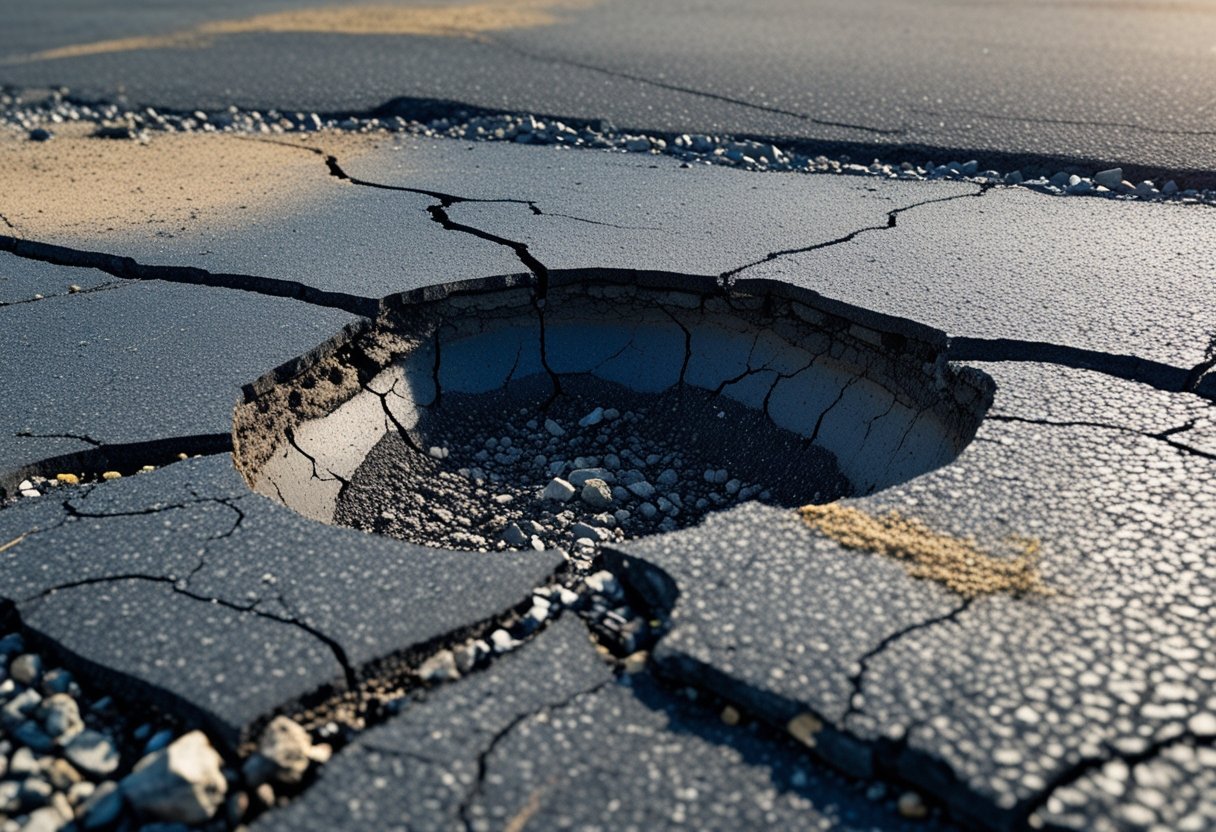
We focus on clear, visible signs that indicate a failing base under asphalt. Look for depressions, unusual cracking, standing water, and areas where the pavement simply sinks.
Surface Depressions and Circular Dips
We watch for shallow depressions and round, bowl-like dips in asphalt. These often measure from a few inches to several feet across and feel hollow when you tap them. A true sinkhole usually has a distinct rim or slope toward the center and may reveal exposed soil or voids at the edge.
Measure depressions with a tape or straightedge to track growth. Rapid deepening over days or weeks is a red flag for a developing sinkhole. Small, slow-settling depressions can still indicate loss of support from eroded subgrade or broken drainage pipes.
Cracks, Fissures, and Potholes
We inspect cracks that radiate from a single spot or form concentric rings; these suggest localized collapse below the asphalt. Wide, jagged fissures or sudden linear cracks that widen over time often mean the base is shifting.
Potholes that form quickly and keep enlarging often point to ongoing erosion or a void beneath the surface. Note clustered potholes or ones that appear near depressions – that pattern commonly signals an active sinkhole or severe drainage problem.
Standing Water and Poor Drainage Patterns
We check for water pooling in spots that don’t drain after rain. Persistent standing water over the same area weakens the base and can wash soil out, causing sinkholes to form under asphalt driveways.
Look for areas where runoff is trapped, blocked drains, or soil washed away near joints and edges. Repeated wetting and drying cycles near these spots speed deterioration and tell us the site has a chronic drainage issue that needs fixing.
Uneven or Sinking Asphalt Driveway
We walk the driveway to feel for soft spots or areas that give underfoot or under a vehicle. Sections that slope or sag compared with adjacent pavement indicate the asphalt driveway is sinking.
Mark sinking areas and compare over time to see if movement is ongoing. Pay special attention where heaving or settlement meets solid pavement; that transition often shows where a sinkhole is enlarging or where subsurface voids exist.
Common Causes of Sinkhole Formation in Asphalt
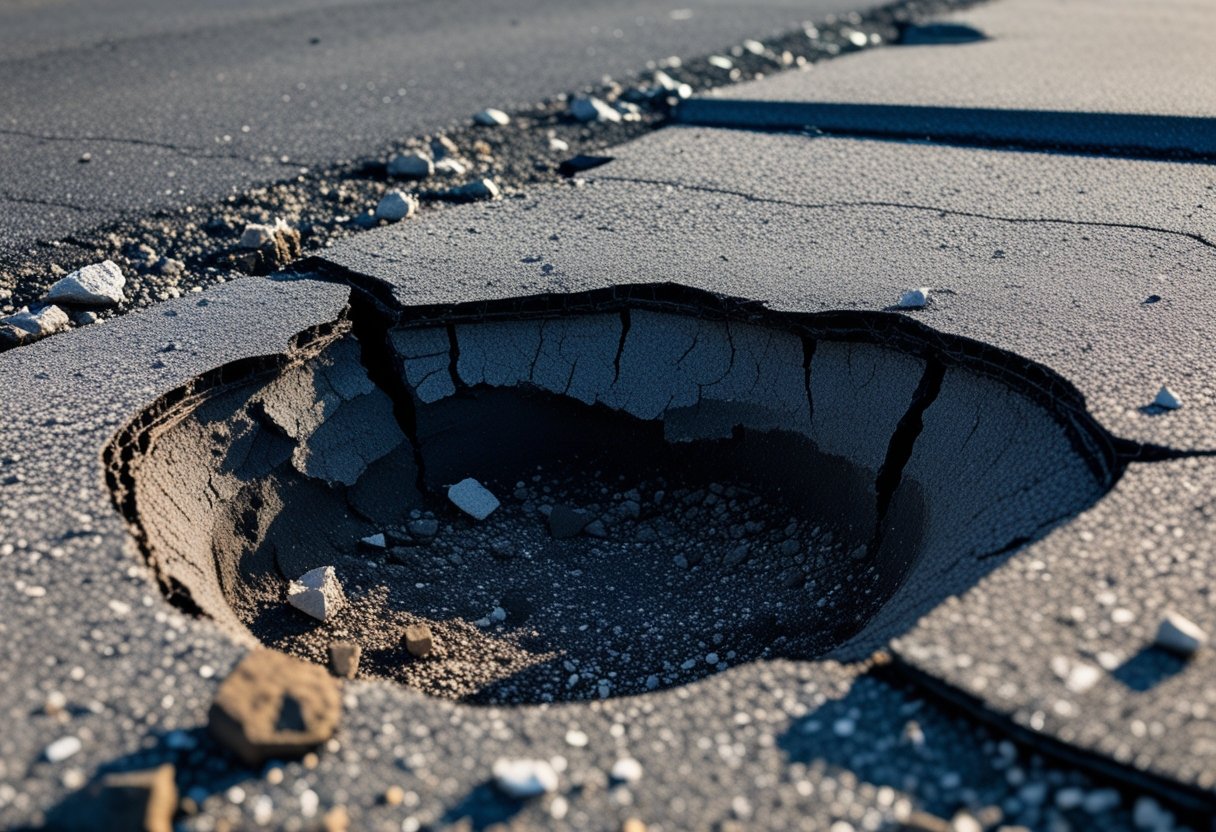
We look at what makes asphalt collapse so we can spot problems early. The main causes are water moving through soil, the ground settling, and bad asphalt or poor installation.
Soil Erosion and Water Damage
We find soil erosion when water removes fine particles under the pavement. Surface runoff, broken pipes, and poor drainage wash away sand, silt, and clay. Over time this creates voids under the asphalt that suddenly give way.
Internal water damage comes from leaking water mains, storm sewer failures, and poor joint seals. Water soaks the subgrade and weakens compacted layers. In areas with limestone or other soluble rock, water can also dissolve material, enlarging underground cavities.
Signs to watch for include soft or spongy spots, puddles that don’t drain, and cracking patterns that follow water paths. Fixing drainage, repairing pipes, and re-compacting the subbase reduce the risk.
Foundation Settling and Subgrade Failure
We see foundation settling when the soil compresses under load or loses support. Organic fill, loose backfill, or differences in soil type cause uneven compression. Heavy traffic and repeated loads speed the process.
Subgrade failure often shows as localized depressions, alligator cracking, or rutting. If the subgrade includes weak materials like peat or unconsolidated fill, it will settle more than nearby native soils. Clay layers that swell and shrink with moisture also lead to movement.
We inspect soil profiles and use geotechnical testing to find weak zones. Replacing poor subgrade, using proper compaction, and adding geotextiles or stone layers stabilize the base.
Poor Asphalt Installation and Low-Quality Materials
We note that a weak asphalt mix and poor placement increase sinkhole risk. Too much filler, wrong aggregate gradation, or inadequate asphalt binder make the pavement brittle or porous. Low-quality asphalt lets water penetrate faster.
Improper compaction during paving leaves voids and reduces layer strength. Thin lift thicknesses over unstable base or failing to tack joints produces pathways for water. Using limestone that breaks down quickly under traffic can worsen the problem where the aggregate degrades.
We recommend specifying proper asphalt mix design, correct compaction levels, and sufficient thickness. Inspecting material certificates and watching paving operations prevents defects that can turn into sinkholes.
Inspection and Testing Methods for Sinkholes
We focus on clear signs the pavement is failing, tools to see below the surface, and ways to check pipes and drainage that may cause sinkhole formation.
Visual Assessment and Surface Indicators
We walk the site looking for cracks, depressions, and sudden pavement sagging.
Long, parallel cracks that follow traffic lanes often point to underlying voids. Short, irregular cracks and localized depressions near manholes or gutters suggest material loss beneath the asphalt.
Look for areas where water pools after rain or where the pavement dries faster in patches. Standing water and repeated wet spots indicate a drainage problem that can wash away soil and start sinkholes.
Check edges of cracks for undermining – flaky or unsupported asphalt edges mean the base has eroded.
Record GPS locations, take photos from multiple angles, and mark the pavement for monitoring.
Use a straightedge or string line over small depressions to measure depth and slope. These simple tools help us track growth between inspections.
Ground Penetrating Radar and Advanced Techniques
We use ground penetrating radar (GPR) to map voids and layer changes beneath the asphalt without digging.
GPR shows differences in material and can identify pockets where soil has been removed. We select antenna frequency based on depth: higher frequency for shallow detail, lower frequency for deeper features.
Complementary methods include seismic refraction and electrical resistivity. Seismic tests measure how fast waves travel through the ground; slow zones can indicate voids or soft soil. Resistivity highlights moisture and material changes that relate to sinkhole formation.
We often combine GPR with core sampling. Cores confirm GPR signals and let us inspect fill material and depth directly.
Interpretation requires experienced technicians and reference data. We calibrate results against known conditions on site and use repeated surveys to detect change over time.
Checking for Underground Utility and Drainage Issues
We coordinate with utility companies to get as-built maps and to locate buried pipes before testing.
Damaged or collapsed pipes, broken storm drains, and leaking sewer lines are common causes of sinkholes under asphalt.
We perform dye testing and camera inspections in storm and sanitary lines to find leaks and blockages. Dye shows flow paths; video cameras reveal cracks, joint separation, and silt buildup.
We inspect catch basins, culverts, and roadside ditches for erosion and sediment that indicate a drainage problem.
Where maps are missing, we use pothole probes, vacuum excavation, or small test pits to expose utilities safely.
Any found defects get documented, photographed, and measured. That data guides repairs that stop soil loss and reduce the risk of sinkholes.
Repair Solutions and Prevention Strategies
We focus on fixes that stop the hole, support the base, and keep water away. We show how to patch small holes, rebuild weakened areas, manage water, and keep the pavement sound.
Asphalt Patching for Minor Sinkholes
We use cold or hot asphalt patch to fill small sinkholes up to a few inches deep. First, clear loose asphalt and mud with a shovel and broom. Remove wet soil until firm material shows, then compact the bottom.
For small holes, apply a well-graded asphalt patching material in 1-2 inch lifts. Compact each lift with a hand tamper or plate compactor until firm. Make the patch slightly higher than the surrounding surface to allow settling. Seal edges with hot-applied crack filler or cold pour to prevent water infiltration.
If the hole is in a driveway, match the asphalt type and grade to the existing asphalt driveway. We recommend professional hot mix and compaction for longevity when possible.
Foundation Preparation and Material Selection
We always fix the base before resurfacing. Excavate the damaged area back to stable subgrade, removing all soft, muddy soil. Replace with 4-8 inches of compacted crushed stone or gravel for typical driveway repairs.
Use geotextile fabric between soft soil and crushed stone where subsoil is unstable. Compact each layer to at least 95% Standard Proctor density for good support. For deeper voids, consider concrete or aggregate with cement stabilization.
Choose patching material by depth: cold patch for short-term fixes, hot mix asphalt for durable asphalt repair. For structural rebuilds, use asphalt paving crews with plate compactors and proper binder temperatures.
Long-Term Driveway Repair and Water Management
We address drainage to prevent future sinkholes. Regrade slopes to shed water away from the asphalt driveway. Install gutters, downspout extensions, or surface swales that direct runoff at least 10 feet from the pavement edge.
Consider French drains or perforated pipe in stone trenches where groundwater feeds the subgrade. Use a micro-slope of 1-2% away from the centerline for proper sheet flow. For repeated settlement, mudjacking or pressure grouting may lift the sinking driveway before repaving.
When repaving, ensure proper edge cutoff and tack coat to bond new asphalt. A minimum compacted base thickness and correct asphalt lift thickness (usually 1.5-2 inches per lift) extend service life.
Preventative Maintenance to Avoid Sinkholes
We inspect annually and after heavy rains to catch early signs of failure. Look for small depressions, edge cracks, and standing water; address them quickly to prevent larger sinkholes.
Keep drainage clear: clean gutters, fix clogged downspouts, and remove debris blocking swales. Seal cracks early with a suitable sealant to stop water entry into the base. Reapply sealcoat every 2-4 years on asphalt paving to protect binder and surface.
Schedule periodic base checks during major repairs. For high-risk areas, add subdrain systems and use thicker base aggregate. Regular maintenance and proper water control reduce the chance of asphalt patch failure and sinking driveway problems.