
We’ve all hit that sudden jolt on the road that makes us grip the steering wheel tighter. Potholes seem to appear overnight, turning smooth drives into rough ones. Potholes form when water seeps into cracks in the pavement, freezes, expands, and weakens the surface until it breaks apart.
We deal with them every day, but few of us stop to think about why they form or how they can be prevented. By understanding what causes potholes, we can better protect our vehicles, reduce repair costs, and help keep our roads in better shape.
In this article, we’ll look at how potholes form, what factors make them worse, the risks they create, and what steps can help reduce them over time.
How Potholes Form
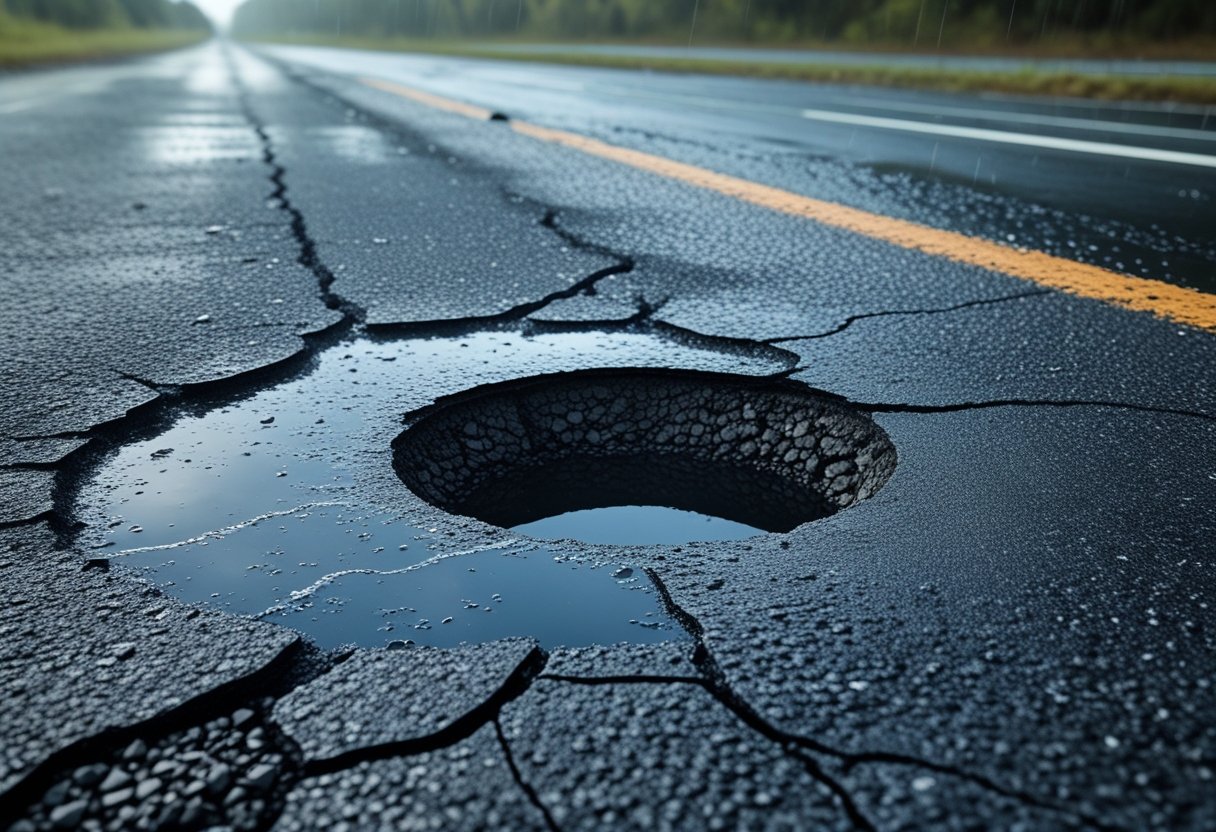
Potholes develop when pavement materials weaken under stress from water, temperature changes, and traffic loads. We can trace their formation through several stages that involve cracking, water infiltration, and repeated freeze-thaw cycles.
Stages of Pothole Development
Pothole formation begins with small surface cracks in the asphalt pavement. These cracks may appear as fatigue cracking, alligator cracking, or reflective cracking from older layers below.
As vehicles pass over the weakened pavement, pressure causes the cracks to widen. The pavement flexes under the weight, reducing its stiffness and allowing more water and debris to enter.
Once the pavement structure loses support from the base or subgrade soil, small pieces of asphalt break loose. Repeated stress causes these loose pieces to dislodge, creating a shallow depression. Over time, this depression expands and deepens into a pothole.
Key factors in early pothole development:
- Poor drainage or clogged ditches
- Heavy traffic loads
- Aging or brittle asphalt
- Insufficient crack sealing or maintenance
Role of Water Infiltration
Water infiltration plays a major role in pavement deterioration. When cracks appear, water seeps through the asphalt surface into the lower pavement layers. This weakens the bond between the asphalt and the base materials.
As the subgrade soil becomes saturated, it loses its strength and stability. The pavement above can no longer distribute loads evenly, leading to more flexing and cracking.
We often see this process accelerate after rain or melting snow. Standing water on the road surface increases the chance of infiltration, especially if drainage systems are poor.
Effects of water infiltration on pavement performance:
| Pavement Layer | Effect of Water |
|---|---|
| Surface Asphalt | Softening and raveling |
| Base Course | Loss of support and stiffness |
| Subgrade Soil | Weakening and deformation |
Regular maintenance, including crack sealing and proper drainage, helps limit water entry and slow down deterioration.
Freeze-Thaw Cycle Impact
In colder climates, the freeze-thaw cycle speeds up pothole formation. When water trapped in cracks freezes, it expands and pushes the pavement upward. This expansion increases existing cracks and creates new ones.
When temperatures rise, the ice melts, leaving air gaps and weakened pavement layers. Traffic passing over these gaps causes the asphalt to collapse into the voids.
Repeated freeze-thaw cycles cause the pavement to lose stiffness and break apart more easily. The result is a rough surface filled with loose fragments that quickly form a pothole.
We can reduce freeze-thaw damage by improving drainage, sealing cracks before winter, and using durable asphalt mixes that resist moisture and temperature changes.
Primary Causes of Potholes
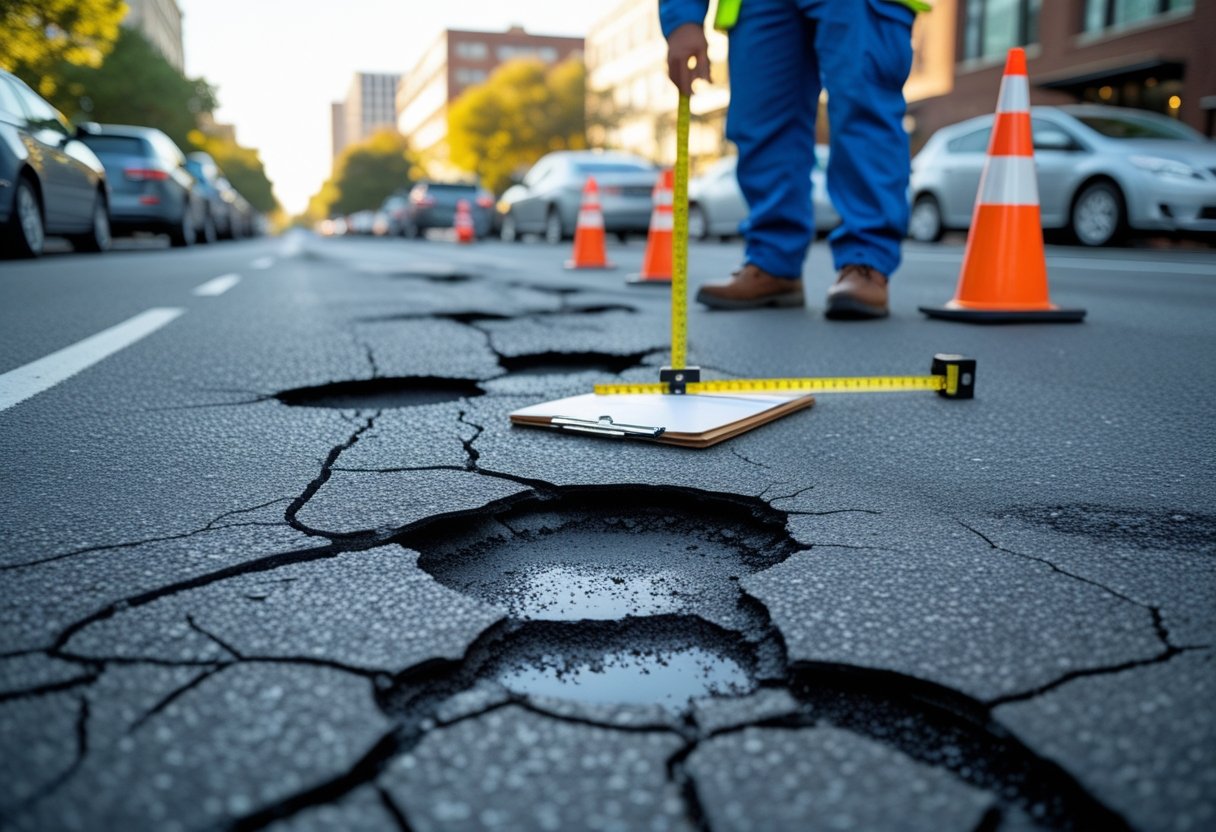
Potholes often form when road materials weaken under stress, moisture, and poor construction practices. We can trace most failures to heavy traffic, trapped water, or the use of low-quality materials during road construction.
Traffic Load and Stress
Heavy traffic loads place continuous pressure on asphalt surfaces. Trucks, buses, and construction equipment create repeated stress that weakens the pavement design over time. When the road foundation cannot support these loads, cracks appear and grow with each passing vehicle.
We often see more damage in lanes with frequent braking or turning. The constant movement and weight cause the asphalt to flex and break apart. Once small cracks form, they allow water to enter the pavement structure.
Key stress factors include:
- High vehicle weight
- Repeated wheel loads
- Uneven pavement support
- Poor maintenance of asphalt overlay
Hot mix asphalt can resist some of this stress, but only when installed correctly and maintained regularly. Without proper upkeep, even strong materials deteriorate faster under heavy traffic conditions.
Poor Drainage and Water Pooling
Water is one of the most damaging elements for asphalt roads. When drainage systems fail, water pooling or ponding occurs on the surface. Over time, moisture seeps into the pavement layers and softens the base or subgrade.
We often find soft spots where water remains trapped after rainfall. These weak areas lose strength and deform under traffic stress. Proper drainage systems, including side ditches and stormwater outlets, reduce this risk by moving water away from the road.
Common drainage issues:
- Blocked or undersized drains
- Poor slope design
- Inadequate drainage improvements during resurfacing
When water freezes and thaws, it expands and contracts within the pavement. This cycle widens cracks and leads to pothole formation. Good drainage design prevents most of these failures.
Substandard Construction and Materials
Substandard construction is another major cause of potholes. When contractors use poor-quality materials or skip essential steps in road construction, the pavement fails prematurely. Weak asphalt mixes, thin layers, or improper compaction reduce overall strength.
We sometimes see roads built with low-grade aggregates or poorly mixed hot asphalt. These materials oxidize faster under UV damage and lose flexibility. Once brittle, the surface cracks easily under normal traffic loads.
Frequent construction flaws:
- Poor installation of asphalt overlay
- Inadequate pavement thickness
- Weak or unstable road foundation
- Improper curing or compaction
Using high-quality materials and following proper construction standards greatly improves pavement life. When we focus on quality control and correct installation, we reduce the chances of potholes forming early in a road’s lifespan.
Consequences and Risks of Potholes
Potholes create problems that affect both vehicles and people. They cause direct physical damage to cars and roads and also lead to safety risks and higher costs for communities.
Vehicle Damage and Road Hazards
When we drive over potholes, the sudden drop and impact can harm our vehicles. Common types of vehicle damage include bent rims, tire punctures, and misaligned suspension systems. Even small potholes can cause uneven tire wear or fluid leaks that lead to costly repairs.
Potholes also worsen road damage. Water seeps into cracks, expanding and breaking down the pavement further. This cycle increases the number of weak spots on roadways and driveways, making travel rougher and less predictable.
We often see road hazards such as loose debris, uneven surfaces, and damaged lane markings. These conditions make it harder to maintain control of a vehicle, especially at higher speeds or during poor weather. Regular road repair helps reduce these hazards, but delays in maintenance allow the damage to spread.
| Common Vehicle Issues | Possible Cause | Typical Repair Cost Range |
|---|---|---|
| Tire puncture | Sharp pothole edges | $50-$200 |
| Wheel misalignment | Hard impact | $75-$150 |
| Suspension damage | Deep potholes | $300-$1,000 |
Safety Hazards and Economic Impact
Potholes increase the risk of safety hazards for drivers, cyclists, and pedestrians. Sudden swerving to avoid a pothole can cause collisions or loss of control. Motorcyclists face even greater danger since a small pothole can cause a fall or skid.
In residential areas, property owners may face extra costs when potholes form near driveways or private roads. These repairs can add up, especially when the pavement damage spreads into connected areas.
Communities also face an economic impact from potholes. Frequent road repair and claims for vehicle damage raise maintenance budgets. Poor road conditions can slow traffic and reduce business access, increasing travel time and fuel use. Over time, these costs affect both local governments and the public through higher taxes or service delays.
Prevention and Maintenance Strategies
We reduce pothole formation by identifying early damage, sealing cracks, and improving drainage. Our goal is to extend pavement life through consistent inspection, timely repair, and durable surface treatments that prevent water and debris from weakening the road.
Routine Inspections and Timely Repairs
We schedule routine inspections to detect small cracks, surface raveling, or early pothole signs before they worsen. Regular maintenance helps us plan timely repairs and avoid costly full-depth patching later.
When we find damage, we use methods such as cold patch repair for quick fixes or full-depth patching for severe deterioration. Cold patching allows us to restore surface strength during any season, while full-depth patching rebuilds the base and surface layers for long-term durability.
We also track inspection data in maintenance logs. This record helps us identify patterns, such as recurring weak spots or poor drainage areas. By acting early, we maintain smoother roads, reduce repair frequency, and keep traffic disruptions minimal.
Key inspection checklist:
| Task | Frequency | Purpose |
|---|---|---|
| Visual surface check | Monthly | Detect cracks and raveling |
| Drainage review | Quarterly | Prevent water buildup |
| Structural evaluation | Annually | Assess base stability |
Crack Sealing and Sealcoating
Crack sealing and sealcoating protect asphalt from moisture, oxidation, and surface wear. We seal cracks as soon as they appear to stop water from entering and weakening the pavement base.
We use hot-pour crack filling for long cracks and cold-applied sealants for smaller gaps. This step prevents freeze-thaw cycles from expanding cracks into potholes. Sealcoating adds a thin protective layer that blocks UV rays and slows aging.
A regular asphalt maintenance schedule includes sealcoating every 3-5 years, depending on traffic and climate. This process keeps the surface flexible and smooth, reducing the need for major repairs. Proper sealing also improves appearance and helps us maintain consistent friction for safer driving.
Drainage Improvements and Surface Treatments
Poor drainage often leads to potholes by allowing water to seep into pavement layers. We improve drainage by cleaning ditches, maintaining culverts, and ensuring slopes direct water away from the road.
When designing or repairing roads, we use geogrids for road reinforcement, such as Tensar InterAx, to strengthen the base and reduce deformation. This support limits water infiltration and helps distribute loads evenly.
We also apply surface treatments like chip seals or micro-surfacing to restore texture and waterproof the surface. These treatments extend pavement life and reduce maintenance costs.
By combining drainage control with durable surface treatments, we minimize water-related damage and maintain stable, long-lasting roads.