
UV light breaks down asphalt binders and speeds cracking and surface loss. We will show how UV exposure directly causes the kinds of damage that force repairs, so you can tell when sun aging is the real problem.
You’ll learn how sunlight changes asphalt at the chemical level, what those changes look like on the pavement, and which conditions make UV damage worse. We also cover practical steps to slow aging and when patching or resurfacing becomes necessary.
As we walk through causes, visible signs, influencing factors, and maintenance options, you’ll get a clear map for spotting UV-driven deterioration and deciding the right repair approach.
Mechanisms of UV Damage in Asphalt
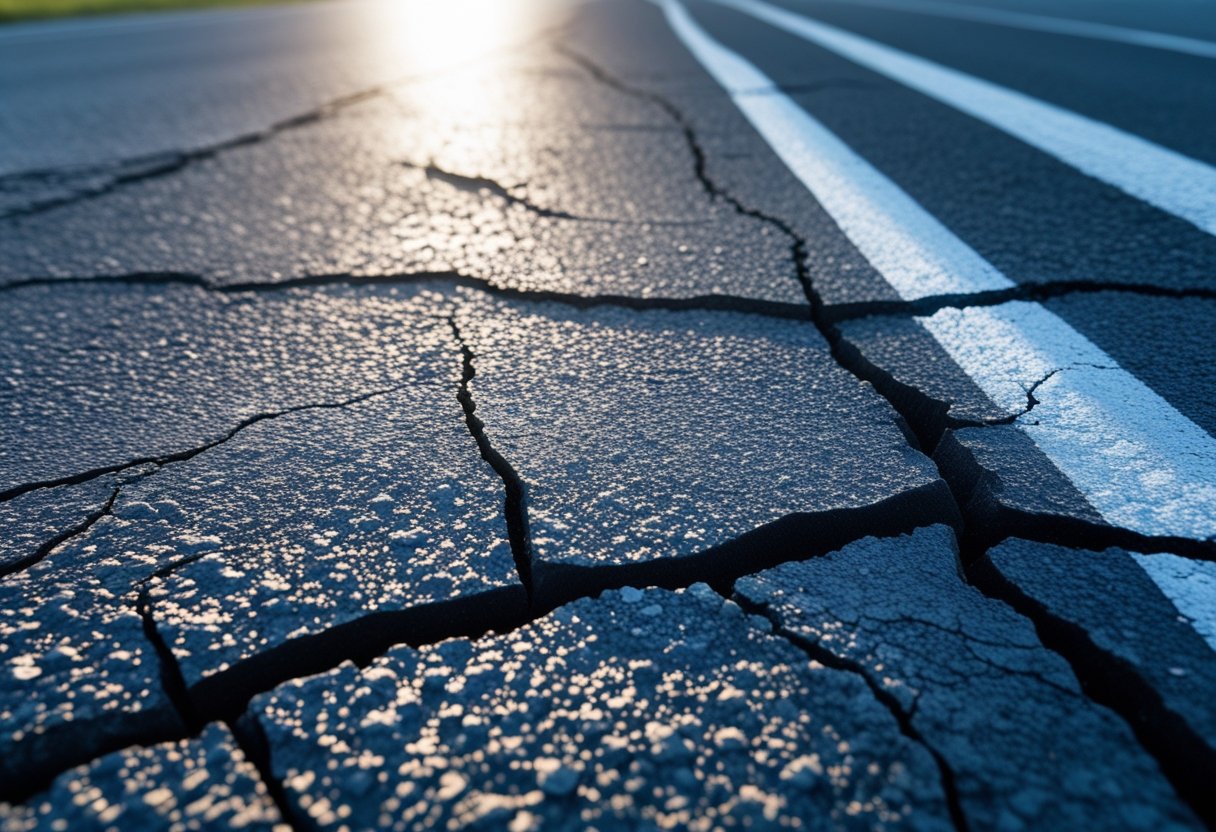
We describe how UV light changes asphalt at the chemical and molecular level, why the binder hardens, and how those changes weaken pavement performance.
Molecular Breakdown and Photo-Oxidation
UV radiation breaks chemical bonds in the bitumen binder. Short-wave UV photons have enough energy to cleave carbon-carbon and carbon-hydrogen bonds in asphalt binders. When those bonds break, free radicals form and start chain reactions.
Those free radicals react with atmospheric oxygen in a process called photo-oxidation. This creates oxygen-containing groups like carbonyls and sulfoxides on the molecules. We see these new groups in lab tests such as FTIR or GC-MS, and they correlate with loss of ductility.
Photo-oxidation is strongest at the pavement surface where UV exposure is highest. Asphalt mixtures show a thin oxidized layer that is stiffer and more brittle than the underlying material. That layer cracks first and allows deeper weathering.
Oxidation and Hardening of Asphalt Binder
Oxidative aging increases the binder’s stiffness and reduces its elasticity. Oxygen molecules attach to bitumen components, forming heavier polar compounds that associate strongly. The binder transitions from viscous to glassy behavior in cold conditions.
We measure hardening by increased viscosity and higher complex modulus in rheological tests. Harder binder cannot relax stresses from traffic or thermal shifts, so fatigue and thermal cracks develop sooner. Repeated UV exposure accelerates this process.
Additives and UV stabilizers can slow oxidation, but their effect diminishes with prolonged exposure. Surface treatments, seal coats, and periodic maintenance help protect the bitumen binder from ongoing oxidative aging.
Changes in Chemical and Molecular Structure
UV-driven reactions alter the chemical structure of asphalt at multiple scales. Small aliphatic chains oxidize first, then larger aromatic and polar fractions change, shifting the overall molecular weight distribution. Cross-linking and formation of insoluble fractions increase.
These molecular changes reduce solubility and compatibility within the asphalt mixture. Aggregates stay the same, but the binder’s adhesion to aggregate weakens, raising stripping risk. The asphalt mixture shows more raveling and surface loss as cohesion drops.
We can detect chemical markers such as increased carbonyl index or sulfoxide peaks to quantify UV damage. Monitoring these markers helps predict when binder hardening will require repair or rejuvenation.
Visible Effects and Structural Consequences of UV Exposure
We observe how sunlight changes asphalt from appearance to structure. UV breaks down binders, fades color, and starts the chain of damage that leads to cracking and potholes.
Surface Fading, Chalkiness, and Color Loss
UV causes the asphalt binder to oxidize, which removes the dark, oily sheen that binds the asphalt mixture. We see the surface turn gray and chalky as oils evaporate and chemical reactions change the binder’s composition.
This loss of color is more than cosmetic. Chalky, faded surfaces repel sealers and adhesives less effectively, reducing traction and making the asphalt pavement look older than it is. For asphalt parking lots, color loss can hide lane markings and safety cues.
Signs to watch for: uniform graying, powdery residue on the surface, and reduced water beading. These signs tell us the binder is weakened and the pavement needs treatment to restore surface protection.
Cracking, Raveling, and Aggregate Loss
When UV oxidizes the binder, it becomes brittle and loses flexibility. We then see small hairline cracks that widen with traffic and temperature changes.
Raveling follows as individual aggregate particles detach. The asphalt mixture loses cohesion and coarse rock chips come loose, leaving a rough, pitted texture. This accelerates water infiltration and further binder loss.
We monitor patterns: alligator cracking shows deeper structural failure, while edge cracking often indicates weakened binder at the pavement margins. Raveling tends to appear first on high-traffic lanes and poorly compacted surfaces.
Formation of Potholes and Accelerated Deterioration
Once cracks and raveling allow water into the pavement layers, freeze-thaw cycles and traffic forces break down the base. We then get potholes where the surface collapses and loose material is pushed out.
Pothole formation is quicker on asphalt that has experienced severe sun damage. The weakened binder and missing aggregate mean the pavement cannot redistribute loads, so localized failure happens under repeated vehicle stress.
Preventive steps we recommend include timely crack sealing, asphalt rejuvenation treatments, and surface sealcoats. These stop UV-driven chemical reactions early and reduce the pace of pothole development.
Factors Influencing UV-Related Asphalt Aging
We focus on the main drivers that speed asphalt aging from UV light and how material choices, weather, and traffic make damage worse. These factors explain why some pavements fail sooner and what changes slow that process.
Environmental Conditions and Sun Exposure
Ultraviolet radiation intensity, air temperature, and humidity work together to break down asphalt binders. High UV index areas expose pavement to more shortwave UV, which oxidizes the binder and causes it to become hard and brittle. In hot, dry climates thermal expansion cycles are larger, stressing the surface and promoting microcracks.
Humidity and freeze-thaw cycles add another layer of damage. Moisture enters cracks; when temperatures drop, water expands and widens fissures. In coastal or humid regions chemical reactions with salts and moisture accelerate binder breakdown.
Urban heat island effect raises surface temperatures by several degrees in cities, increasing oxidation rates and making binders age faster than in rural areas. We must consider local sun exposure records and seasonal extremes when planning maintenance.
UV Resistance Through Material Modification
We improve UV resistance by altering asphalt binders or adding surface treatments. Polymer modifiers such as SBS, CR, and EVA increase elasticity and reduce brittleness caused by UV-induced oxidation. These polymers slow crack development by maintaining flexibility at higher temperatures.
Adding UV stabilizers or antioxidants into the binder can delay oxidation. Surface sealers with UV inhibitors form a protective barrier that reflects some UV and limits direct exposure.
Aggregate choice and binder grade also matter. Harder aggregates resist surface abrasion, while higher-performance binder grades withstand thermal and UV stresses longer. We select combinations based on climate, traffic load, and expected service life.
Interactions With Water, Chemicals, and Traffic
Water, chemical spills, and traffic loading create compounds effects with UV damage. After UV hardens the binder, water penetrates more easily and accelerates stripping and raveling. Heavy traffic causes shear forces that open UV-created microcracks, turning them into potholes.
Chemical spills; fuels, oils, de-icing salts; soften or strip oxidized binders, making structural loss faster. Repeated freeze-thaw cycles push water in and out of cracks, deepening damage started by UV.
We prioritize maintenance for high-traffic routes and areas prone to spills or heavy humidity. Targeted treatments; sealcoats, polymer-modified overlays, and timely crack sealing; reduce the combined effects of UV, moisture, chemicals, and traffic.
Maintenance, Prevention, and the Necessity of Asphalt Repair
We focus on practical steps that slow UV damage, keep water out, and cut long-term costs. Regular checks, timely sealcoating, and affordable preventive fixes protect asphalt pavement and extend its service life.
Role of Inspections and Early Detection
We inspect asphalt at least twice a year and after extreme weather events. We look for hairline cracks, surface chalking from UV, edge breakdown, and any signs of water infiltration near seams or patched areas.
Routine inspections let us catch problems while they are small. Small cracks can be routed and sealed or filled with hot or cold patch before they let water reach the base. That prevents potholes and base failure.
We document findings with photos and simple notes on location, size, and severity. This helps us plan maintenance on a schedule and justify preventive budgets to property owners.
Sealcoating and Protective Treatments
We apply asphalt sealcoating every 2-4 years depending on traffic and sun exposure. A quality seal coat forms a protective barrier that blocks UV rays and reduces binder oxidation.
Sealcoating materials include coal-tar and asphalt emulsion products; we choose based on local rules and pavement condition. Proper surface cleaning and crack repair before sealcoating increase its effectiveness.
Sealcoating slows water infiltration and reduces surface abrasion, but it is not a structural repair. We still repair deep cracks or failed patches first; sealcoating preserves the repaired surface.
Cost-Efficiency and Longevity of Preventive Methods
We compare costs: preventive sealcoating and minor crack repairs cost a fraction of full resurfacing. For example, a sealcoat may cost 20-30% of what resurfacing would cost per square yard for a given cycle.
Preventive work extends asphalt life by 5-10 years when done correctly. We prioritize maintenance on high-traffic areas, edges, and places with visible UV chalking to get the best value.
We present property owners with a simple maintenance schedule and cost estimates. That lets them weigh immediate expense against longer-term savings and avoid emergency repairs that are far more expensive.