
You can spot asphalt damage by where water collects after a storm. If water pools or stays soggy on pavement, that’s a clear sign the surface or base has failed and needs attention. We will show how standing water links to cracks, potholes, and faster wear so you can act before small problems grow.
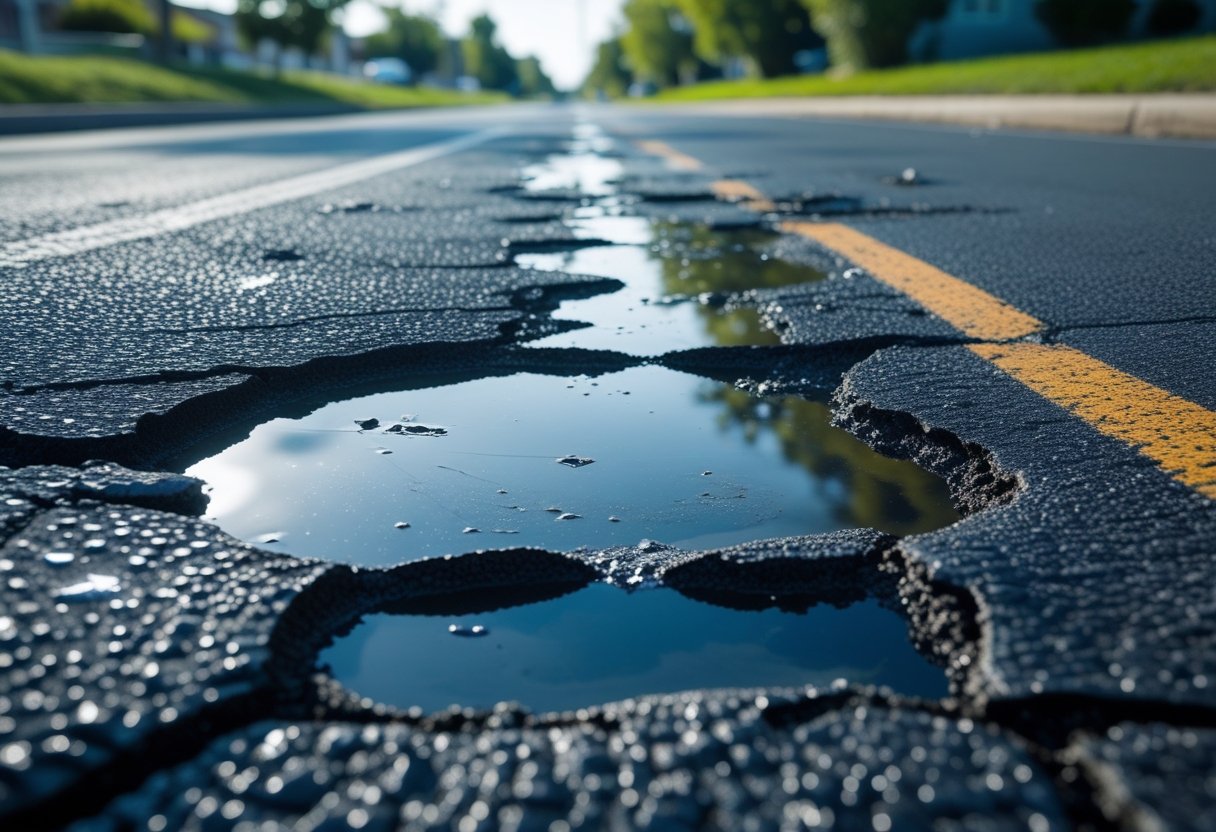
We will explain how water moves on asphalt, what causes pooling, and which signs mean danger versus normal drainage. Then we will cover common causes and practical fixes you can use to protect your pavement and save money over time.
Understanding Water Accumulation on Asphalt
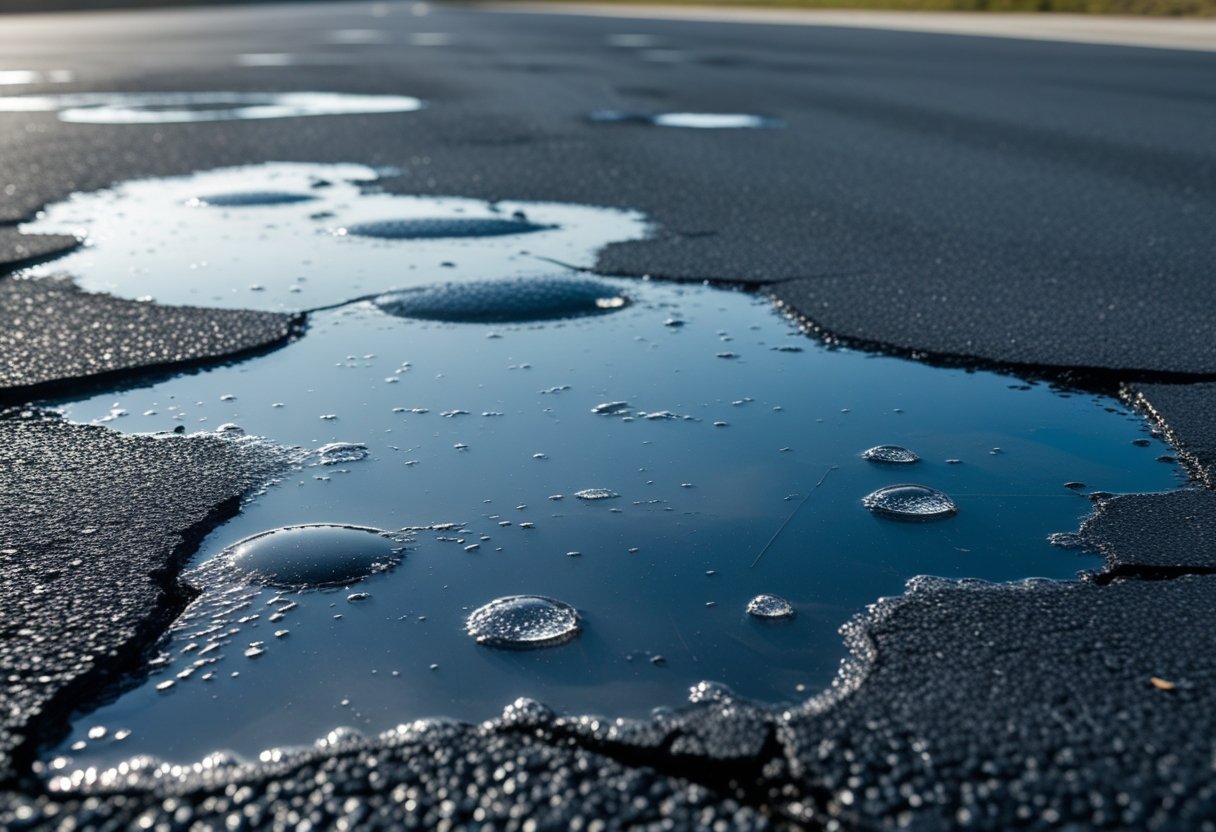
We explain why water gathers, how it moves into asphalt, and how to tell short-lived puddles from damaging pools. This helps us spot early signs of asphalt pavement failure and plan repairs.
What Is Water Accumulation?
Water accumulation means water that stays on the asphalt surface after rain or snow melt. It includes small puddles and larger areas of standing water on asphalt that do not drain quickly.
We focus on depth, area, and duration. Shallow, short-lived puddles under 1 inch deep usually pose low short-term risk. Deep or long-lasting pooling; more than a few hours; can weaken the asphalt binder and the base below.
Visible signs include darkened patches, soft spots, and edge cracking where water sits. Repeated accumulation accelerates raveling and pothole formation. Recording locations, size, and how long water remains helps us prioritize repairs.
How Water Penetrates Asphalt Surfaces
Asphalt pavement is a layered system: the surface mix, binder, and underlying base or subgrade. Water infiltration happens when cracks, interconnected voids, or failed joints let water pass through the surface layer.
Small hairline cracks allow freeze-thaw cycles to widen openings. When water reaches the binder or base, it reduces cohesion and load support. Poor compaction or failing edge drains speed this process.
We inspect for alligator cracking, longitudinal splits, and edge breakup as signs that water has infiltrated. Proper sealing, crack filling, and base drainage limit further infiltration and extend pavement life.
Distinguishing Between Temporary Puddling and Persistent Pooling
Temporary puddling clears within a short time after weather stops. It often occurs in low spots from minor surface irregularities or blocked drains. These puddles usually do not cause immediate structural damage.
Persistent pooling lasts many hours or days and recurs after each rain. It appears where slopes are incorrect, drains fail, or the pavement has subsided. Persistent pooling often coincides with soft spots, edge cracks, and potholes.
We use simple checks: measure depth and time to drain, note firmness under foot, and check for nearby cracking. If water remains after 24 hours or the asphalt feels spongy, treat it as persistent pooling and consider professional evaluation.
Why Water Accumulation Signals Asphalt Damage
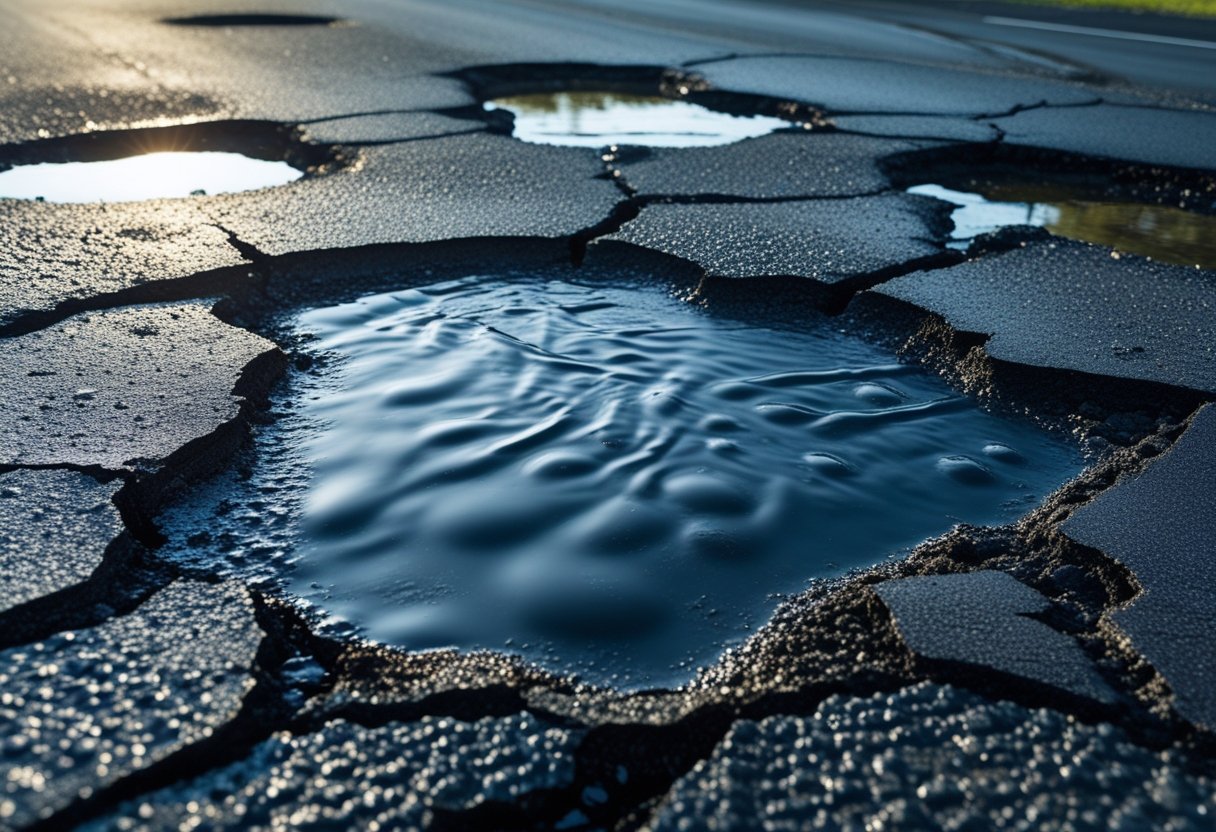
Water pooling on pavement often means the structure beneath the surface is failing. It points to problems like weakened asphalt binder, lost aggregate, poor drainage, or a soft subgrade that will speed up cracking and potholes.
Common Forms of Water-Induced Damage
We see several clear types of damage when water sits on asphalt. Surface erosion removes fine particles and loosens aggregate, which reduces skid resistance and leads to a rough, worn surface. Stripping happens when water breaks the bond between the asphalt binder and the aggregate, causing chunks of pavement to come loose.
Cracking appears next: alligator or fatigue cracks form where the base is unstable. Depressions and rutting show that the subgrade or base has compacted or washed out, letting wheels push the asphalt down. Potholes develop where water-filled cracks let material wash away, then traffic removes what’s left.
The Role of Water in Accelerating Deterioration
Water speeds up every failure mechanism in asphalt. It infiltrates micro-cracks and weakens the asphalt binder, making the mix less flexible and more brittle under loads. When binder loses adhesion to aggregate, stripping increases surface erosion and particle loss, which leads to more and larger cracks.
Standing water also concentrates loads and softens the subgrade. Repeated vehicle loading on a saturated base causes permanent deformation like rutting and depressions. That deformation increases stress on the pavement surface and accelerates pavement failure, requiring repairs sooner than expected.
Freeze-Thaw Cycle Effects
We watch freeze-thaw cycles closely because they make water damage much worse. Water that seeps into cracks freezes and expands, forcing cracks wider and lifting aggregate from the binder. When the ice melts, the voids remain and let more water enter, repeating the damage.
This cycle drives rapid pothole growth and progressive surface breakdown. On saturated subgrades, freeze-thaw also weakens support, increasing settlement and rutting. Preventing water entry and ensuring quick drainage reduces freeze-thaw damage and slows the loss of pavement life.
Root Causes of Water Accumulation on Asphalt Surfaces
We identify specific causes so property owners can target repairs. Fixing the right problem saves time and money.
Drainage Problems and Improper Grading
Water pools when surface slopes and subsurface paths fail. We often see asphalt driveways and parking lots graded too flat or toward buildings. Proper drainage needs a 1%-2% slope away from structures and toward drains or swales.
Clogged or missing drains make things worse. Leaves, sediment, and curb buildup block outlet points on parking lots and driveways. That forces water to pond on the asphalt surface.
Subsurface drainage also matters. Poor base compaction or missing edge drains lets groundwater rise into the asphalt, causing soft spots and rutting. We recommend checking both surface flows and base layer drainage when diagnosing ponding.
Design and Installation Errors
Design choices set the stage for long-term performance. We see contractors place joints or transitions where water can collect, such as at driveway-shoulder edges or in low spots beside curbs. Drain placement that ignores vehicle patterns also creates repeated wheel-path ponding.
Compaction and lift thickness must match project specs. Thin lifts or uneven compaction leave voids for water to sit. When installers use improper tack coats or skip sealing joints, water infiltrates those weak lines first.
We inspect how the paving ties into curbs, gutters, and nearby slopes. Poor coordination with site grading plans often causes failure points in otherwise sound asphalt sections.
Material and Mix Design Factors
Asphalt mix design affects permeability and durability. Mixes with too much fine material or low-quality binder allow water to penetrate the surface faster. Open-graded mixes drain well but need correct binder content to avoid raveling.
Aggregate selection is critical. Rounded or soft aggregates break down and create voids that trap water. We prefer dense-graded mixes for driveways and parking lots where standing water is common.
Temperature and compaction at laydown change the mix performance. Cold placement or low compaction increases porosity, accelerating water damage. We test for density and binder content when investigating recurring ponding issues.
Maintenance Neglect
Lack of routine care accelerates water problems. We find cracked seals, broken joints, and potholes left unrepaired quickly turn small drainage issues into large ones. Water exploits every opening.
Routine sweeping and drain clearing preserve flow paths. Sealcoating and crack sealing protect the asphalt mix and slow water infiltration. For parking lots, regular striping and edge inspections keep runoff channels clear.
Ignoring vegetation and shoulder erosion undermines asphalt edges. Roots and undermined shoulders detach pavement, creating depressions that collect water. Simple, scheduled maintenance reduces the chance of ponding becoming structural failure.
Effective Solutions and Preventive Measures
We focus on fixes that stop water fast and prevent new damage. Practical steps include improving drainage, repairing cracks, sealing surfaces, and using newer materials like permeable pavement.
Upgrading Drainage Systems
We install or improve drainage systems to move water away from asphalt quickly. That means adding or clearing catch basins, installing French drains, and creating sloped surfaces so water runs to drains instead of pooling.
We size drains to handle heavy storms and place them where water collects most: low spots, ends of parking aisles, and near roof runoff. We also add gutter downspout extensions to keep roof water off paved areas.
Routine inspection matters. We schedule cleaning of catch basins and flushing of French drains at least twice a year. That reduces blockages from leaves, sediment, and debris that cause backups and standing water.
Surface Repairs: Crack Sealing and Patching
We stop water from entering the asphalt by sealing cracks and patching damaged areas promptly. For small cracks we use hot-pour or cold-applied crack sealing to create a flexible barrier that moves with the pavement.
For larger holes or areas of failing asphalt we remove the damaged section, compact a new base if needed, and apply hot-mix asphalt for a durable patch. Proper edge cutting and compaction prevent new seams from forming.
We prioritize repairs in wheel paths, at curbs, and around utility cuts. Quick repair reduces the need for full resurfacing later and keeps drainage channels from being blocked by broken pavement.
Sealcoating and Routine Maintenance
We apply sealcoating every 2-4 years to protect asphalt from water and UV damage. Sealcoating fills tiny voids and restores a water-resistant surface, slowing oxidation and surface cracking.
Our routine maintenance plan includes sweeping, line repainting, joint repairs, and spot filling. We document maintenance dates and condition photos so we know when to reseal or repave.
For parking lot repairs, we also keep gutters and inlets clear and inspect pavement after freezes. Regular upkeep extends pavement life and reduces water-related deterioration.
Innovative Approaches: Permeable Pavement and Drainage Channels
We use permeable pavement where appropriate to let rain soak through the surface into a gravel base, reducing runoff and ponding. Permeable asphalt or pavers work well in low-traffic areas, walkways, and some parking bays.
We pair permeable surfaces with engineered drainage channels and linear drains to guide excess water away from high-use zones. Channels should have grates that resist clogging and be accessible for cleaning.
Combining permeable systems with traditional drains gives redundancy. That approach reduces reliance on single drainage points and lowers the chance of standing water forming after heavy storms.