You will see how weather drives asphalt to crack, rut, and peel, and what that means for safety and cost. Knowing which weather forces do the most damage helps you spot early signs and pick the right fixes.
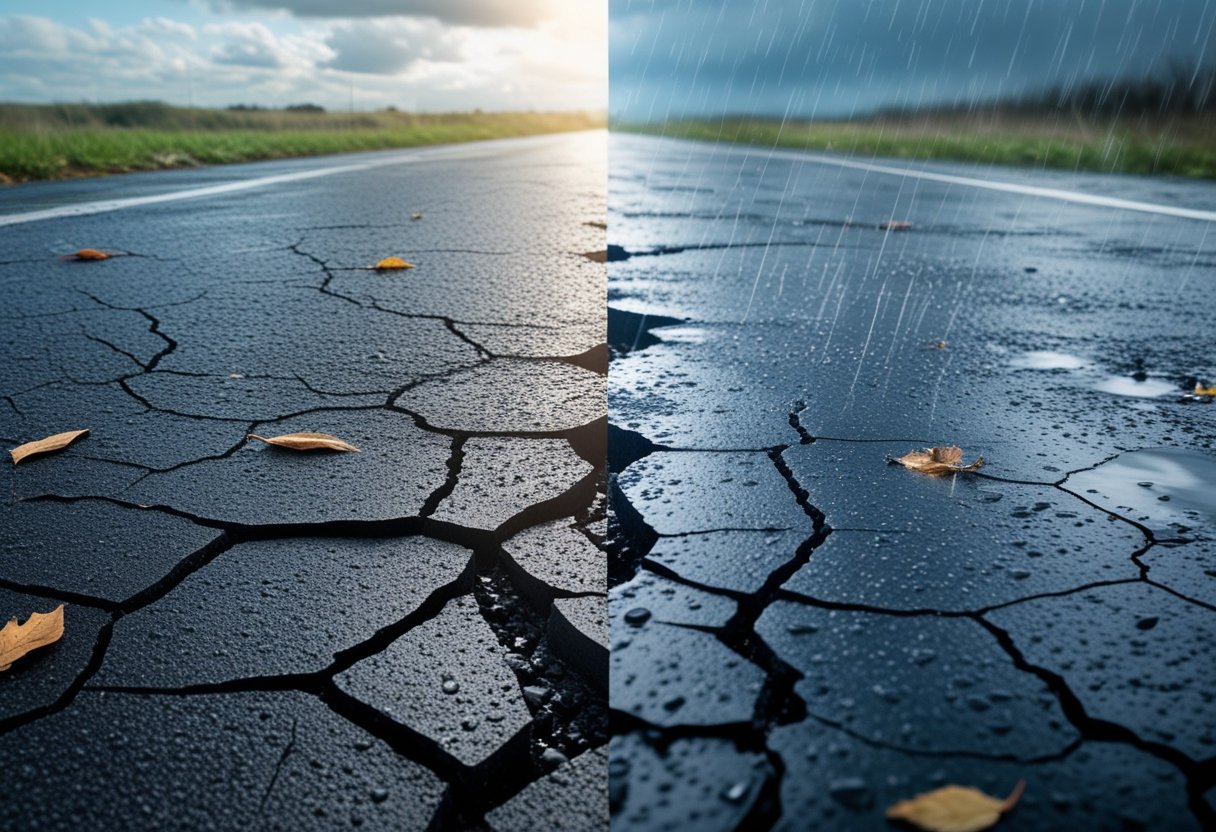
We will explain how sun, heat, cold, water, and freeze-thaw cycles act on pavement, how mix and construction affect outcomes, and what simple maintenance steps reduce damage. Keep reading to learn practical actions you can use to protect asphalt and save money.
Key Weather Factors in Asphalt Degradation
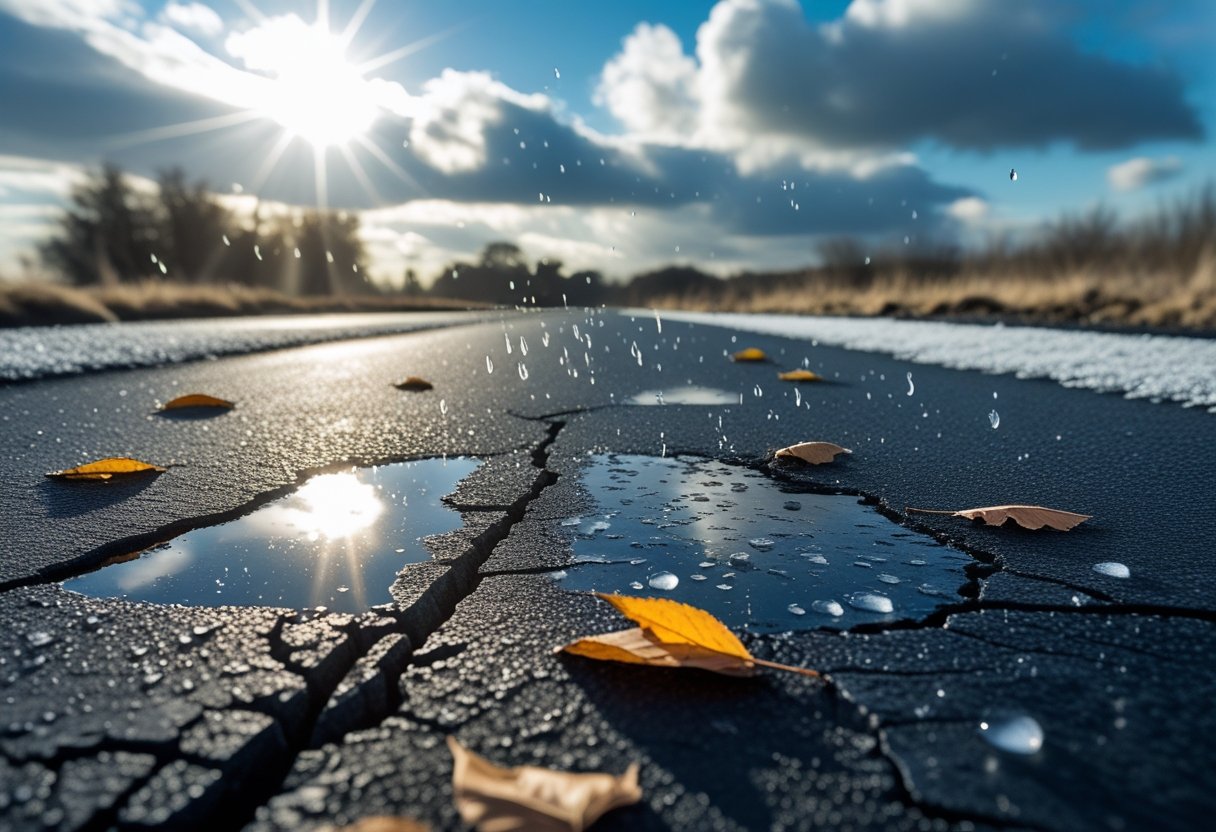
We focus on four main weather processes that cause asphalt to crack, soften, or lose binder. Each process affects the surface differently, so targeted maintenance helps extend pavement life.
Temperature Fluctuations and Thermal Expansion
Temperature swings change asphalt surface temperature quickly. Hot days raise surface temperature and soften the binder, which makes the pavement more vulnerable to rutting from repeated traffic. Cool nights contract the pavement and increase stiffness, which can lead to tensile cracking when the asphalt cannot flex enough.
Repeated daily and seasonal temperature cycles stress pavement joints and edges. Thermal expansion forces move aggregate and create micro-cracks that grow under load. In climates with large temperature ranges, we see more reflective and longitudinal cracks. Managing surface temperature with lighter seal coats and controlling traffic loads during extreme heat reduces damage.
Moisture Infiltration and Water Damage
Water enters through cracks, joints, or porous asphalt and weakens the pavement structure. Moisture reduces the bond between asphalt binder and aggregate, causing stripping where the binder peels away from stones. Subsurface water increases pore pressure and softens the base, which leads to depressions and potholes.
We must repair surface cracks and seal joints to prevent infiltration. Good drainage and timely crack sealing minimize water-related failures. In areas with heavy rain or high groundwater, a stable base and proper slope are essential to keep moisture from collecting under the asphalt.
Freeze-Thaw Cycles and Frost Heave
When water in cracks or the base freezes, it expands and lifts the pavement in a process called frost heave. Thawing then leaves voids and reduces support, which causes the asphalt to settle unevenly and form potholes. Repeated freeze-thaw cycles cause progressive weakening and larger surface failures.
Cold climates with frequent freeze-thaw change the pore pressure in the pavement layers. We find more alligator cracking and potholed patches where freeze-thaw is common. Improving drainage, using frost-resistant base materials, and sealing surfaces reduce freeze-thaw damage.
UV Exposure and Oxidation
Ultraviolet (UV) radiation breaks down asphalt binder at the surface, causing oxidation. Oxidized binder becomes hard and brittle, losing elasticity and adhesive strength. This leads to surface raveling, fine cracks, and reduced resistance to traffic loads.
We protect asphalt with surface treatments like seal coats or rejuvenators that block UV rays and restore some binder properties. Regular maintenance prevents deep binder loss and slows oxidation from prolonged sun exposure, especially in sunnier climates with high UV radiation.
Mechanisms and Types of Asphalt Deterioration
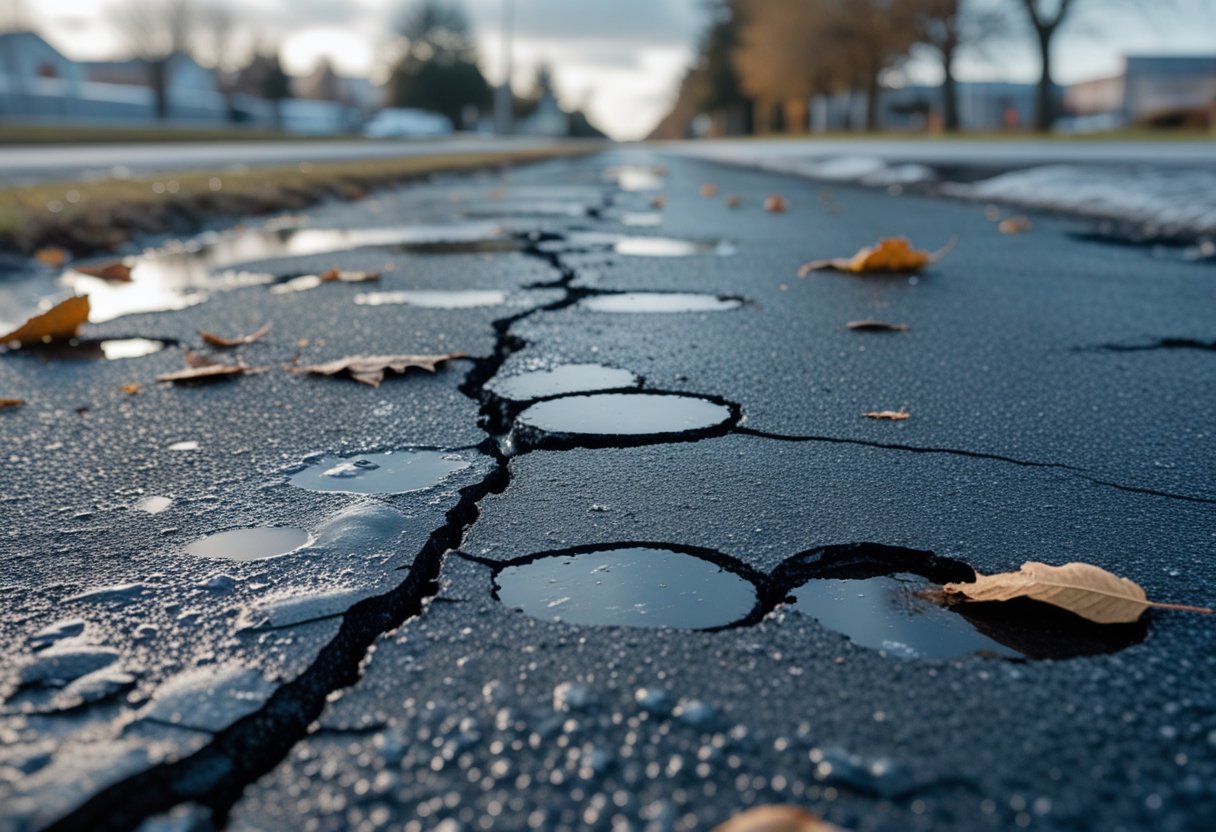
We describe how weather, traffic, and materials cause specific failures in asphalt. Each mechanism ties to visible damage like cracks, potholes, rutting, and loss of aggregate from moisture.
Cracking and Crack Formation
We see cracks when asphalt stiffens from cold or weakens from aging and UV exposure. Thermal contraction causes transverse cracks in cold climates, while shrinkage from binder oxidation yields fine, branching fatigue cracks. Repeated heavy traffic produces alligator (or fatigue) cracking: interconnected, polygonal cracks over weakened base layers. Reflective cracking happens when old pavement cracks transfer through a new overlay. Small cracks let water and air in, which speeds up binder oxidation and base erosion. Sealing surface cracks early reduces moisture entry and slows crack propagation. Proper mix design and adequate binder content help resist brittle cracking and extend pavement life.
Pothole Formation and Surface Erosion
We find potholes where water and traffic remove support under the surface. Water enters through cracks or joints, weakens the base or subgrade, and traffic dislodges loosened asphalt fragments. Repeated freeze-thaw cycles make voids grow faster, leading to sudden collapses that form potholes. Surface erosion from abrasion and raveling strips fines and exposes aggregates, reducing surface cohesion. Proper drainage, timely crack sealing, and routine patching prevent small defects from turning into potholes. Using durable aggregates and correct compaction during construction also reduces the rate of surface particle loss.
Rutting, Surface Deformation, and Softening
We observe rutting where the asphalt mix becomes too soft or the base yields under load. High temperatures and heavy, slow-moving traffic cause binder softening and plastic flow in wheel paths. Weak or poorly compacted base layers let the pavement deform vertically, creating grooves. Repeated stress increases rut depth, which traps water and worsens skid resistance. Stabilizing bases, increasing pavement thickness, and using stiffer binders or polymer-modified asphalts reduce rutting risk. Monitoring rut depth and addressing drainage issues help prevent deformation from progressing into structural failure.
Moisture Damage: Stripping and Aggregate Loss
We identify moisture damage when binder loses adhesion to aggregates; called stripping; and when water lifts fine particles out of the mix. Moisture infiltration through cracks and poor joints separates binder films from aggregate surfaces, reducing tensile strength and cohesion. Stripping leads to raveling, weakened surface layers, and accelerated cracking or pothole formation. Poorly graded or reactive aggregates increase susceptibility. Treatments include asphalt additives, anti-stripping agents, improved mix design, and maintaining surface seals. Ensuring good surface drainage and fixing cracks limits moisture access and slows aggregate loss.
Influence of Pavement Design and Construction
We focus on how material choices and construction practices change how asphalt weathers. Good design and tight construction limits cracking, rutting, and water damage.
Role of Asphalt Binder and Mixtures
We choose asphalt binder grade to match local temperatures and traffic loads. A softer binder helps in cold climates to reduce cracking, while a stiffer binder resists rutting in hot climates. Binder flexibility is key: more flexible binders stretch with traffic and thermal cycles without breaking.
Asphalt mixtures combine binder with aggregates to form asphalt concrete. Proper gradation and air void control improve durability. High-quality mixtures reduce oxidation and moisture ingress, which slows aging. We test mixtures for stiffness, fatigue, and moisture susceptibility to ensure long-term performance.
Importance of Base Layer and Pavement Layers
We build a stable base layer to distribute loads and limit deformation of upper layers. A compacted granular or stabilized base reduces stress on the asphalt and minimizes cracking from settlement. Weak or thin bases let the pavement bend and accelerate binder fatigue.
Pavement layers work as a system: surface, binder, base, and subgrade must interact correctly. Layer thickness and material choice depend on traffic, climate resilience, and subgrade strength. We monitor compaction and layer interfaces during construction to prevent early failures.
Significance of Drainage Systems
We design drainage to remove water quickly from the pavement structure. Proper drainage prevents water from reaching the base layer and subgrade, which would reduce support and speed asphalt degradation. Surface drains, cross slopes, and subsurface drains are common methods.
Drainage improvements like edge drains and permeable layers reduce pore water pressure and freeze-thaw damage. We inspect and maintain drains to keep flow paths clear. Without proper drainage, even strong asphalt mixtures and thick bases will deteriorate faster.
Effect of Additives and Polymer-Modified Asphalt
We use additives to improve binder properties and extend pavement life. Polymer-modified asphalt increases binder elasticity and temperature range, reducing thermal cracking and rutting. Fibers and anti-stripping agents improve mixture cohesion and moisture resistance.
Additives must match climate and traffic. Polymers help in hot and variable climates by keeping binder flexible at low temps and stable at high temps. We evaluate cost versus performance and run lab tests to confirm improvements before full-scale use.
Prevention and Maintenance Strategies for Weather-Related Damage
We focus on practical steps that extend pavement life and cut repair costs. The most effective work targets surface protection, timely crack repairs, better drainage, and data-driven maintenance planning.
Sealcoating and Protective Coatings
We apply sealcoats to block water, UV, and salts from penetrating asphalt surfaces. Regular sealcoating every 2-4 years for driveways and parking lots slows asphalt aging and restores surface oils lost to sunlight. Use coal-tar or asphalt-based sealers for roads and parking areas; choose emulsified asphalt or acrylics where environmental rules restrict coal-tar products.
Protective coatings like chip seals or thin overlays add mechanical wear resistance for roadways. Chip seals are cost-effective for large areas but can be rough; thin asphalt overlays smooth surface texture and add several years of service life. We inspect coatings after winter and heavy rain to reapply where wear or thinning appears.
Crack Sealing and Filling
We seal cracks promptly to prevent water and de-icing chemicals from reaching the base. For moving cracks up to 1/2 inch wide, hot-pour crack sealants with a rubberized base provide flexible, long-lasting seals. For non-moving, wide cracks or pothole-prone areas, use asphalt-based fill or patch mixes and compact them to match surrounding pavement.
We rout and clean cracks before sealing to improve adhesion. A schedule of inspections each spring and fall captures freeze; thaw damage early. Proper crack sealing reduces edge raveling and base weakening, which helps avoid full-depth repairs or overlays.
Timely Drainage Improvement
We design and maintain drainage to move water off asphalt quickly. Install and clear gutters, swales, and catch basins to avoid standing water on driveways, parking lots, and roadways. Slope pavement 1-2% where possible to prevent pooling along curbs and joints.
We repair subsurface drainage and add edge drains when persistent saturation weakens the base. Use permeable paving or curb cuts in low-traffic areas to direct runoff. Timely drainage fixes cut freeze; thaw cycles and limit salt exposure, both of which increase pavement durability and reduce costly repairs.
Adaptive Maintenance and Predictive Models
We use data and models to plan maintenance before visible failure. Pavement condition surveys combined with machine learning predict aging based on traffic load, weather history, and past repairs. These predictive models help prioritize interventions like sealcoating, crack sealing, overlays, or concrete overlays for high-risk sections.
We adopt an adaptive maintenance cycle: inspect, predict, treat, and re-evaluate. This approach schedules preventive measures where they deliver the most pavement longevity and cost savings. Prioritizing sections that face extreme weather, heavy de-icing chemical use, or high traffic keeps roadways and parking lots long-lasting.